
Macao has had many incarnations throughout history, from a
major trading port on the Pearl River Delta, to something
of a “Las Vegas of the East”.
More recent decades, however, have seen it blossom from a glamorous destination for luxury travellers into so much more. And Macao’s rich multicultural heritage—long overlooked—is at the centre of this current transformation.
“
”
Macao was the site of the first European settlement in East Asia, and also the last. When Portugal handed over the territory to China in 1999, it ended an era. This legacy underpins much of Macao—up to its present-day multicultural joie de vivre—but is especially well documented in the city’s architecture and design, from traditional Chinese temples to southern European churches and still-vibrant public squares.
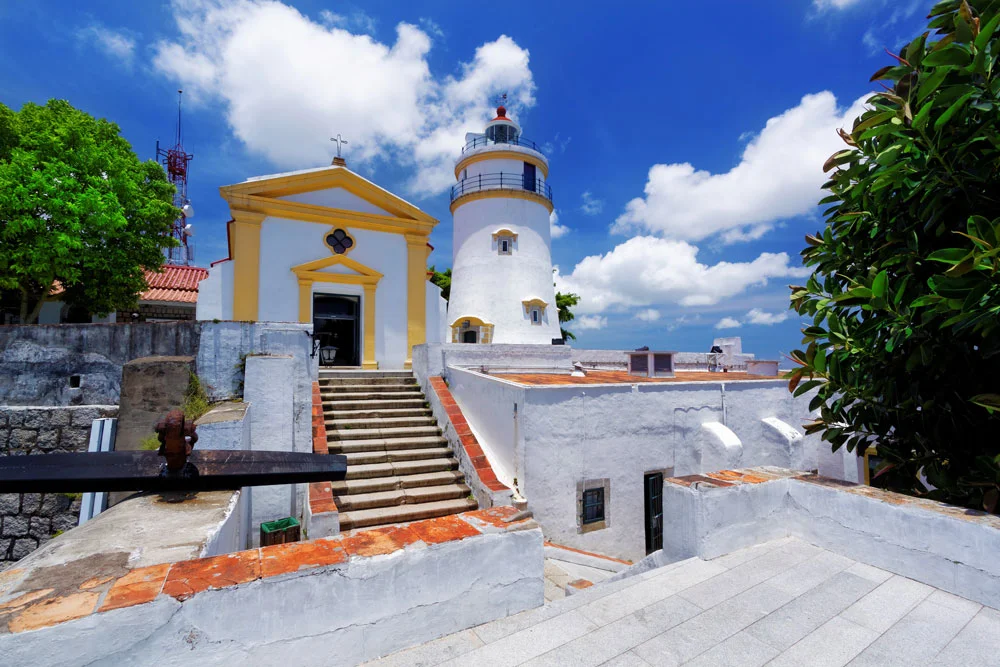
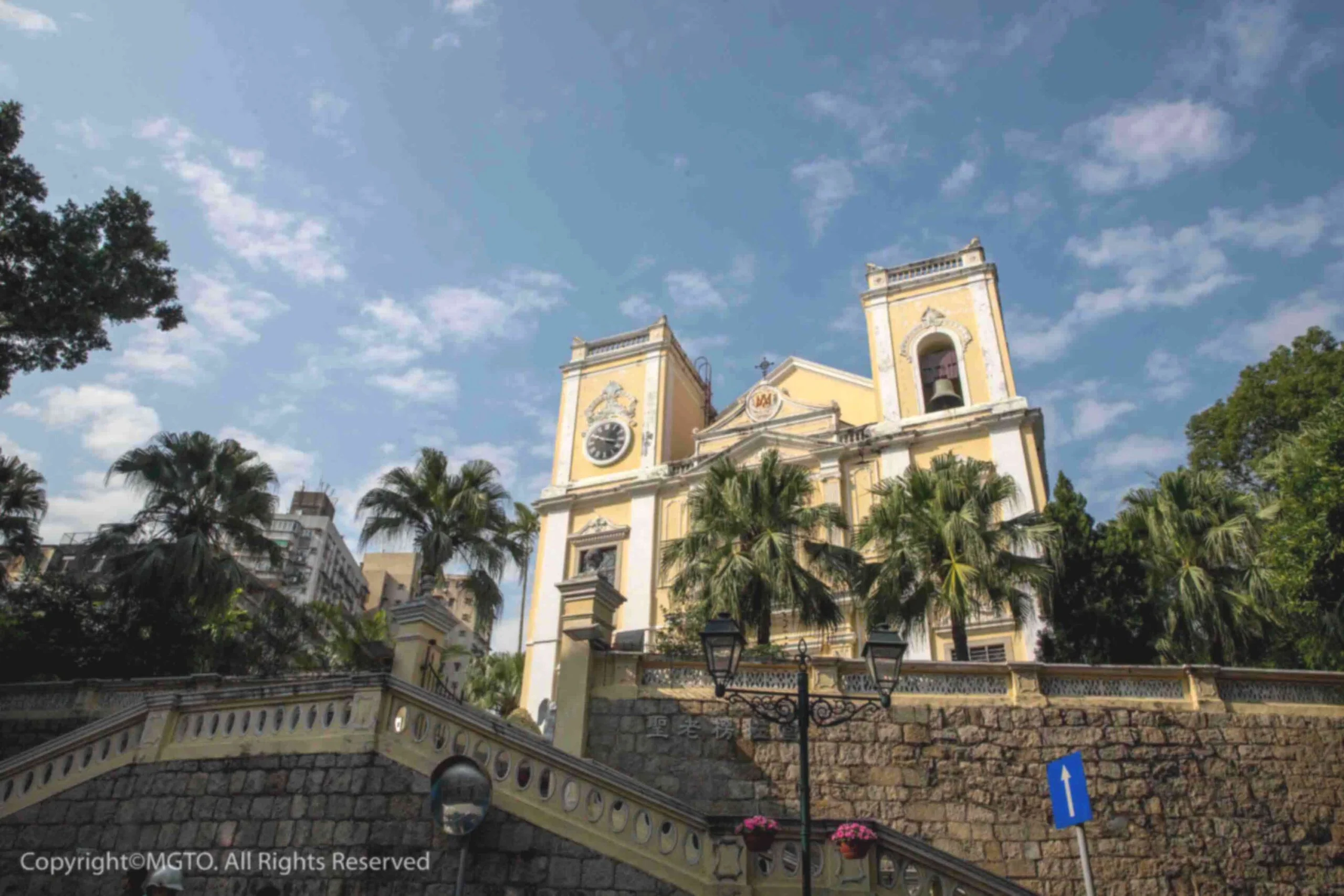
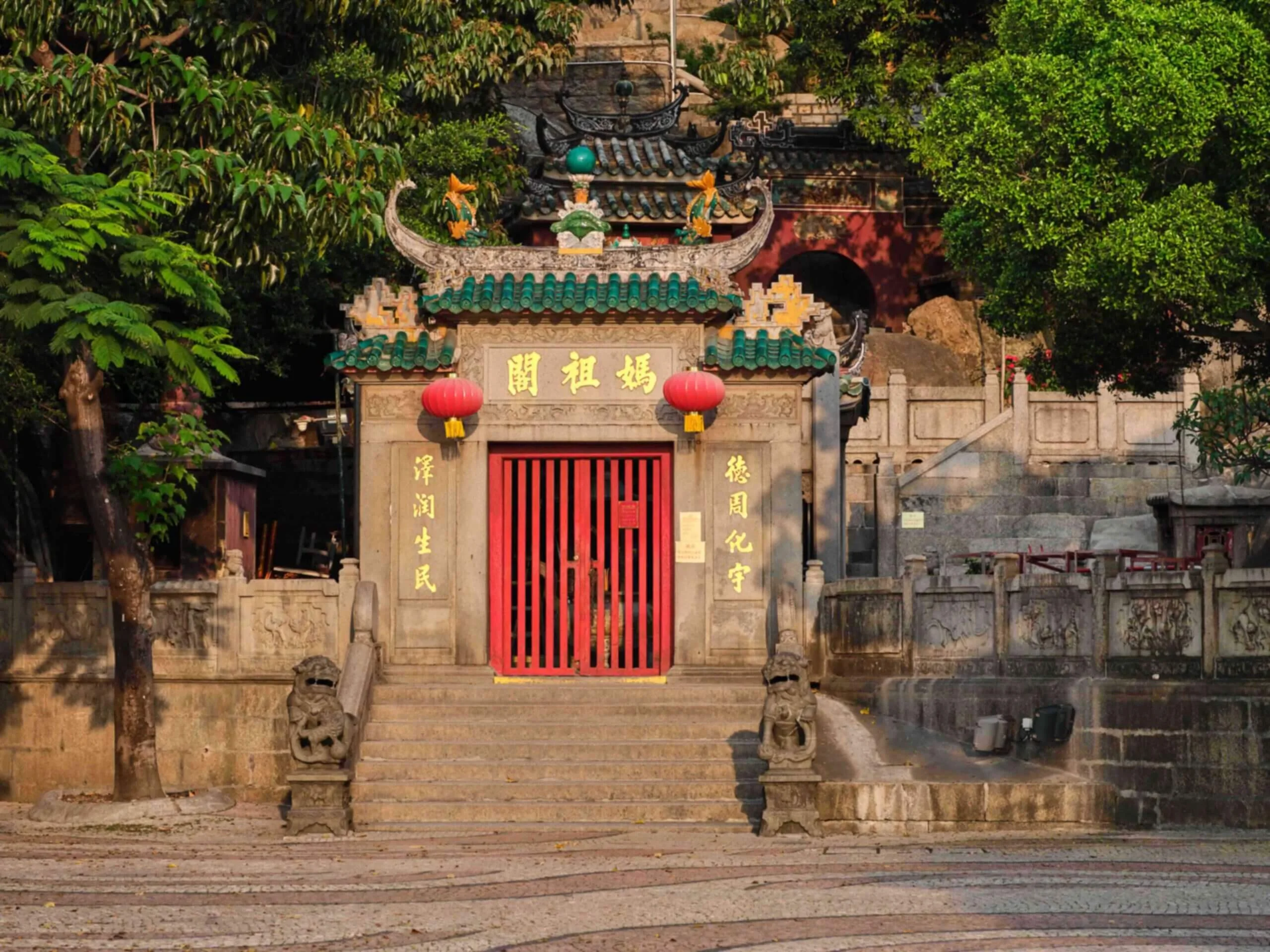
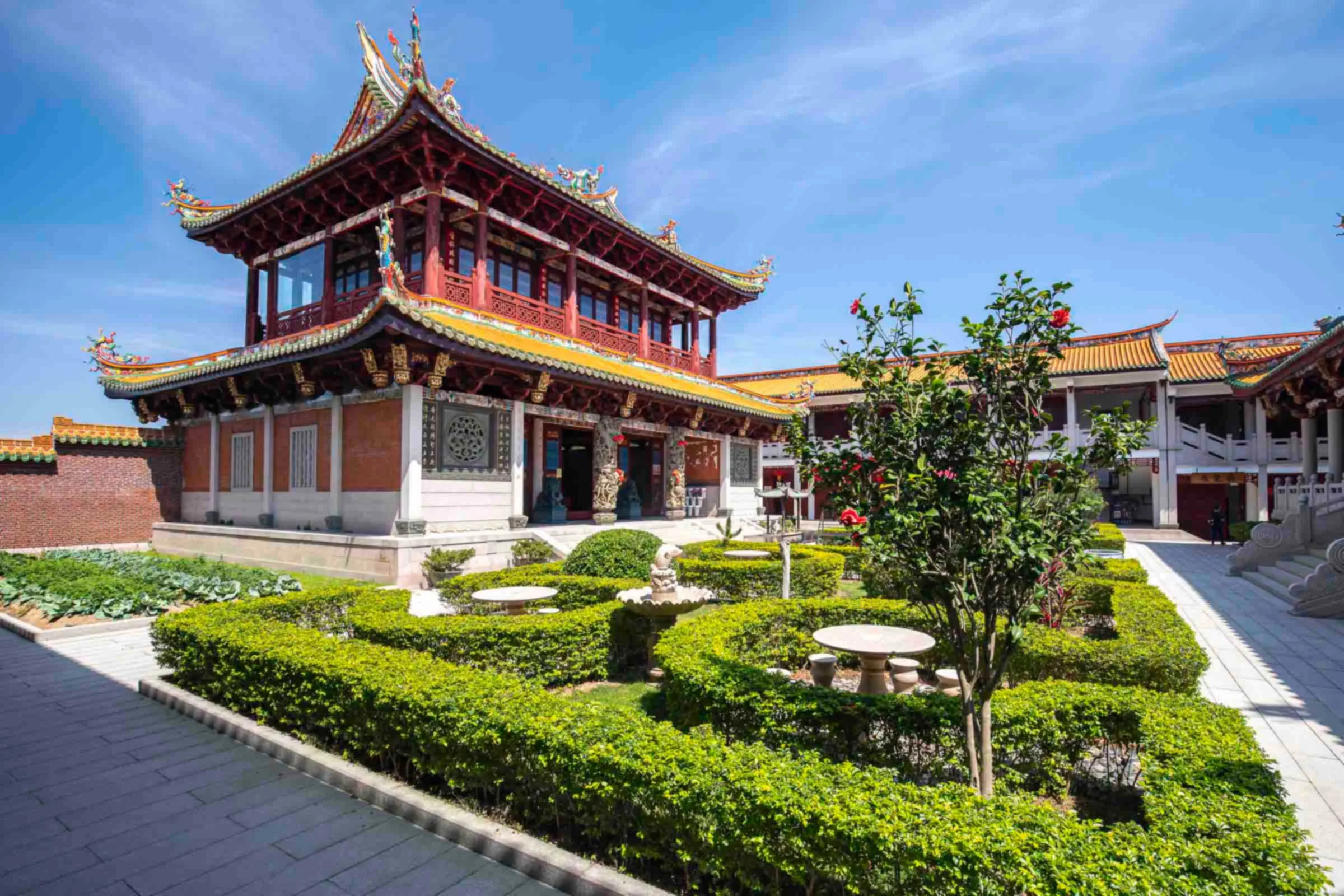
To experience Macao’s distinct cultural tapestry, a visit to the city's historic district—also known as the historic centre of Macao—is a must. Inscribed on the World Heritage List in 2005, the neighbourhood includes over 20 monuments and squares that will take visitors back in time and through Macao’s winding history. Each bears witness to the city’s colonial past and Chinese origins, and all are standing testaments to a uniquely Macanese way of life.
Back to the beginning
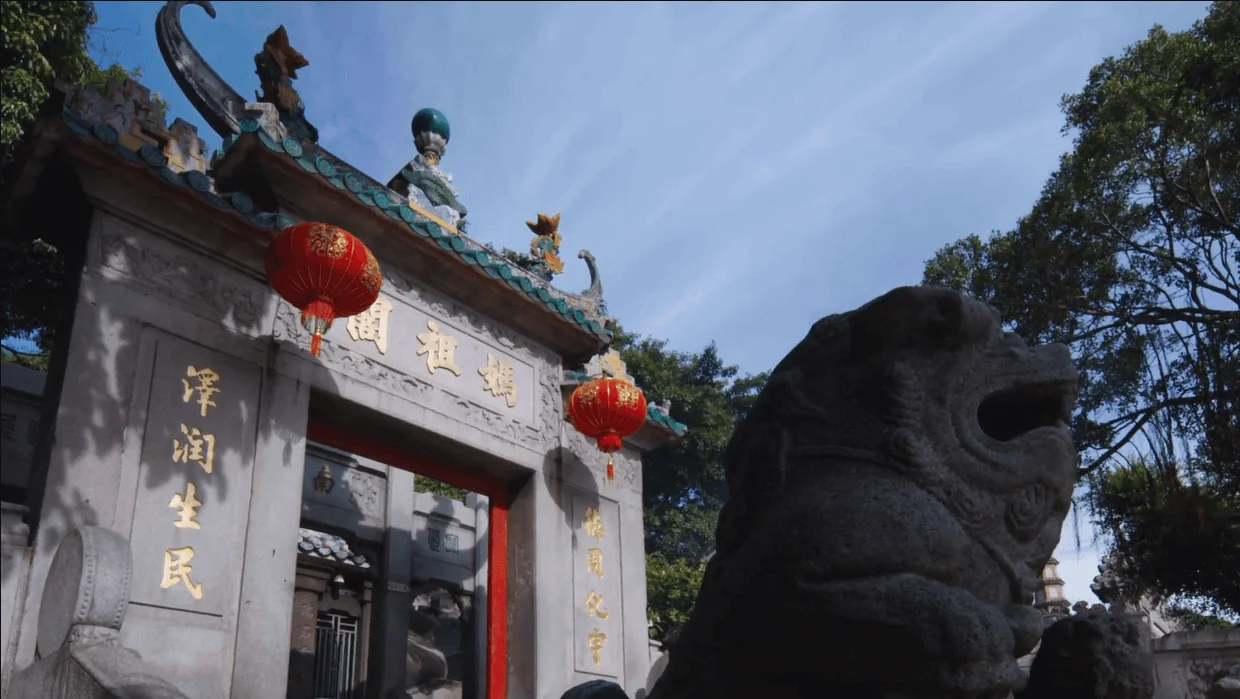
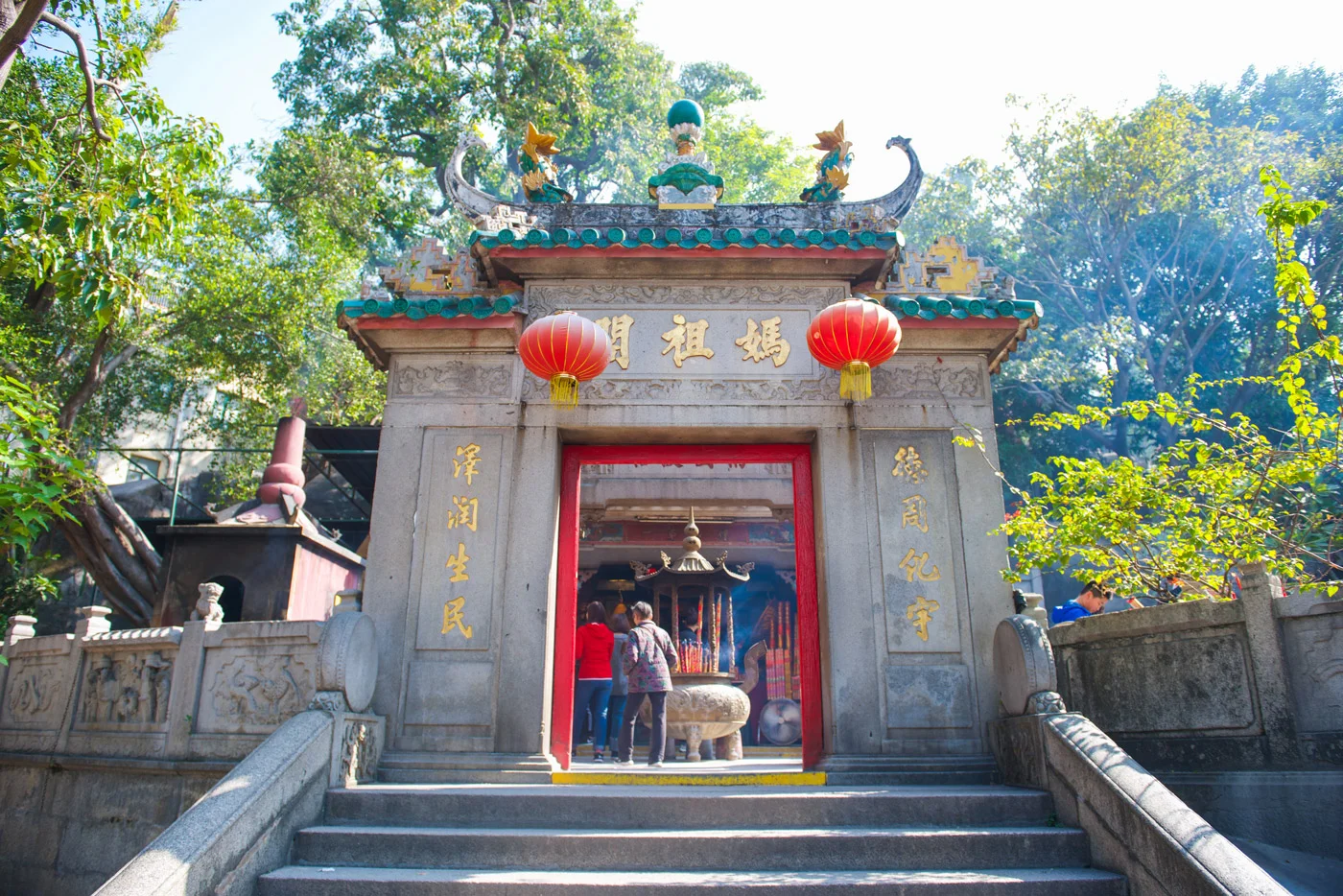
On the western slope of Colina da Barra, the hill at the tip of peninsular Macao, sits the oldest structure representing Macao’s UNESCO World Heritage: A-Ma Temple. The six pavilions were built at different points in history, but the Hall of Benevolence—a small granite and brick pavilion that houses a statue of Mazu—is believed to be the earliest, dating back to 1488.
Testament to Macao’s multicultural identity and religious tolerance is the fact that the Taoist temple is popular with tourists and locals alike, especially during Chinese New Year and the annual A-Ma Festival, which is held in spring. But even on an ordinary day, visitors can still fully immerse themselves in such traditions as they pass through the temple’s main entrance, flanked on both sides by a pair of stone lions, and as they make their way through the prayer pavilions, each dedicated to the worship of different deities.
Elsewhere in the city, another important Chinese temple and historic centre of folk religion—the Na Tcha Temple—sits behind the Ruins of St. Paul’s, the stone façade of what was once the largest Portuguese Jesuit centre in Asia.
A Portuguese settlement in the Far East
After the Portuguese secured a lease for a trading post in coastal China in the mid-1500s, a golden age of sea trade followed, with Macao serving as a key port on routes connecting Lisbon, Nagasaki, Manila and Mexico. The promise of trade drew Chinese merchants from Guangdong and beyond, as well as the Jesuits, who established St. Paul’s College in 1594, an important early centre for the study of eastern languages and cultures.
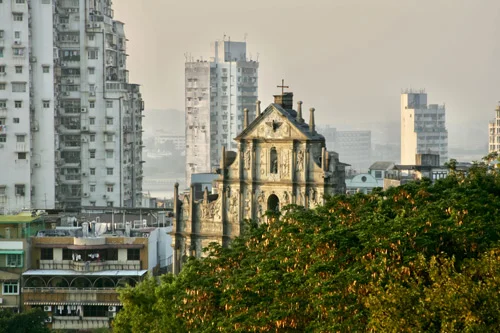
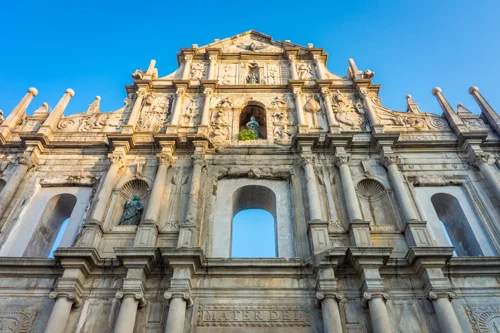
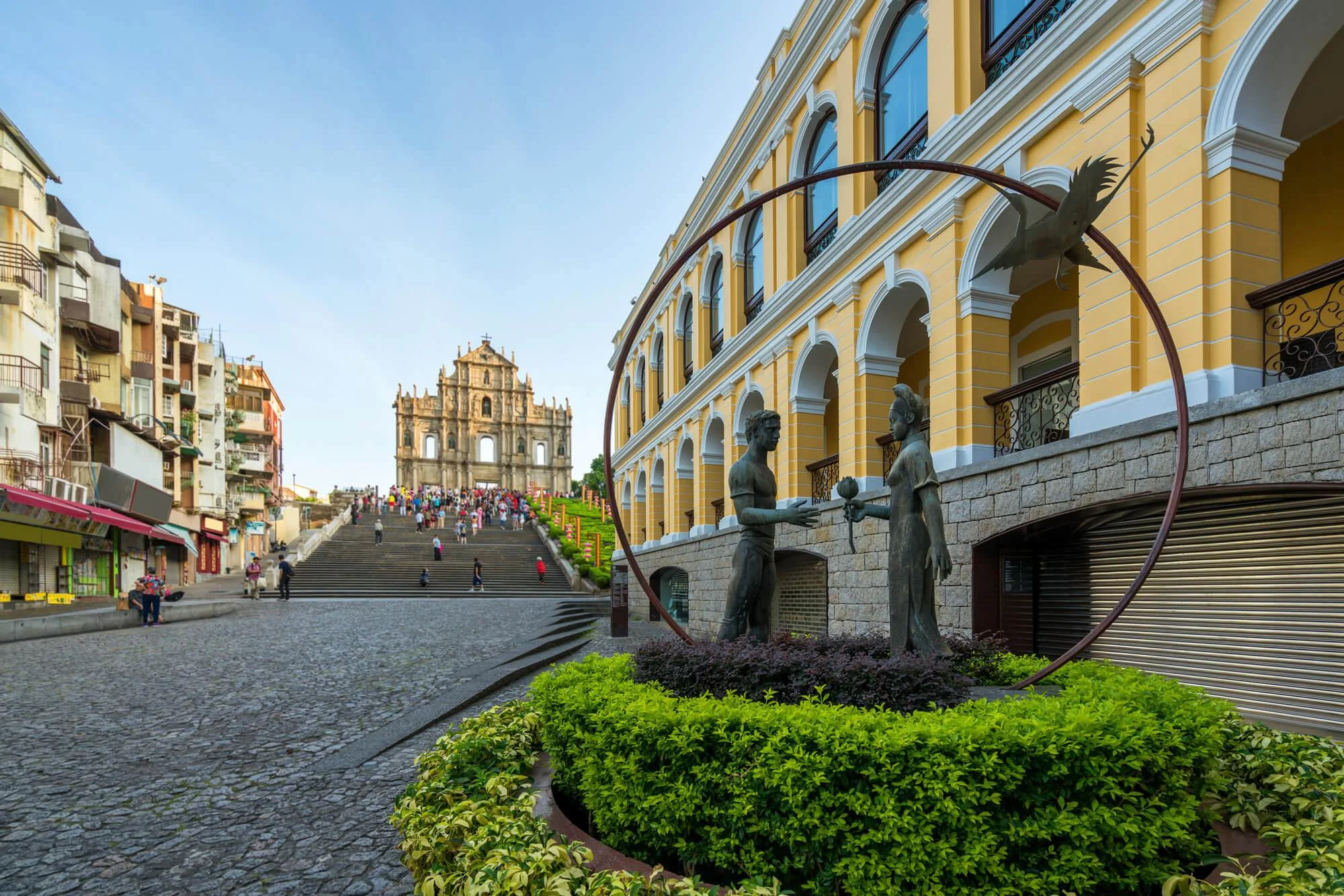
Other historic sites of Macao’s UNESCO World Heritage from this era include St. Dominic’s Church, among Macao’s oldest and with quintessentially baroque stylings; Guia Fortress, built less than a half-century later, under threat of Dutch invasion; and the Moorish Barracks, influenced by the Mughal architecture of India.
Old Macao, today
In Macao, plenty have withstood the oft-harsh test of time and change. The old does not just give way to the new; instead a mélange of tradition and modernity, of eastern allure and Portuguese influences, is thoughtfully created.
Senado Square, another site of Macao’s UNESCO World Heritage, embodies this harmony. Look no further than the design detail of the pavement to understand: done in calçada portuguesa—Portugal’s traditional style of mosaic-tile paving—small black and white stones are arranged in undulating ribbons to form abstract waves across the square. But while the art of calçada portuguesa is much older, the tiling in Senado Square was paved in the 1990s, by Portuguese artisans honouring Macao’s unique multicultural past, and present.
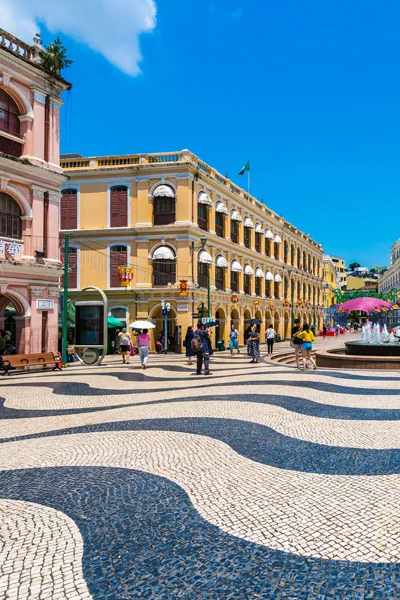
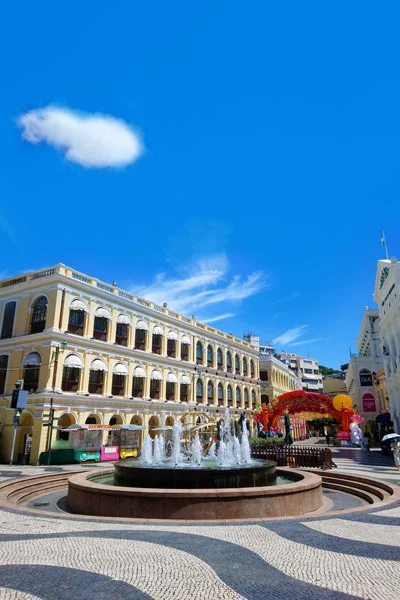
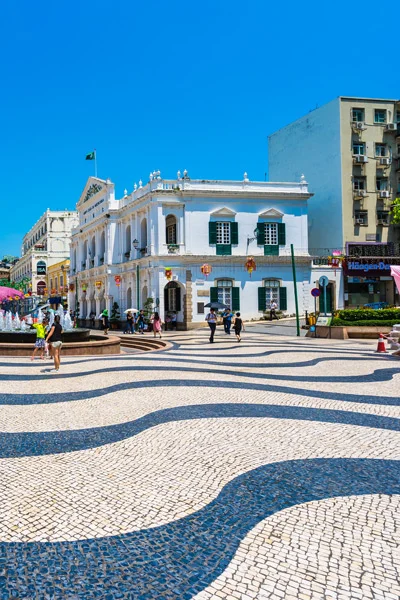
Today, the all-mosaic square remains the heart of the historic city centre, as it has for centuries. Still a vibrant public space, it is the site of regular festivals, markets and events. Macao’s Chinese New Year parade, with its spectacular lion and dragon dances, passes through here, and past historical buildings that date back to the 15th century. So does the annual Procession of the Passion of Our Lord, the God Jesus, a Macao Intangible Heritage experience. Some evenings there are live jazz performances, as locals and tourists alike gather around the plaza’s outdoor cafes at dusk.
Putting its own spin on gastronomy
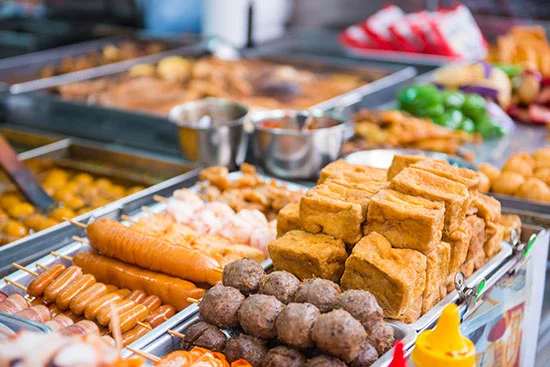
Macao’s rich cultural heritage is firmly interlaced with the city’s vibrant culinary offerings. As thoughts turn to dinner, another avenue of cultural exploration comes into view—the city’s culinary heritage, which also has an impressive history of nearly 500 years. Macanese cuisine is often regarded as the world’s first fusion food, and this creative amalgamation of complementary eastern and western ingredients, and cooking styles earned the city a new title as a UNESCO-designated Creative City of Gastronomy.
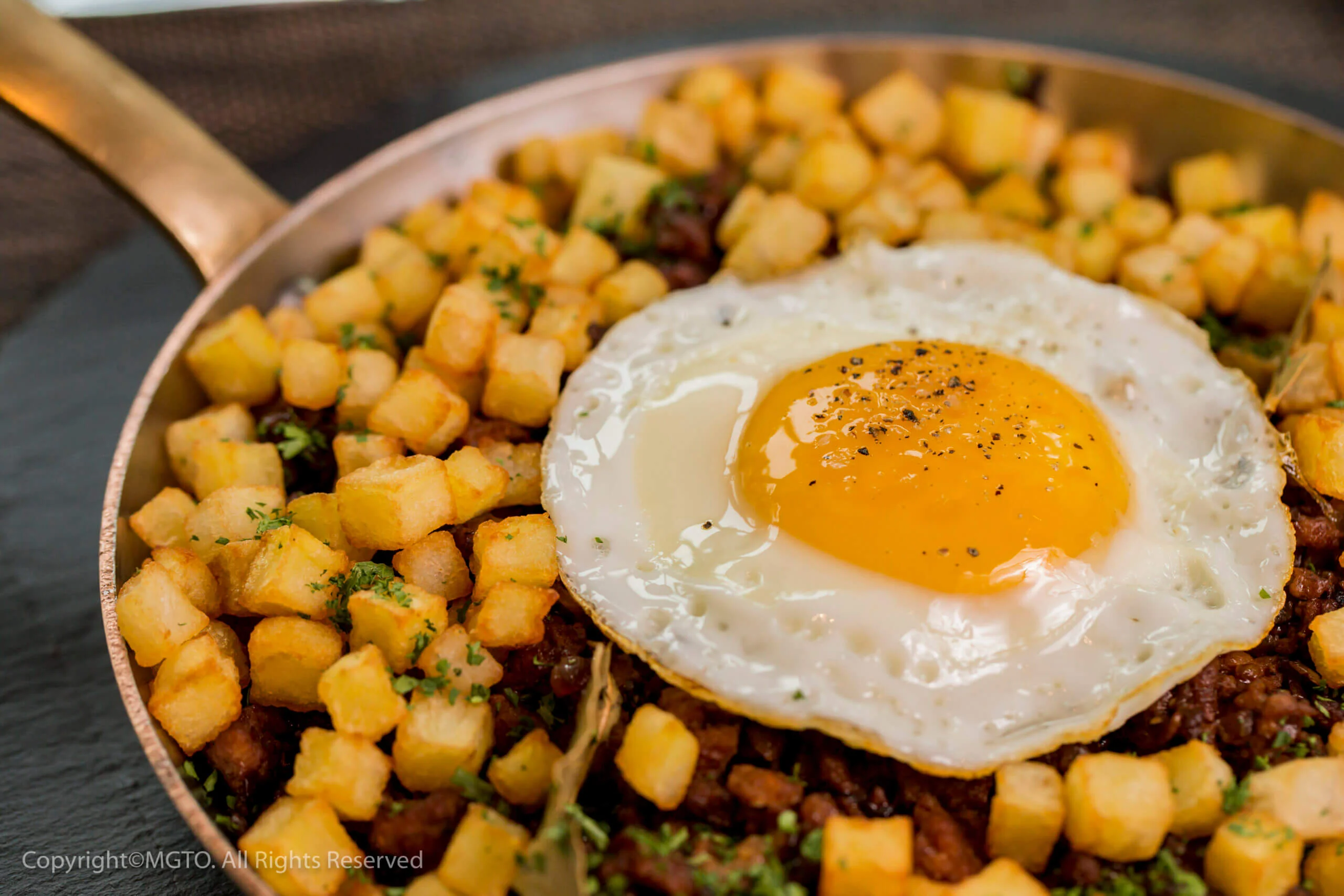
There are a multitude of ways to sample the diverse tastes of Macao, from stopping for a street-side pork chop bun, to sitting down at a restaurant to feast on arroz de mariscos—seafood rice with prawns, crab, mussels and clams.
“
”
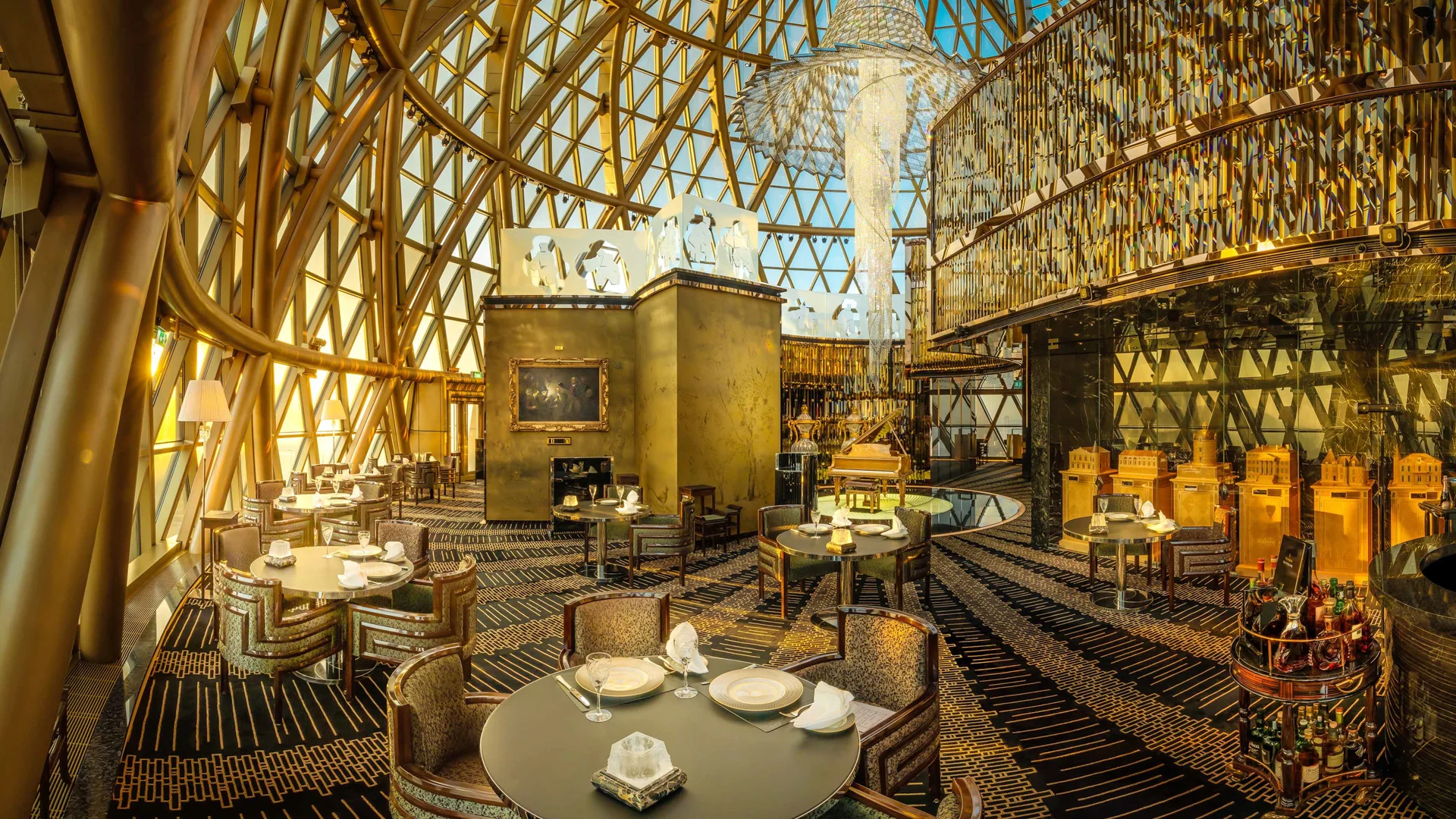
This extends to cocktail hour as well, which can be celebrated at Bar Patuá, a sophisticated lounge named for the colonial-era Macanese patois—Portuguese amalgamated with Cantonese, Sinhala and Malay. It’s located inside the MGM Cotai, where a talented team of mixologists busy themselves with developing novel tastes for a new era, blending ingredients such as baijiu from Macao, Chinese pei pa koa (loquat syrup), and aged port from Portugal.
A city of complementary contrasts
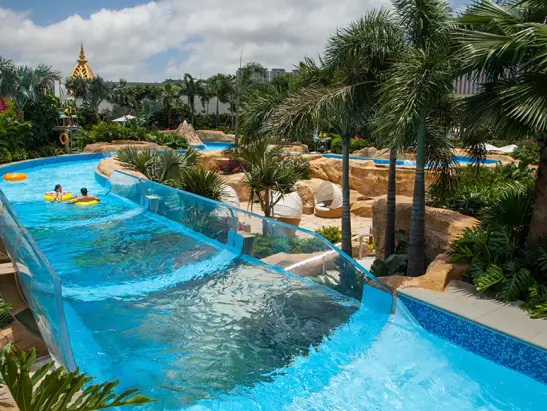
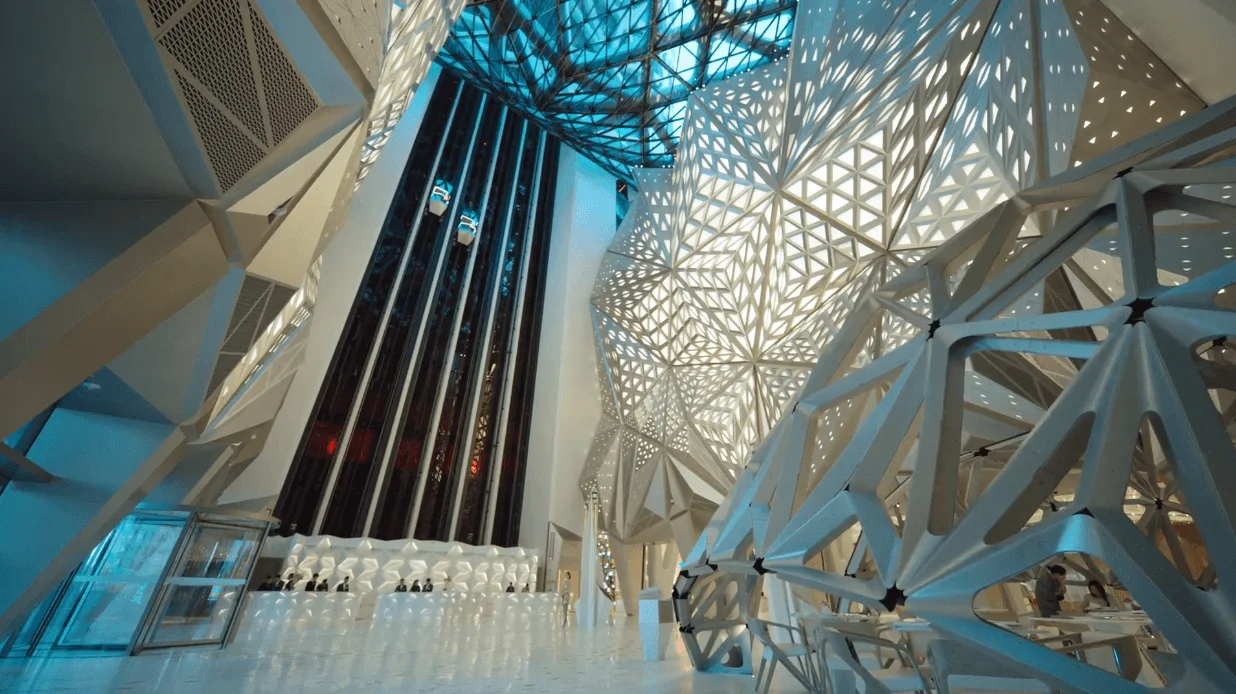
These glitzy, award-winning integrated resorts have
long been the driving force behind Macao’s booming
tourism economy—and will deservedly remain so. But at
the same time, the city has grown beyond its outdated
moniker and is now also known for its own hallmarks,
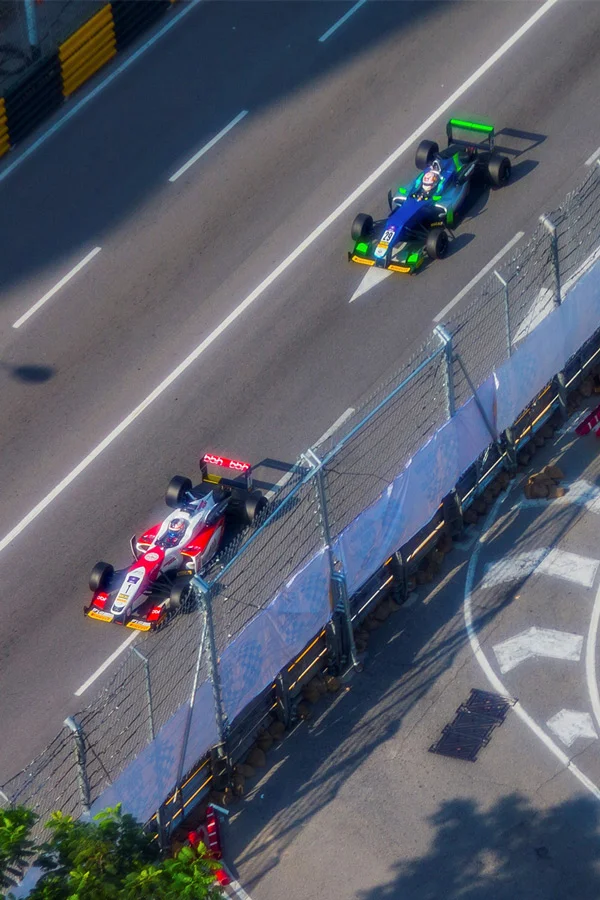
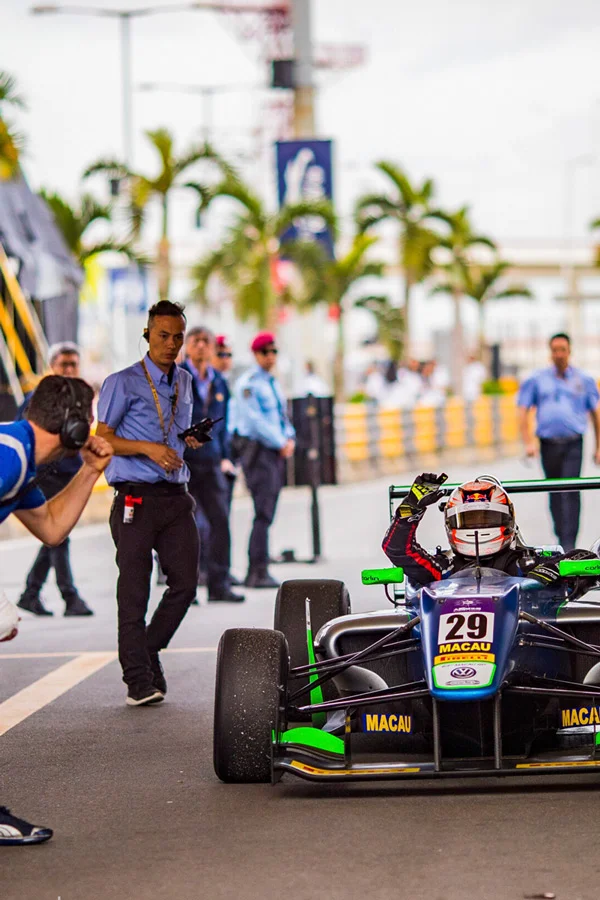
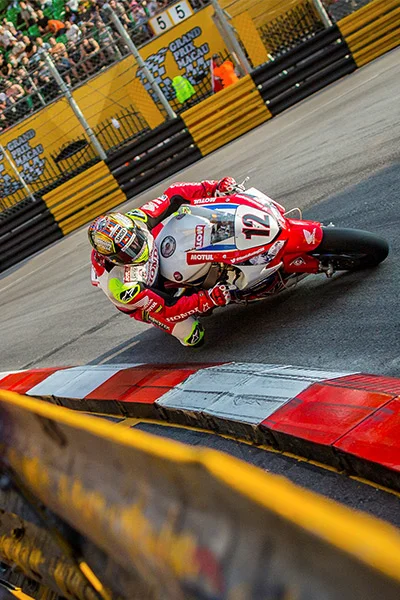
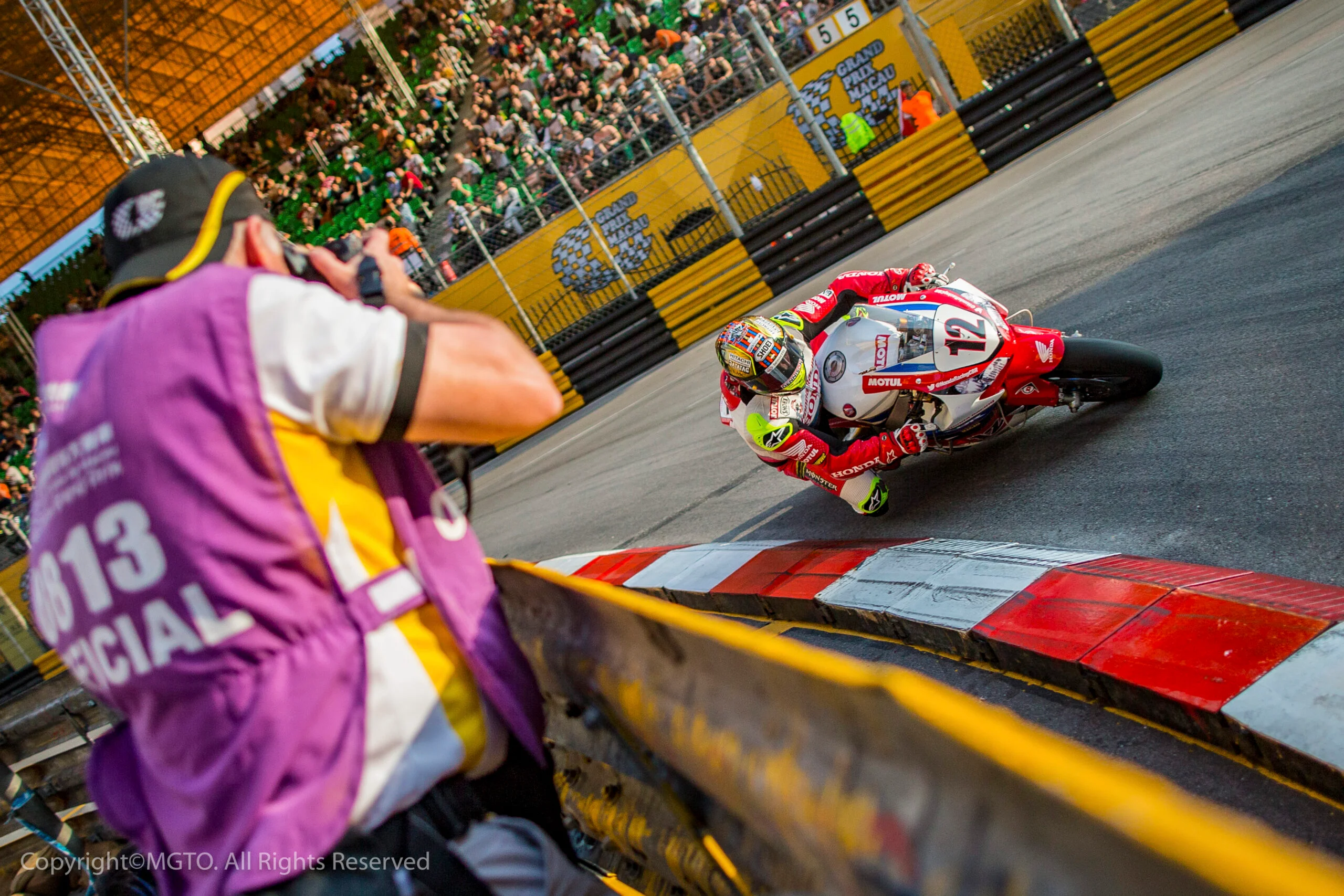
like the annual Macau Grand Prix, one of the
longest-running motorsport events that brings plenty
of high-speed thrills and spills onto the
history-laden streets.
As Macao comes more
fully into its own, visitors are in for an all-around
treat. Here, surrounded at every turn by an
appreciation of the old and a celebration of the new,
one can experience the best of both worlds, and take a
treasured glimpse into the past, present and future of
Macao. These are exciting times to be in the city, to
be able to journey through past times,
and beyond.