
Empowering workers: tackling areas where benefits fall short
Download infographicEmployers in the US manufacturing sector spend $260 billion on benefits—an immensely valuable investment for workers, employers and the broader economy. But while there are many positives for the sector, our survey reveals some crucial gaps across health insurance, retirement, and family planning and care benefits.
These insights are based on an Economist Impact survey of US workers, national benefits data and an economic model. Our survey included 1,500 full-time workers across medium to large companies, including 500 in the manufacturing sector.
Top three gaps in benefit provision
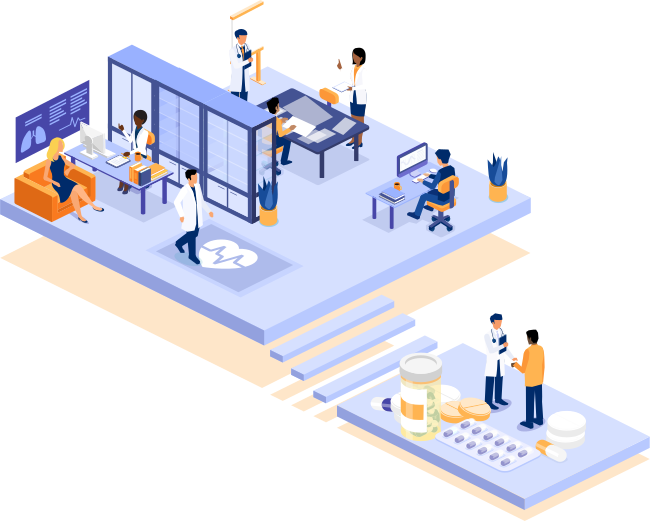
Health insurance
This rises to 64% among those from American Indian, Alaska Native, Hawaiian, Pacific Islander or mixed race backgrounds.
Although manufacturing companies spend $106 billion on health insurance, workers shoulder another $54 billion in health costs. For many, this is a heavy burden.
say their premiums, deductibles, and copayments for health insurance are very expensive
manufacturing workers say they need to buy supplemental insurance to cover their needs
are not confident they can afford the healthcare their family needs
Together, these challenges reduce access to vital health services, exacerbating health outcomes, especially for minorities and older workers.
Retirement
Overall, manufacturing workers ranked retirement plans as their most important benefit—especially older workers. However, younger workers remain pessimistic.
Those satisfied with their retirement plans
Gen Z
Gen X
Those confident they will be able to retire on time
Gen Z
Gen X
Those able to diversify their retirement savings through self-directed investment options
Gen Z
Gen X
Those who say they have enough clarity about how much income they will receive in retirement
Gen Z
Gen X
of manufacturing workers say they lack access to a pension plan but would use one if offered.
This rises to
36%among Gen Z.

Many are delaying retirement planning in favor of other financial priorities.

However, manufacturing companies are trying to help younger workers save. For instance, Gen Z is nearly twice as likely to have access to automatic employer contributions.

Family planning and care
Access to family planning, caregiving and parental leave benefits is in short supply, but these are a top priority for parents and mid-career professionals.
of parents say they or their partner have been able to stay in their job due to these benefits.
as many upper managers rank family planning and care as their most important benefits compared with other respondents.

People of color and low-income households disproportionately lack access to childcare subsidies and high-quality childcare.

Black women face large disparities in maternal health outcomes, but these improve among those with insurance coverage for birthing centers or community care centers with diverse care teams.
Our next infographic explores three areas where benefits can be improved in the manufacturing sector.
Read moreOur next infographic explores three areas where benefits can be improved in the manufacturing sector.
Read moreIn our next article, we explore how manufacturing companies can use benefits more effectively to promote growth and resilience for their organization.
Read moreTo elevate the impact of their benefits, companies need a holistic strategy to guide decision-making. Learn more about how manufacturing employers can set themselves up for success.
Read more

Empowering workers in a changing retirement landscape
What has propelled the shift away from traditional pension plans, and how can employers still support their workers’ retirement goals?
Read more
The benefits of lifetime income
How can lifetime income ease workers’ anxieties over retirement savings–and give employers an edge?
Read moreDisclosure statement:
Nuveen and Economist Impact, or any of their affiliates or subsidiaries are not affiliated with or in any way related to each other. The research was independently developed by Economist Impact and is sponsored by Nuveen, LLC. The views and opinions expressed in this publication are those of Economist Impact and do not necessarily reflect the view and policies of Nuveen, LLC.
This material, along with the views and opinions expressed within, are for informational and educational purposes only as of the date of production/writing and may change without notice at any time based on numerous factors, such as market, economic or other conditions, legal and regulatory developments, additional risks and uncertainties and may not come to pass.
All information has been obtained from sources believed to be reliable, but its accuracy is not guaranteed. There is no representation or warranty (express or implied) as to the current accuracy, reliability or completeness of, nor liability for, decisions based on such information, and it should not be relied on as such.
Nuveen, LLC provides investment solutions through its investment specialists.
QAR-3325909CG-E1223W