
Empowering workers in a changing retirement landscape
What has propelled the shift away from traditional pension plans, and how can employers still support their workers’ retirement goals?Download articleA comfortable retirement has long been part of the American Dream. After years of hard work, employees want to slow down and need to count on the stability of their retirement savings to get them through the rest of their lives. Pensions, also known as defined benefit plans, once provided that stability, and workers could retire with confidence, knowing they would receive a guaranteed paycheck for life in retirement.

Nowadays, this dream can be much harder to achieve. More than half of US workers think they are lagging behind on saving for their retirement.1 Only 12% of private-sector workers can count on a pension in retirement.2 That’s because many workplaces have shifted towards defined contribution plans, such as 401(k)s. These types of plans can reduce the risk and cost to employers but often leave employees feeling vulnerable and concerned that their savings will not be enough to last throughout their retirement.
This is causing a crisis, warns Brendan McCarthy, head of retirement investing at Nuveen.
Societal shifts and legislation
Pensions have long been part of American lives, with some plans dating back to the Revolutionary War.3 They provided a guaranteed amount of continual income throughout retirement. But things started to change when Congress passed the Revenue Act of 1978, which included Section 401(k), giving high-earning workers a tax-beneficial option to defer compensation from bonuses and stock options.4 In 1981, the Internal Revenue Service (IRS) expanded use of the 401(k) to allow contributions from workers’ paychecks.5
What’s more, legislative reform, such as the 1974 Employee Retirement Income Security Act (ERISA) and the 2006 Pension Protection Act (PPA), sought to protect employees by holding employers more accountable for the health of their pension plans.6 The PPA, for instance, required employers who were guilty of underfunding their pension plans to pay higher premiums.7 Given the more onerous legislative requirements, corporations sought alternative offerings to pensions. Soon, the 401(k) became many corporate employers’ plan of choice, as they opted to sunset their companies’ defined benefit plans. Workers have had to assume more of the cost and risk relating to how their contributions were being invested, an added responsibility that not all workers are prepared to handle.
The rise of the 401(k) generation came just as other societal shifts impacted the workplace: macroeconomic factors, demographic changes and an increase in education levels, with more women entering the workforce.8 The pandemic also redefined where and how many workers do their jobs and saw others working through supply-chain disruptions. Unionization is growing across several industries, and many workers have higher expectations for their benefits.9
“Benefits need to adapt to reflect this more modern workforce we are in today,” Mr McCarthy explains. “We need solutions that solve the problems facing many industries, without adding complexity.”
“Benefits need to adapt to reflect this more modern workforce we are in today. We need solutions that solve the problems facing many industries, without adding complexity.”
The impact on manufacturing workers
The shift away from pension plans has been especially strongly felt by the manufacturing sector, which is among the top five employers in the United States.10
Many manufacturing workers want those pension benefits back, as seen in the case of the automotive industry during the recent United Auto Workers (UAW) union strike. UAW reached a tentative deal with the Big Three automakers, but failed to bring back pensions for younger workers.11
Indeed, pensions today are a legacy business. Pension plans at the aerospace and security company Lockheed Martin, for example, were frozen and closed between 2016 and 2020. Employees are instead automatically opted into a 401(k) plan, in which Lockheed Martin matches an employee's 401(k) contributions up to a certain percentage of salary.
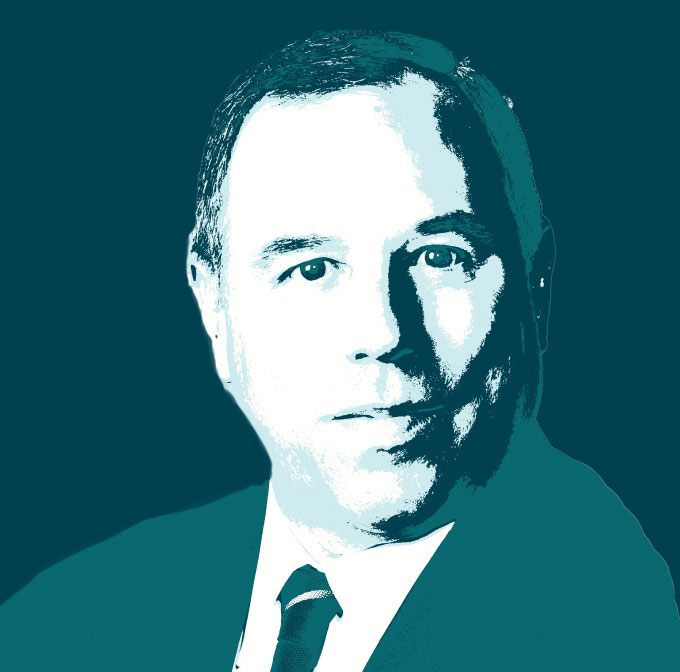
“We’re making sure that employees don’t get lost in this more self-serve world of the 401(k) plan. We stay connected with our population and make sure we’re offering really thoughtful solutions to achieve their retirement goals, and we’re here to partner with them throughout that entire journey.”
“Our goal is making sure that employees understand and maximize the value of the match,” says Paul Colonna, president and chief investment officer for Lockheed Martin Investment Management. “We have a large portion of our workforce close to or maximizing their matching benefits. We’re making sure that employees don’t get lost in this more self-serve world of the 401(k) plan. We stay connected with our population and make sure we’re offering really thoughtful solutions to achieve their retirement goals, and we’re here to partner with them throughout that entire journey.”
Introducing lifetime income
One potentially helpful feature amid the changing retirement landscape is “lifetime income,” offered by fixed annuities that companies can use to provide workers with a guaranteed paycheck for life. These products can be embedded into existing retirement plans, such as 401(k)s, to keep the portability and accumulation benefits that people like about those plans while also providing a guaranteed income stream in retirement.
Making solutions such as lifetime income more mainstream will require partnership among the retirement sector, the government and industries such as manufacturing. The ultimate goal should be to bring back the promise of the American Dream, which includes a stable, comfortable retirement for a lifetime of work.
Disclosure statement:
Nuveen and EI Studios, or any of their affiliates or subsidiaries are not affiliated with or in any way related to each other.
This material, along with the views and opinions expressed within, are for informational and educational purposes only as of the date of production/writing and may change without notice at any time based on numerous factors, such as market, economic or other conditions, legal and regulatory developments, additional risks and uncertainties and may not come to pass.
All information has been obtained from sources believed to be reliable, but its accuracy is not guaranteed. There is no representation or warranty (express or implied) as to the current accuracy, reliability or completeness of, nor liability for, decisions based on such information, and it should not be relied on as such.
Any guarantees are backed by the claims-paying ability of the issuing company.
Paycheck is the annuity income received in retirement. Guarantees of fixed monthly payments are only associated with fixed annuities.
Nuveen, LLC provides investment solutions through its investment specialists.
GAR-3290336PG-E1223W

Benefits 2.0 infographic
Learn more about how employers can optimize benefits to better meet workers’ needs, gain a competitive advantage and drive socioeconomic growth.
Explore now