
Reasons for nontraditional retirement
Although many workers may feel unprepared to retire or work in fields that make it harder to plan ahead, options like lifetime income can help level the playing field.Download articleFor most Americans, the road to retirement is not linear. But as many are finding out these days, neither is retirement itself.
There are early retirements, workers who worry they can never retire, and those who may be the first in their family to have a chance at a secure retirement. Then there are those who retired during the tumultuous years of the covid-19 pandemic, and are now dipping their toes back into corporate life.
Until the pandemic, the number of US retirements roughly tracked those predicted by the Census Bureau, but increased considerably for much of 2022. As of April 2023, there were an estimated 2.4m “excess retirees” in the US.1 However, an estimated 20% of these retirees have since “unretired” and rejoined the workforce. While their reasons for doing so are varied, roughly half cite financial hardship due to inflation or fears of outliving their finances.2
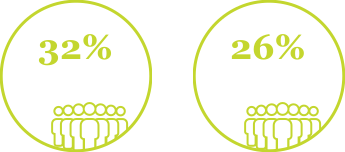
The percentage of employees planning to work at least part-time in retirement rose to:
This pressure on personal budgets is also weighing heavily on the minds of younger members of the workforce. The percentage of employees planning to work at least part-time in retirement rose to 32% in 2024, up from 26% in 2022.3
Monetary pressures of recent years are creating wider gaps across economic and racial lines. Disparities between low-income and high-income retirement accounts in the households of older workers (those aged 51 to 64) were greater in 2019 than in 2007.4 And black workers aged 51 to 64 are the least likely among all racial and ethnic groups to have a retirement account. 5
Bridging these divides is no easy task, but technological upgrades to traditional financial services products can be part of the solution. “With any defined contribution plan in any industry, automation is the most important feature,” says Brendan McCarthy, head of retirement investing at Nuveen. “Employees can always opt out, but auto-enroll and auto-escalation are crucial to the success of a retirement plan.”

“With any defined contribution plan in any industry, automation is the most important feature. Employees can always opt out, but auto-enroll and auto-escalation are crucial to the success of a retirement plan.”
The sobering realities of today’s retirement planning, while taxing for many Americans, are even more pronounced among those in fields such as sports, media or entertainment where a career may be shortened by physical demands or elongated for creative expression. For instance, the physical toll for, say, athletes, stunt performers and dancers can impact their ability to continue working in their field. There were around 200 serious accidents on US television and movie sets between 1990 and 2014, including at least 43 fatalities.6 Meanwhile, writers or other creatives may want to continue working past the normal retirement age.
“It is really important to our members that they continue to be involved in creative expression,” says Duncan Crabtree-Ireland, national executive director and chief negotiator for Screen Actors Guild-American Federation of Television and Radio Artists (SAG-AFTRA), the union representing some 160,000 media professionals. “But the countervailing force is that the amount of jobs that are available for older workers in the entertainment industry is not great. As performers get older, opportunities become less, and that’s particularly true for women.”
Add to that the fact that entertainment employees can potentially work for dozens of different employers in the course of a year, making them ineligible for a company’s benefits program. That’s why unions like SAG-AFTRA form multi-employer pension plans, so no matter where employees work, contributions get paid into those plans. Most entertainment unions provide their members with a defined benefit plan—something much of private industry has replaced with defined contribution plans that shift the burden and decision-making of investments from employer to employee.
“I understand the appeal to corporate America of defined contribution plans, but most workers don't have the time or expertise to manage a portfolio of investments”
Add to that the fact that entertainment employees can potentially work for dozens of different employers in the course of a year, making them ineligible for a company’s benefits program. That’s why unions like SAG-AFTRA form multi-employer pension plans, so no matter where employees work, contributions get paid into those plans. Most entertainment unions provide their members with a defined benefit plan—something much of private industry has replaced with defined contribution plans that shift the burden and decision-making of investments from employer to employee.
“I understand the appeal to corporate America of defined contribution plans, but most workers don't have the time or expertise to manage a portfolio of investments,” Mr Crabtree-Ireland says. “We’re constantly looking at the financial health of the pension plan, determining what amount of additional contributions it might need in order to provide either stability in the plan or to provide additional benefits.”
Mr McCarthy adds that portability, or the ability to carry accrued benefits between roles, is especially important for workers in fields such as entertainment and sports. Portability is often a key feature in “lifetime income” products, fixed annuities that companies can use to provide workers with a guaranteed paycheck for life.
When looking at a nontraditional workforce, such as within sports and media, the different employee characteristics can impact the ability of companies to communicate benefits effectively. This makes it even more critical to automate. Relying on that infrastructure is especially important for smaller, contract-employment oriented firms.”
Given the unknown about how long a person’s career may last in the sports, media and entertainment sectors, it’s also more important than ever for workers in those industries to educate themselves and start retirement planning as soon as possible. Financial services companies such as Morgan Stanley and Wells Fargo even have global sports entertainment divisions that cater to this aspect.
Much attention is given to the idea of constructing a long runway to build the retirement nest-egg. But flexibility and portability of retirement funds is just as important, especially in industries where workers move jobs frequently. “When looking at a nontraditional workforce, such as within sports and media, the different employee characteristics can impact the ability of companies to communicate benefits effectively,” Mr McCarthy says. “This makes it even more critical to automate. Relying on that infrastructure is especially important for smaller, contract-employment oriented firms.”
In industries where job-hopping and contractual work are prominent, the portability and ease of management of a retirement portfolio is key.
Disclosure statement:
Nuveen and EI Studios or any of their affiliates or subsidiaries are not affiliated with or in any way related to each other.
This material, along with the views and opinions expressed within, are for informational and educational purposes only as of the date of production/writing and may change without notice at any time based on numerous factors, such as market, economic or other conditions, legal and regulatory developments, additional risks and uncertainties and may not come to pass. All information has been obtained from sources believed to be reliable. There is no representation or warranty (express or implied) as to the current accuracy, reliability or completeness of, nor liability for, decisions based on such information, and it should not be relied on as such.
Any guarantees are backed by the claims-paying ability of the issuing company.
Paycheck is the annuity income received in retirement. Guarantees of fixed monthly payments are only associated with fixed annuities.
Nuveen, LLC provides investment solutions through its investment specialists.
QAR-3512045CG-E0424W

Benefits 2.0 infographic
Learn more about how employers can optimize benefits to better meet workers’ needs, gain a competitive advantage and drive socioeconomic growth.
Explore now