
Self-assessment
Turn crisis response into business resilience
Assess how your organisation engages with societal crises and find the next practical step
When a crisis disrupts the communities where a company operates, it also disrupts its workers, suppliers, customers and infrastructure. Businesses recover only as quickly as the communities around them. Companies that stay engaged through recovery are therefore better placed to protect their operations, maintain trust among workers and customers and preserve their licence to operate.


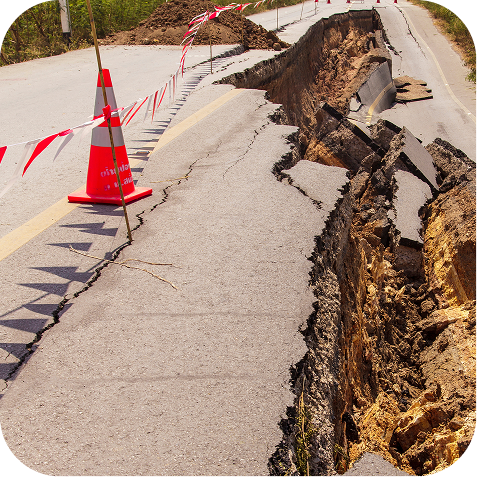

Most companies can respond to a crisis. Far fewer have the systems to sustain their support, learn from experience and prepare for the next shock. Our research across Asia found that engagement is strongest during an emergency but falls quickly afterwards. Fewer than a quarter of organisations remain involved in long-term recovery and efforts to build resilience. The problem is rarely a lack of intent. It is a lack of systems.
That is why we developed this self-assessment. Drawing on our research across Asia, it helps businesses assess the systems they have in place, identify gaps and decide what to strengthen. The aim is to prepare before a crisis rather than improvise during one, protecting both the business and the communities around it.
What the self-assessment covers
The self-assessment brings together three elements:
Five approaches to crisis engagement, from absent to adaptive, showing how organisations engage before, during and after a crisis
Organisational systems that sustain engagement: governance, capabilities, partnerships, funding, and data and learning
Key transitions that show how organisations can improve each system, one step at a time
Few organisations develop all their systems at the same pace. The framework therefore assesses each system separately rather than assigning an overall score. This makes gaps easier to see and the next step clearer.
How to use the self-assessment
Assess where your organisation stands.
Answer five short questions, one for each organisational system. Choose the description that best reflects your organisation today.
See where your organisation lands on the framework.
Your answers place each system at one of five levels: absent, reactive, prepared, integrated or adaptive. This shows where your organisation is strongest, where it needs to improve and how evenly its systems have developed.
Identify your next step.
The assessment shows how to move each system up one level, with examples from companies across Asia. The aim is not to reach the final level at once, but to know what to do next.
Take it further.
Download your organisation’s results and explore the research behind the framework.
How to use your results
This is a starting point for discussion and action. Use your results to take an honest look at where your organisation stands and identify what to work on next.
The framework does not prescribe a single path. The most advanced approach will not be right for every organisation. The right level depends on your company’s size, sector, resources, exposure to risk and role in society.
Ready to assess your organisation?
Answer five short questions to see where your organisation stands, identify gaps in its systems and learn what to strengthen next—and how.