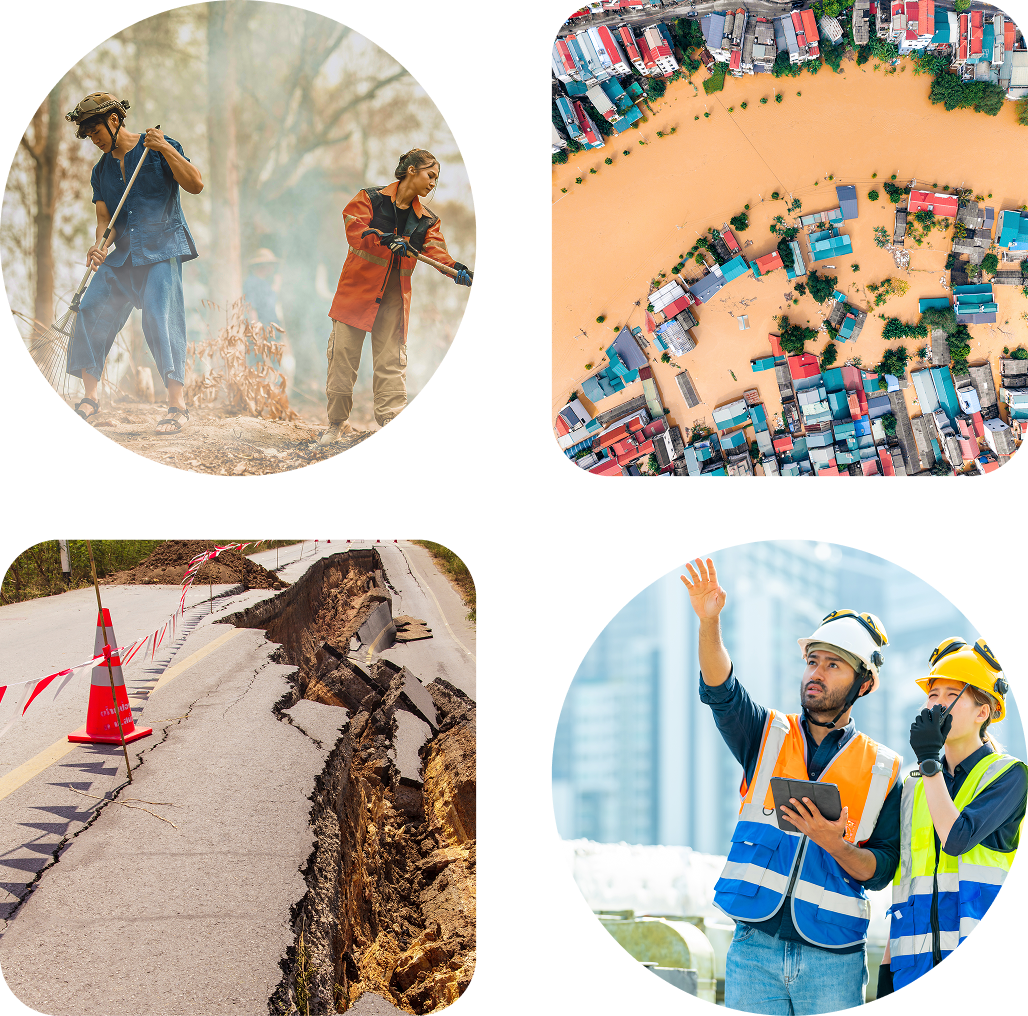
The business of doing good: should companies step in during times of crisis?

After devastating wildfires in Los Angeles in January 2025, Airbnb.org, a non-profit founded by the accommodation booking platform, worked with 211 LA, a local community organisation, to provide free emergency housing. The platform supplied places to stay; its local partner identified people who needed shelter. The arrangement gave each a clear role. Businesses’ willingness to help does not always come with such co-ordination—or incentives to stay involved once immediate relief gives way to recovery.
That gap raises a question about what societies expect from business. Companies face growing pressure from employees, consumers, investors and governments to contribute to social progress as well as make profits. Crises test those expectations. How can companies use their resources and expertise to help communities recover and prepare for future shocks?
To explore this changing role, Economist Enterprise convened a panel discussion at the Yale Club in New York on September 21st 2026, alongside the UN General Assembly. The Institute of Philanthropy, a Hong Kong-based “think-fund-do” tank, supported the event which was moderated by Kenneth Cukier, deputy executive editor of The Economist. The discussion drew on findings from the second instalment of The Business of Doing Good, a large-scale survey, conducted by Economist Enterprise, with support from the Institute of Philanthropy, of how businesses in Asia respond to crises.

Brian San, secretary-general of the Institute of Philanthropy, described the difficulty of bringing companies and community groups together to meet people’s needs during a crisis. For businesses, the task is to turn an instinct to help into an organised commitment to recovery. From skilled staff to logistics networks, often firms can offer much more than money. They also have a reason to stay involved: a company’s prospects depend on its local workers, suppliers and customers getting back on their feet.
The research suggests that willingness runs ahead of preparation. Three-quarters of the business leaders surveyed cited community impact as a leading reason to respond to crises. Yet fewer than a third of organisations have a team dedicated to crisis response. And support drops sharply as immediate relief gives way to long-term recovery. Teresa Hutson, corporate vice-president and general counsel for technology and services at Microsoft, a technology company, said she would grade companies “A” immediately after a crisis but “C” soon afterwards. “Figuring out what to do once a crisis is over is its own discipline,” said Ms Hutson.

Matching help to need
Even the first rush to help can go astray. Mohamed Yahya, the United Nation’s assistant secretary-general for humanitarian affairs and deputy emergency relief co-ordinator, described floods in Pakistan’s Punjab province as an example. Humanitarian teams assessed communities’ needs, but businesses often took no part in these discussions, deciding for themselves where to provide support. Food arrived where people needed clean water; other goods went to places already well supplied. “They’re trying to do good in an unco-ordinated way,” said Mr Yahya.
The discussion showed how involving businesses in such assessments could put their generosity to better use. The Connecting Business Initiative, run jointly by the United Nations Development Programme (UNDP) and the UN Office for the Coordination of Humanitarian Affairs, gives businesses information about local needs. Companies can then direct resources towards shortages and work out where their expertise can help.
After fires in Lahaina, Hawaii, Microsoft used satellite data to identify affected buildings and help rescuers decide where to focus their efforts, Ms Hutson explained. A precise request gives corporate specialists a clear job. It can also make it easier for a company to stay involved as communities’ needs change.

Keeping an economy working
Once the immediate danger passes, restoring ordinary commerce becomes essential. “Getting your private sector going again should be one of your first priorities,” said Alexander De Croo, administrator of UNDP. Local firms supply food and rebuild homes. Reopening puts people back to work and restores the incomes on which recovery depends.
Temporary support can help businesses restart. UNDP has temporarily paid workers’ salaries to help local entrepreneurs reopen their businesses, Mr De Croo explained. Credit guarantees can encourage commercial banks to lend again by sharing the risk. Banks still decide which investments to finance, and governments or aid organisations can withdraw support as the economy recovers.
Companies also have commercial incentives to stay involved. Microsoft benefits when local firms that buy its products and services can operate, Ms Hutson noted. Mr San argued that altruism could spur an emergency response, but businesses needed a commercial reason to remain involved: “it has to be good for the business”.
Getting your private sector going again should be one of your first priorities
Alexander De Croo, administrator, UNDP
Preparing before disaster strikes
After the panel, business leaders, policymakers and representatives from philanthropic, humanitarian and development organisations gathered in breakout sessions to discuss preparation and accountability. Participants proposed mapping likely crises and finding corporate partners months or years in advance. Companies could work out how to join existing response systems, while communities and aid agencies could spell out what help they would need.
Preparedness also needs incentives that last through quiet years. Participants pointed to research and development between pandemics. Advance market commitments, which guarantee companies future demand, could help sustain investment when no emergency is making headlines. But someone must pay for that promise. The business case for preparedness does not answer who should bear the cost.
Commercial incentives also offer no guarantee that communities will benefit. Mr De Croo warned against chasing short-term profits at the expense of development. Participants questioned whether annual funding commitments and quarterly business horizons could support work that takes years. At one breakout table, participants argued that businesses should answer to the communities they seek to help. That means involving local people in setting priorities and measuring whether the support improves their lives.
Trust, Ms Hutson said, underpins long-term business success and companies’ permission to operate. Earning it requires a plan for the months after urgent appeals end but before ordinary life resumes. Once donations slow, the test is whether children are back in school and local firms can pay their workers.

Companies can offer much more than money during a crisis. Their help works best when it meets communities’ needs and fits with existing relief efforts. Helping local firms reopen and staying involved through the recovery can strengthen communities as well as companies’ own prospects. Businesses, governments and aid organisations should build partnerships before the next crisis strikes, then judge their success by what communities gain.
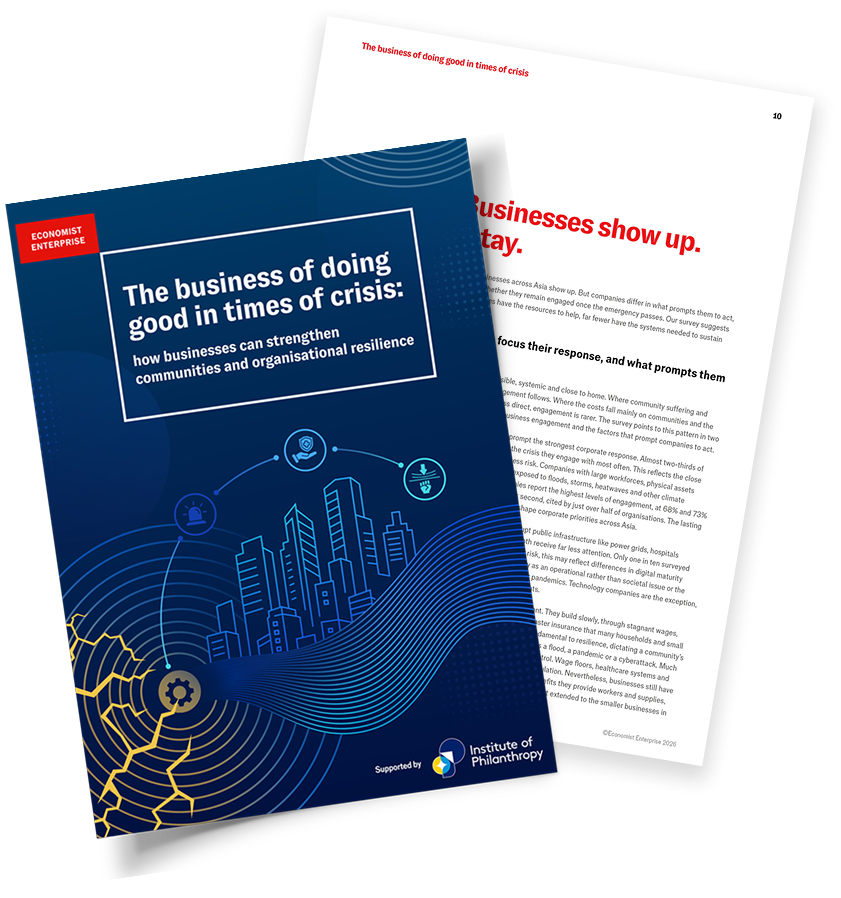
Explore findings from our survey of more than 1,600 executives across 14 Asian markets and interviews with experts. The report examines why businesses respond quickly when crises happen but rarely stay involved through recovery, what holds back longer-term commitment and how companies can build more resilient approaches to engagement throughout the crisis lifecycle.


Turn crisis response into business resilience
Assess how your organisation engages with societal crises and find the next practical step
No two companies face the same risks, resources or responsibilities. The systems they need to prepare for, respond to and recover from crises will therefore differ. This assessment helps you assess the systems your organisation already has, identify gaps and decide what to strengthen across five areas: governance, capabilities, partnerships, funding, and data and learning. You will see where your organisation sits on a crisis-engagement spectrum, how developed each system is and practical examples of what stronger engagement can look like.
The results will help you decide what to put in place first, what can wait and where your organisation can strengthen its approach. The assessment takes about five minutes to complete, and you can download your results.