

Resilient Futures
Securing prosperity by transforming our vital planetary systems
For decades, the global economy has prized efficiency over resilience, treating the environment as an endless resource. That extractive model is now buckling under the strain of climate shocks, geopolitical rivalry and continuing urbanisation.
Resilient Futures™, an initiative by Economist Enterprise, aims to equip policy and business leaders with the evidence and clear thinking they need to abandon endless crisis management in favour of systemic redesign. It examines how to build lasting prosperity across three related fronts:

The energy transition Moving the world towards cheap, reliable and zero-carbon power

Resilience and adaptation Strengthening systems to withstand the era of permanent volatility

Regenerative systems Changing incentives in the global economy to support and restore nature
Latest insights

Insights | Decarbonisation
Power in reserve
Europe’s next energy reserve may not sit in warehouses. Some of it will lie in strategic spares, some in stockpiled materials and some in the grid itself, where ageing assets can be upgraded, reused or mined for what they contain.

The risks and rewards of water
Water is both a vital industrial input and an increasingly uncertain one. Companies that treat it as a strategic resource will be better equipped to respond.

The elusive price of resilience
Climate adaptation often pays by preventing losses rather than generating revenues. Financial institutions are learning to measure those benefits. Rewarding them is proving harder.

The world's coral reefs are running out of time
This summer’s record-breaking wildfires have made the consequences of climate change impossible to ignore.

The cost of misvaluing water
With the UN Water Conference around the corner, governments, consumers and investors need a frank discussion about the real value of water, writes Matus Samel, lead of the Resilient Futures initiative.

“We need to decouple economies from water,” says water-bankruptcy expert Professor Kaveh Madani
Iranian scientist and director of the United Nations University Institute for Water, Environment and Health was named the 2026 Stockholm Water Prize laureate for his pioneering work on the concept of water bankruptcy.
Key research
Start of carousel.

Supported by Blancpain
Beyond the Surface
Explore the world of marine protection
Resilience is not just an environmental goal; it is a socio-economic imperative. The old model viewed conservation as a cost, but the new reality demands we see it as an investment in systemic security. Effective Marine Protected Areas do more than save fish; they secure livelihoods, buffer coastlines from disaster, and regenerate the natural assets on which the global economy depends.
Beyond the Surface provides the blueprint for this regenerative economy. By evaluating the social and economic outcomes of marine protection—not just the biological ones—this initiative demonstrates the high returns of investing in genuine resilience. It challenges leaders to look past the surface-level metrics and commit to the deep, structural work required to build a prosperous future that works with, rather than against, our ocean systems.

Supported by Sarawak Energy
Switching on ASEAN: Accelerating cross-border energy connectivity
The old energy model—centralised, fossil-based, and nationalistic—is no longer fit for purpose in a region driving the digital economy. As ASEAN becomes a global hub for tech firms and manufacturing, the demand for affordable, clean power is outpacing the capacity of legacy infrastructure. The result is a systemic bottleneck that threatens to stall growth and derail climate goals.
This programme investigates the systemic redesign required to break this deadlock. Cross-border renewable energy trade and cooperation in ASEAN analyses the friction points slowing progress, from patchy regulations to subsidy distortions. By identifying the financing models and policy frameworks needed to scale renewable trade, the research offers a strategy for building a dynamic, resilient regional grid capable of powering the next generation of economic growth.

Supported by JLL
Radical retrofit: adapting cities for a resilient future
True resilience requires more than just preparing for the next crisis; it demands that we rebuild the very architecture of our growth. As cities face mounting climate pressures and resource constraints, we cannot simply build our way to security—we must evolve what already exists.
Economist Enterprise, supported by JLL, presents a new analysis on the critical role of retrofitting in this systemic shift. By reimagining our current building stock, cities can transform potential vulnerabilities into foundations for long-term prosperity. Drawing on insights from senior leaders across 12 global hubs, this programme charts a practical five-year roadmap to upgrade our urban infrastructure, ensuring it is not only productive and efficient but capable of enduring the challenges of the coming decades.

Supported by Kraken
Empowering energy consumers
The stability of our global energy systems is being tested not just by supply shocks, but by a radical transformation in demand. As renewable technology becomes accessible to the masses, the unpredictability of consumer behavior becomes a systemic risk—or a powerful asset—for energy security.
To ensure our future energy systems are built on solid ground, we must understand the people powering them. The Energy Empowerment Barometer offers a critical diagnostic of this new landscape. By analyzing attitudes, costs, and technology adoption among 10,000 consumers in 10 countries, this research creates a comparative framework for the future. It equips leaders to move beyond reactive service models and design responsive strategies that secure long-term engagement.

Supported by Iberdrola
The business of electrification
A resilient future cannot be built on intent alone; it requires the physical infrastructure and human capital to sustain it. While the demand for clean power is surging—driven by data centres, EVs, and industrial shifts—our capacity to deliver it is being tested.
This research delves into the "hard wiring" of the energy transition. It exposes the critical bottlenecks threatening to stall progress: from three-year interconnection queues for the grid to acute shortages of skilled electricians and engineers. Based on insights from leaders in major markets like China, the US, and Europe, the report outlines what is needed to move from a state of gridlock to one of flow—proving that the true test of electrification is not just generating power, but successfully deploying it.

Supported by Zurich
Resilience from the ground up: assessing city-level approaches to climate risk and adaptation
True resilience cannot be imposed from the top down; it must be built on a foundation of public trust and community engagement. As climate shocks intensify, the social contract between cities and their residents is being tested, revealing a dangerous gap between official plans and public perception.
In this global assessment, Economist Enterprise, supported by Zurich Insurance Group, surveys 5,000 residents across ten major cities—from New York to Jakarta—to gauge the human reality of climate risk. The findings expose a stark vulnerability: four in five residents believe their city is underprepared for the threats ahead, particularly regarding water scarcity and extreme heat. By identifying the specific barriers preventing individuals from taking action—ranging from cost to a lack of trust in government—this report offers a blueprint for repairing the social fabric essential for enduring urban security.

Supported by UNICEF
Powering Progress: measuring the benefits of investing in energy resilience for healthcare, education and water
The transition to a resilient future requires closing the critical gap between public resources and systemic needs. In developing economies, the fragility of energy systems threatens to unravel progress in healthcare, education, and water access—vital foundations for stability and growth.
This report offers a rigorous cost-benefit analysis of closing this resilience gap. It demonstrates that every dollar invested in resilient energy infrastructure for social sectors can yield returns of up to $3. By mapping the economic and social dividends of moving from unreliable grids to secure, decentralized renewable systems, Powering Progress charts a clear pathway for private and public capital. It argues that securing these vital systems is not a cost to be borne, but a high-yield strategy for safeguarding prosperity within planetary limits.

Supported by Back to Blue: An initiative of Economist Enterprise and The Nippon Foundation
Peak Plastics: bending the consumption curve
For decades, we have relied on a "take-make-waste" model that treats the ocean as an infinite sink. This model is no longer fit for purpose. The cascading failure of voluntary agreements and patchwork recycling schemes has left our vital marine systems exposed to an escalating crisis that threatens biodiversity, food security, and human health.
This diagnostic report moves beyond the promise of recycling to expose the hard truth of consumption. Peak Plastics reveals that current policy proposals—even when aggressively implemented—are failing to secure a turning point. With consumption set to nearly double by 2050 under the status quo, the report argues that true resilience demands more than just managing waste; it requires a radical redesign of the upstream economy. We must move from crisis management to a proactive strategy that actively reduces the flow of virgin materials into our societies.

Supported by Grundfos
Water Access Impact Tool
Securing a prosperous future requires closing the investment gap in our most vital systems. Yet, for too long, the economic case for water infrastructure has been obscured by a lack of credible data, leaving essential projects unfunded and communities fragile. To move from uncertainty to security, investors need more than narrative—they need proof of return.
The Water Access Impact Tool, developed by Economist Enterprise and supported by Grundfos, provides this essential evidence base. By quantifying the specific social and economic dividends of water investments—from productivity gains to health outcomes—this pre-investment resource transforms water from a passive utility into a dynamic driver of resilience. It empowers decision-makers to direct capital where it will deliver the highest systemic impact, ensuring that the financial foundations of our future are as robust as the physical ones.
End of carousel.
Strengthening ocean resilience
Ocean health underpins livelihoods, climate resilience and economic stability. Economist Enterprise examines the science, policy and finance needed to protect biodiversity, scale sustainable blue economies and translate global commitments into tangible, equitable outcomes.

The rising tide of marine protected areas
An assessment framework that identifies the factors contributing to the effectiveness of MPAs and other marine conservation areas

From sustainability to security: the Iran war marks a hard shift in transition drivers
The closure of the Strait of Hormuz is an opportunity to accelerate investment in energy diversification, say experts, as they spotlight the cost to seafarers

Advancing sustainable maritime economy: Ocean Changemakers Challenge crowns 2026 winners!
From data-driven transparency to the restoration of "living" infrastructure, these entries demonstrate that human ingenuity can indeed be harnessed to mend what we have spent centuries breaking.

Financing SIDS’ blue development
Despite sharing common vulnerabilities and development aspirations, SIDS are not monolithic; significant regional distinctions exist, particularly in terms of historical cohesion, institutional diversity and relationship with the ocean.
Events

2nd annual Water Summit
Making water strategy a boardroom priority

Future of Food Summit
Building resilient systems for people, planet and prosperity
Watch on demand

Launching Resilient Futures: strengthening global systems for a more fragile world
Join Jonathan Birdwell, global head, policy & insights at Economist Enterprise, as he launches the initiative that aims to help leaders move from isolated fixes to integrated, system-wide resilience.


Steering committee
Start of carousel.

Amer Baig
Chief Investment Officer

Ani Dasgupta
President and CEO

María Fernanda Espinosa
Former President

Suzanne Johnson
Senior Adviser

María Mendiluce
CEO

Damilola Ogunbiyi
CEO and Special Representative
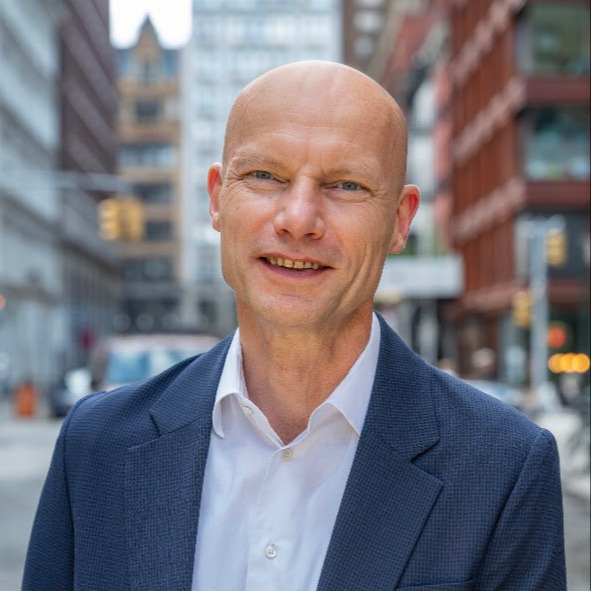
Henk Ovink
Executive Director

Avinash Persaud
Special Adviser to the President

Maimunah Mohd Sharif
Special Envoy

Lucy Yu
CEO
End of carousel.
Resilient Futures is supported by
Economist Enterprise works with organisations to advance their mission and turn ideas into action


Get in Touch
Whether you want to explore partnership opportunities with our team, share feedback, or contribute ideas to inform our strategic roadmap, we want to hear from you. Send your questions, ideas, or comments to [email protected].
Economist Enterprise Perspectives
Sign up for Economist Enterprise's weekly newsletter
Subscribe and read our latest research and analysis covering a broad range of topics and global markets at Economist Enterprise Perspectives.