
Build inclusion into the foundation of research and design. That means engaging communities as co-owners, setting standards for inclusive data, and validating models locally with diverse “edge-case” patients.

The way forward
Inception

All data is biased, all people are biased. We need to design knowing that."
Neil Sahota, CEO of ACSI Labs; United Nations (UN) AI Advisor
Once equity is built into design, the next step is bringing those models safely and effectively into real-world use.
Once equity is built into design, the next step is bringing those models safely and effectively into real-world use.
AI systems are often trained on narrow, unrepresentative datasets, while underserved patients remain excluded. Current electronic health records are fragmented and biased, raising the concern that AI could amplify existing disparities, gaps, and errors in data processes instead of closing them.
The challenge
Inception
One in three US adults delay needed healthcare due to cost, and one in five forgo filling prescriptions for the same reason.5
AI can strengthen community-based healthcare by extending relational care into trusted spaces such as community centers, schools and churches. Done well, it can enhance patient–doctor relationships and empower local youth to co-develop solutions.
The promise
Inception

Start with people, not tools.”
Leo Anthony Celi, Senior Research Scientist, Massachusetts Institute of Technology; Clinical Research Director, Laboratory of Computational Physiology
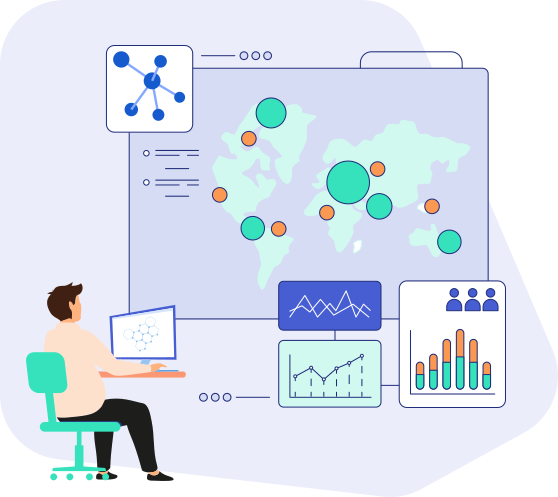
Where ideas become algorithms. The phase in which equity must be built in at the source– framing the problem, collecting data, and designing and training models–to ensure that AI is built on solid ground, with equity designed in from the beginning rather than retrofitted later.
Inception
Pillar 1

AI has blurred the traditional lines of liability and regulation hasn’t caught up. Right now, clinicians often carry the risk for decisions influenced by systems they didn’t design... having clear governance and human(s) in the loop is how we move from confusion to proper justifiable accountability.”
Smit Patel, Director and Head of AI, Digital Medicine Society; Advisory Council, Harvard Business Review
Mandate localized, equity-centered validation processes to test AI models across varied clinical and demographic environments. Develop shared liability frameworks to protect clinicians and ensure clear pathways for legal recourse within model development. Establish an independent regulatory body to oversee AI model deployment and accountability.

The way forward
Deployment
But deployment alone is not enough. AI must be shaped and trusted by the communities it serves.
But deployment alone is not enough. AI must be shaped and trusted by the communities it serves.
Clinician trust remains low, as liability for AI-driven decisions often falls on healthcare providers rather than vendors. Many tools also lack localized validation, creating risks when models trained in one context are deployed in another. In addition, clinician knowledge gaps in AI fluency, ethics, and decision-making, as well as limited explainability of how AI models reach conclusions—often due to the ‘black-box’ nature—present further practical barriers to adoption.
The challenge
Deployment

A model trained in one system doesn’t automatically translate to another. For example, Detroit’s patient population looks very different from Alabama’s, so you can’t assume the model will perform the same.”
Smit Patel, Director and Head of AI, Digital Medicine Society; Advisory Council, Harvard Business Review
AI tools can reduce administrative burdens and free up clinician time for patients.6,7 In radiology, for example, machine-assisted diagnostics already show strong performance when safeguards are in place.8,9
The promise
Deployment


As of 2025, approximately 77% of FDA- authorized AI-enabled devices focus on radiology.10
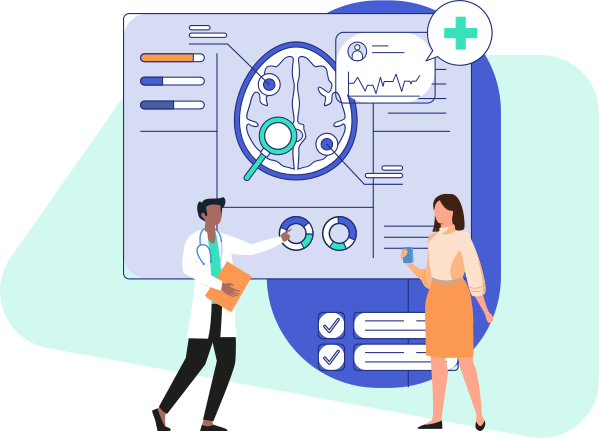
Where models meet a complex, real world. The transition from research to real-world application, focused on validating AI models in local contexts, safeguarding against bias drift, creating regulatory and liability frameworks, and ensuring AI tools actually work for the communities they aim to serve.
Deployment
Pillar 2

We’re trying to replace workflows and relationships with technology… but trust is critical and cannot be replaced.”
Leo Anthony Celi, Senior Research Scientist, Massachusetts Institute of Technology; Clinical Research Director, Laboratory of Computational Physiology
Link public and private reimbursement to equity outcomes, making it profitable for technology companies to prioritize inclusive design. Fund and formalize community engagement in governance. Establish ongoing feedback loops that enable communities to drive course correction and ensure outcomes are measured, monitored, and iteratively improved through community-informed dashboards.

The way forward
Engagement
But deployment alone is not enough. AI must be shaped and trusted by the communities it serves.
Community voices are often included only symbolically. Efforts fail when marginalized groups are present but lack influence, and when inclusion becomes a checkbox exercise without true accountability.
The challenge
Engagement

We give [communities] a seat at the table, but we order for them because [we think] we know what they want.”
Leo Anthony Celi, Senior Research Scientist, Massachusetts Institute of Technology; Clinical Research Director, Laboratory of Computational Physiology
AI can streamline processes like prior authorization and billing, reducing clinician stress and improving morale.11,12,13 Properly governed, it can align innovation with industry and community priorities for equity outcomes.
The promise
Engagement

It’s not the hospital that creates the tools—we end up buying them. Industry has to do that, and they need to be engaged in these conversations from the start.”
Lisa Prasad, Vice President and Chief Innovation Officer, Henry Ford Health
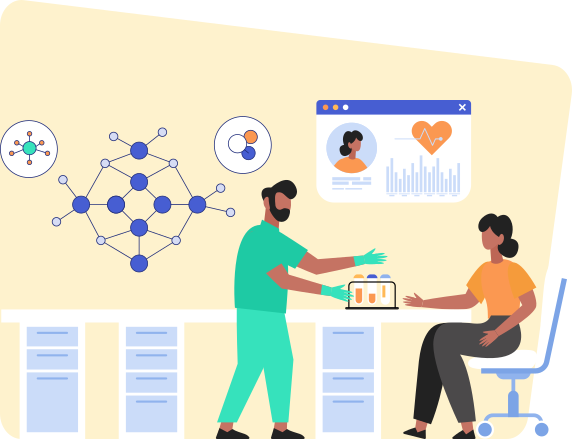
Where systems evolve through shared power. The phase where ongoing input from patients, clinicians, and communities drives governance, trust, and accountability, transforming AI from a developer-led technology into a collaborative partner that adapts to diverse needs over time
Engagement
Pillar 3

Governance without real authority is meaningless. If committees don’t have enforcement power, they’re just talking shop.”
Lia Dibello, CEO, President, and Director of Research of Workplace Technology Research Inc. (WRTI)
Establish enforceable governance and accountability standards that prioritize inclusive data and design for those at the margins who are often overlooked in data and system design. Build collaboration frameworks and regulatory sandboxes to ensure safe experimentation with equity safeguards.

The way forward
Engagement
Without equity-tied incentives, adoption risks reinforcing divides. Persistent disparities in access, digital literacy, and biased data mean that AI benefits remain unevenly distributed.
The challenge
Outcomes

Equity has to be non-negotiable. It can’t be treated as an optional add-on... it needs to be an integral part of the fabric of the ROI and the business case.”
Smit Patel, Director and Head of AI, Digital Medicine Society; Advisory Council, Harvard Business Review
AI can expand digital literacy and access, enabling patients to better self-manage conditions and engage in shared decision-making.14 When designed equitably, it can reduce disparities and generate long-term return on investment (ROI).
The promise
Outcomes


Although digital tools have become widely available, significant gaps in access and digital literacy persist, underscoring that equity in design must be a core principle from the outset rather than an afterthought.15,16
Where impact is measured, insights are learned from, and improvements are fed back into the system. The final and continuous phase that monitors real-world impacts, closes equity gaps, ties incentives to inclusive results, and informs the next cycle of research and design.

Outcomes
Pillar 4
From promise to impact: A roadmap for advancing health equity through AI
Supported by



Widespread health disparities continue to create significant barriers to equitable healthcare in the United States (US), with differences in access and outcomes driven by race, ethnicity, gender, age, income, and geography.1,2
The arrival of artificial intelligence (AI) offers the potential to transform efforts to advance health equity. Yet it also brings its own challenges, each of which could—if not managed effectively—worsen rather than reduce health disparities.3,4
Economist Enterprise, with support from EMD Serono, is leading a research initiative examining entrenched health inequities in the US and AI’s potential to transform healthcare delivery. The findings highlight both the risks of biased data and flawed algorithms—which could inadvertently deepen disparities if not managed carefully—and the urgent need for coordinated action to ensure AI advances equity through clear priorities, aligned policies, and inclusive design.
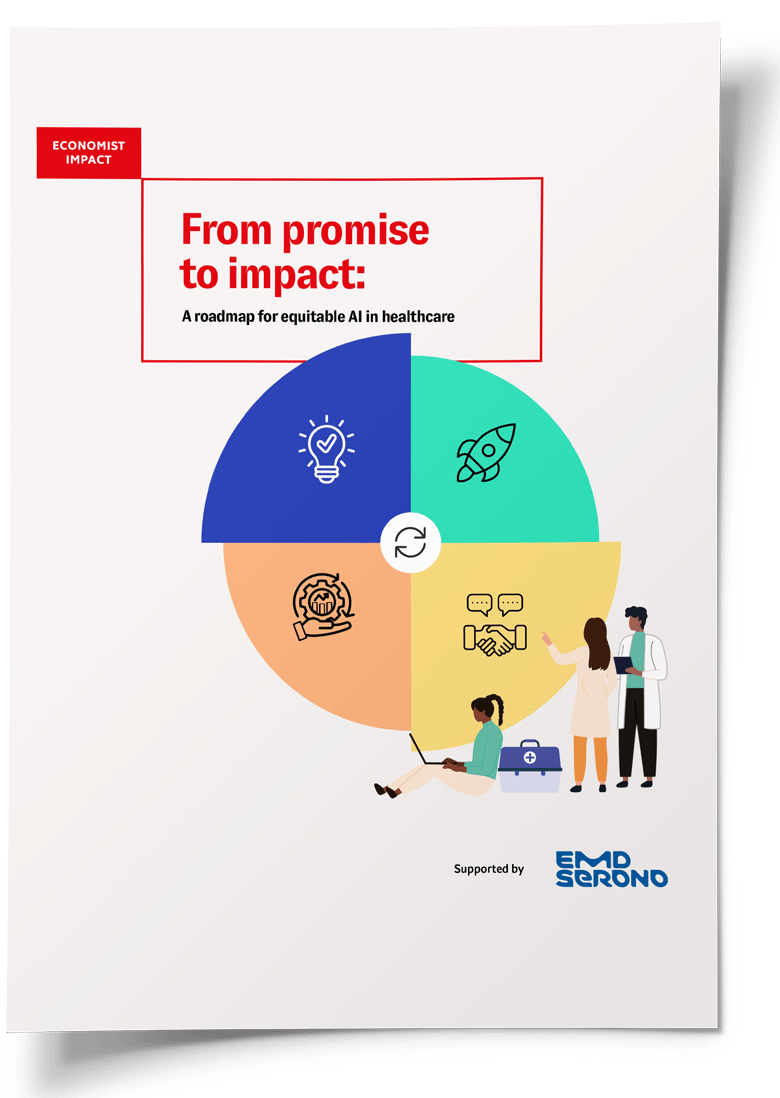
Relying on the AI life cycle as its foundation, Economist Enterprise developed the PATH (Progressing AI Towards Health Equity) Framework.

Introducing the PATH framework
The Framework ensures that AI strengthens, rather than undermines, health equity. It spans four key pillars—1. Inception, 2. Deployment, 3. Engagement and 4. Outcomes—and provides practical steps for key stakeholders, including policymakers, health systems, and industry, to build sustainable, empowering, and transparent AI in healthcare.
“AI must be sustainable, empowering and transparent. It must respect autonomy. It must build confidence, ensure access and add real value to care.”
Guiding principle:
advisory board members
1. Inception

4. Outcomes

2. Deployment

3. Engagement


SELECT A PILLAR
EXPLORE THE FRAMEWORK
Where impact is measured, insights are learned from, and improvements are fed back into the system. The final and continuous phase that monitors real-world impacts, closes equity gaps, ties incentives to inclusive results, and informs the next cycle of research and design.
EXPLORE PILLAR ➜
Where systems evolve through shared power. The phase where ongoing input from patients, clinicians, and communities drives governance, trust, and accountability, transforming AI from a developer-led technology into a collaborative partner that adapts to diverse needs over time.
EXPLORE PILLAR ➜
Where models meet a complex, real world. The transition from research to real-world application, focused on validating AI models in local contexts, safeguarding against bias drift, creating regulatory and liability frameworks, and ensuring AI tools actually work for the communities they aim to serve.
EXPLORE PILLAR ➜
Where ideas become algorithms. The phase in which equity must be built in at the source– framing the problem, collecting data, and designing and training models–to ensure that AI is built on solid ground, with equity designed in from the beginning rather than retrofitted later.
EXPLORE PILLAR ➜
Introducing the PATH framework
The Framework ensures that AI strengthens, rather than undermines, health equity. It spans four key pillars—1. Inception, 2. Deployment, 3. Engagement and 4. Outcomes—and provides practical steps for key stakeholders, including policymakers, health systems, and industry, to build sustainable, empowering, and transparent AI in healthcare.
“AI must be sustainable, empowering and transparent. It must respect autonomy. It must build confidence, ensure access and add real value to care.”
Guiding principle:
advisory board members
1. Inception
4. Outcomes
2. Deployment
3. Engagement
CLICK ON PILLAR
EXPLORE THE FRAMEWORK
The integration of AI into healthcare is not a distant future—it has been underway for over a decade. The real question is whether it becomes a force for equity or a driver of deeper disparities.
To meet this challenge, a deliberate and coordinated approach is essential. The PATH Framework provides a Roadmap to ensure AI becomes a driver of equity rather than a source of inequity.
Yet its success will depend on shared action and adherence to four guiding principles:


Shoehorning AI into broken systems … is nothing but rearranging the furniture of the Titanic."

Leo Anthony Celi, Senior Research Scientist, Massachusetts Institute of Technology; Clinical Research Director, Laboratory of Computational Physiology

design equity into systems from the start.
1. Proactive equity

2. Enforceable governance
governance must carry legal authority and consequences.

3. Aligned incentives
equity must deliver real financial and operational value–no longer treated as optional.

4. True accountability
voluntary guidelines are not enough.

Looking forward
References
- Weinstein JN, Geller A, Negussie Y, et al; Committee on Community-Based Solutions to Promote Health Equity in the United States; Board on Population Health and Public Health Practice; Health and Medicine Division; National Academies of Sciences, Engineering, and Medicine. The state of health disparities in the United States. In: Communities in action: pathways to health equity. [Internet]. Washington [DC]: National Academies Press; 2017. Available from: https://www.ncbi.nlm.nih.gov/books/NBK425844/.
- Chen AM. Barriers to health equity in the United States of America: can they be overcome? Int J Equity Health. 2025;24(1):39. doi: 10.1186/s12939-025-02401-w.
- Green BL, Murphy A, Robinson E. Accelerating health disparities research with artificial intelligence. Front Digit Health. 2024;6:1330160. doi: 10.3389/fdgth.2024.1330160.
- d'Elia A, Gabbay M, Rodgers S, et al. Artificial intelligence and health inequities in primary care: a systematic scoping review and framework. Fam Med Community Health. 2022;10(Suppl 1):e001670. doi: 10.1136/fmch-2022-001670.
- Sparks, G, Lopes, L, Montero A. Americans' Challenges with Health Care Costs. [Internet]. San Francisco [CA]. KFF; 2025. Available from: https://www.kff.org/health-costs/americans-challenges-with-health-care-costs/
- Spear J, Ehrenfeld JM, Miller BJ. Applications of artificial intelligence in health care delivery. J Med Syst. 2023;47(1):121. doi: 10.1007/s10916-023-02018-y.
- NHS England. AI-enabled ambient scribing products in health and care settings: an overview for NHS executives and Boards. [Internet]. London: National Health Service England; [Last updated 27 April 2025]. Available from: https://www.england.nhs.uk/long-read/ai-enabled-ambient-scribing-products-in-health-and-care-settings/.
- Hosny A, Parmar C, Quackenbush J, et al. Artificial intelligence in radiology. Nat Rev Cancer. 2018;18(8):500-510. doi: 10.1038/s41568-018-0016-5.
- Najjar R. Redefining radiology: a review of artificial intelligence integration in medical imaging. Diagnostics (Basel). 2023;13(17):2760. doi: 10.3390/diagnostics13172760.
- US FDA. Artificial intelligence-enabled medical devices. [Internet]. Silver Spring [MD]: U.S. Food and Drug Administration; n.d. Available from: https://www.fda.gov/medical-devices/software-medical-device-samd/artificial-intelligence-enabled-medical-devices.
- Pandey H, Amod A, Shivang. Advancing healthcare automation: multi-agent system for medical necessity justification. [Internet]. Ithaca [NY]: arXiv; [Last updated 6 July 2024]. Available from: https://doi.org/10.48550/arXiv.2404.17977.
- Lavoie-Gagne O, Woo JJ, Williams RJ 3rd, et al. Artificial intelligence as a tool to mitigate administrative burden, optimize billing, reduce insurance- and credentialing-related expenses, and improve quality assurance within health care systems. Arthroscopy. 2025;41(8):3270-3275. doi: 10.1016/j.arthro.2025.02.038.
- Khullar D. Burnout, professionalism, and the quality of US health care. JAMA Health Forum. 2023;4(3):e230024. doi: 10.1001/jamahealthforum.2023.0024.
- Arias López MDP, Ong BA, Borrat Frigola X, et al. Digital literacy as a new determinant of health: a scoping review. PLOS Digit Health. 2023;2(10):e0000279. doi: 10.1371/journal.pdig.0000279.
- OECD. Digital divides [Internet]. Paris: Organisation for Economic Co-operation and Development; n.d. Available from: https://www.oecd.org/en/topics/sub-issues/digital-divides.html.
- ITU. Measuring digital development: facts and figures 2021. [Internet]. Geneva: International Telecommunication Union; 2021. Available from: https://www.itu.int/en/ITU-D/Statistics/Documents/facts/FactsFigures2021.pdf.
©2025 The Economist Group. All rights reserved. The Economist Group endeavors to provide accurate information; however, neither The Economist Group nor its affiliates can accept any responsibility or liability for reliance by any person on this information. Asset supported by EMD Serono. EMD Serono is the Healthcare business of Merck KGaA, Darmstadt, Germany in the U.S. and Canada. US-NONF-00737 12/2025