

The business of doing good in times of crisis
The business of doing good in times of crisis is the second instalment in The Business of Doing Good research programme, supported by the Institute of Philanthropy. The programme examines how businesses can help build a more sustainable and inclusive future as societies confront global challenges. It explores how companies can make social purpose part of how they operate, strengthening ties with communities, attracting top talent and becoming more resilient over time.

About the research
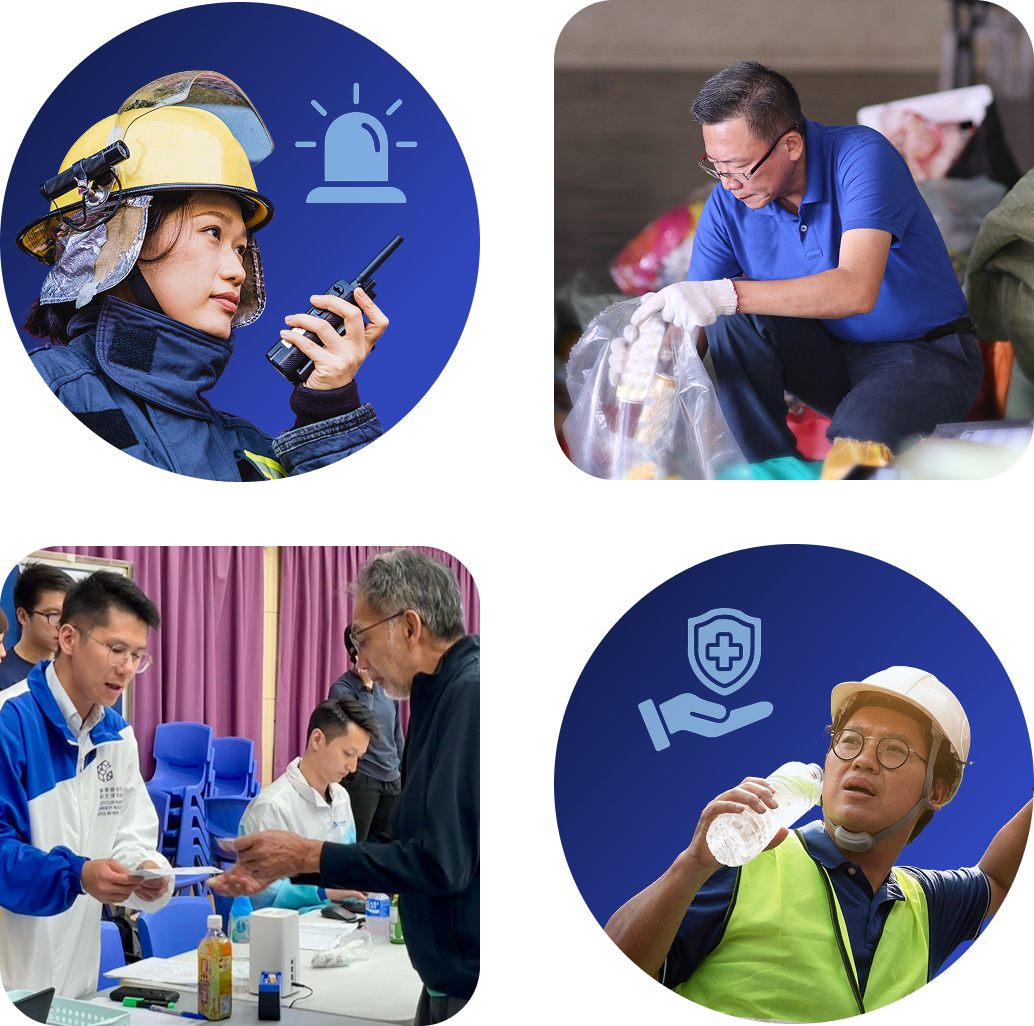
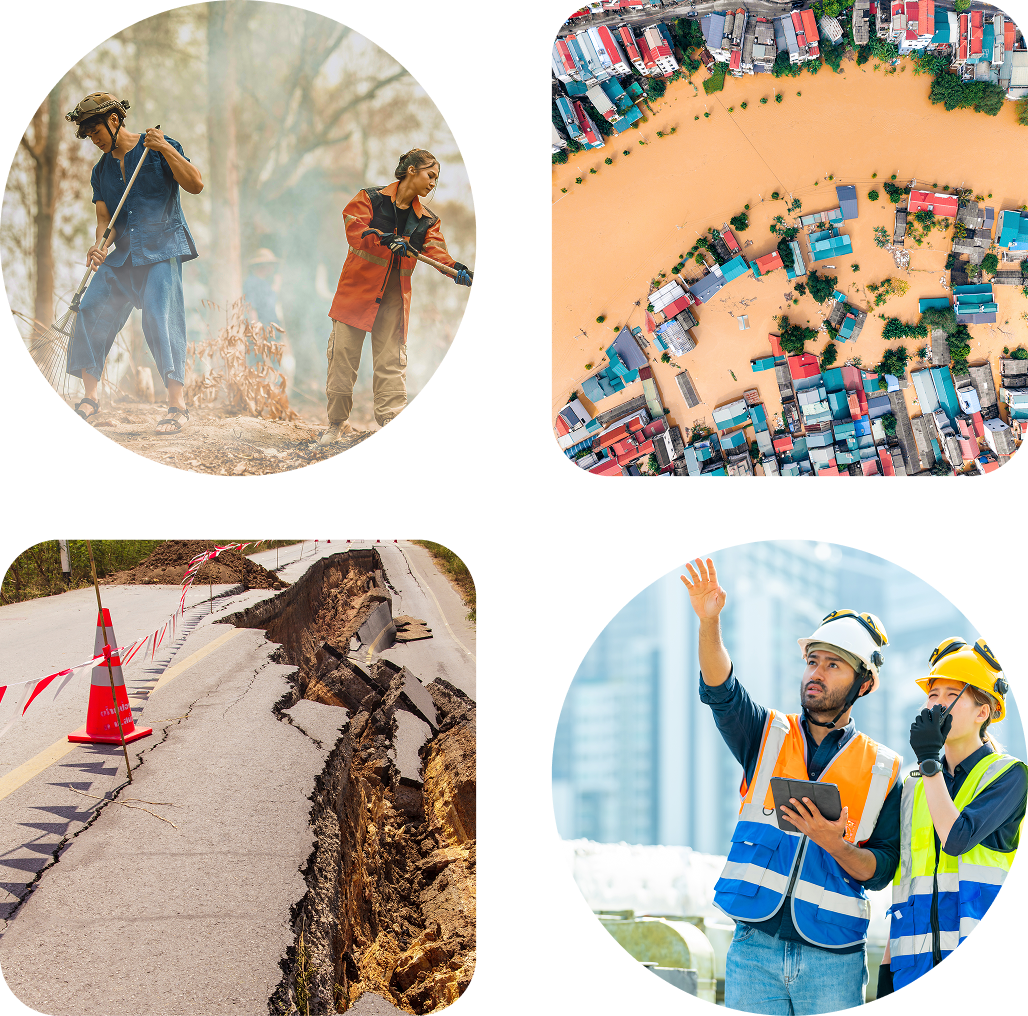
The 2026 instalment of The Business of Doing Good programme examines what it means for businesses to do good in times of crisis, when the need to work together can outweigh the instinct to compete. Crises disrupt lives and livelihoods. They strain workers, suppliers, infrastructure and markets. Businesses that stand with communities before, during and after a crisis can help people endure hardship and recover. In doing so, they can strengthen their own resilience, earn trust and support local economies.
Drawing on a survey of more than 1,600 executives across 14 Asian markets as well as interviews with experts, the 2026 research examines how businesses in Asia currently engage in crises, what prevents them from sustaining that support and how they can move beyond one-off emergency relief towards longer-term, collaborative action that strengthens communities and the wider systems on which businesses depend.
It introduces a practical framework to help companies assess their approach to crisis engagement, identify where they can improve and use their people, skills and resources to create the most value.
Key findings
Based on a survey of more than 1,600 executives across 14 Asian markets
75%
of businesses rank the severity of community impact among their top three reasons for engaging during a crisis
80%
say senior leaders play a formal role in preparing for societal crises
62%
cite budget constraints as the biggest barrier to sustained crisis engagement
Only
32%
of organisations have a dedicated crisis engagement team

What does it take to turn crisis response into lasting resilience?
Hear from experts on why businesses need to look beyond one-off donations and how their skills, resources and partnerships can help communities prepare for the next crisis.


Turn crisis response into business resilience
Assess how your organisation engages with societal crises and find the next practical step
When a crisis disrupts a community, businesses feel the effects too. Workers, suppliers, customers and infrastructure can all come under strain. Companies that stay engaged through recovery can help communities regain stability while protecting their operations, maintaining trust and strengthening their ability to withstand future shocks. Most companies can respond to a crisis. Far fewer have the systems to sustain support, learn from experience and prepare for the next one. Yet these systems can turn a short-term response into lasting support for communities and greater resilience for businesses. This self-assessment helps organisations understand how they engage in crises and identify practical next steps suited to their circumstances. Drawing on research across Asia, it focuses on five organisational systems that support sustained engagement: governance, capabilities, partnerships, funding, and data and learning.

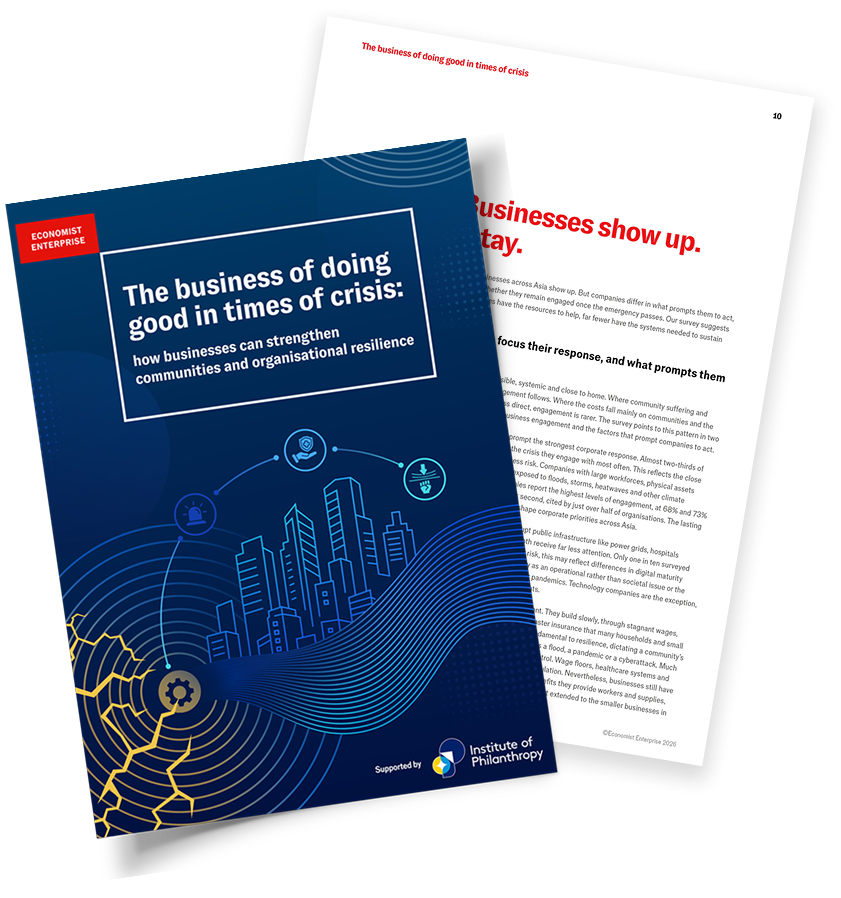

The business of doing good in times of crisis: how businesses can strengthen communities and organisational resilience
Explore findings from our survey of more than 1,600 executives across 14 Asian markets and interviews with experts. The report examines why businesses respond quickly when crises happen but rarely stay involved through recovery, what holds back longer-term commitment and how companies can build more resilient approaches to engagement throughout the crisis lifecycle.

Previous research
The first instalment of The Business of Doing Good examined how businesses across Asia are redefining what it means to do good. Explore insights from research conducted in 2025 on the changing role and practices of businesses in society.
The business of doing good in Asia: whitepaper
Learn how companies across Asia are rethinking what it means to “do good” to stay relevant, responsible and resilient, and shape the role of business in the region.

The business of doing good in Asia: briefing paper
Explore 12 case studies showing different ways businesses can do good—and why they need to do it better.

The business of doing good in Asia: infographic
Explore six profiles showing what shapes how businesses “do good” in Asia and how companies are responding to societal challenges.