
Infrascope 2025/26


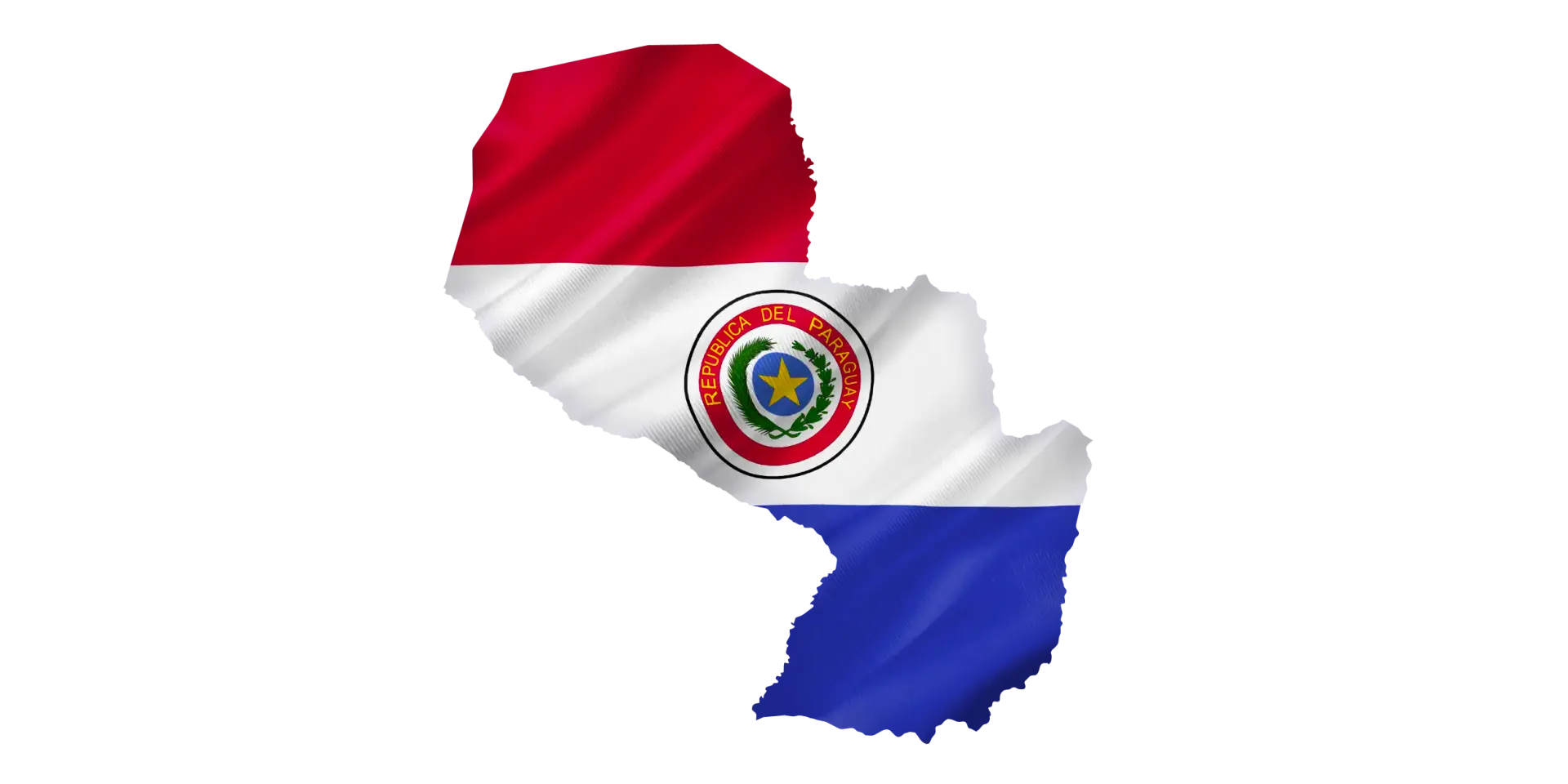
Paraguay
Score: 55.3
out of 100
Rank: 10th
out of 26 countries
Paraguay has established a relatively sophisticated regulatory and institutional framework for public-private partnerships (PPPs), but its market remains small and concentrated in transport infrastructure. Major reforms in 2025-26 aim to overcome longstanding barriers to project development, while a recent highway PPP award signals renewed market momentum. The challenge now is to translate these advances into a broader pipeline of well-prepared, successfully implemented projects.

MACRO ENVIRONMENT
Population, 20257.0m
Source: The Economist Intelligence UnitGDP (US$), 2025$49.3bn
Source: The Economist Intelligence UnitSovereign risk rating, Oct 2026BBB-
Source: S&P Global RatingsPPP INVESTMENT
Number, 2016-25*7
Source: IJ Global‡Total (US$), 2016-25$2.0bn
Source: IJ Global‡% of all infrastructure investment, 2016-25†9%
Source: IJ Global,‡ Infralatam, Economist EnterprisePPP INVESTMENT BY SECTOR (US$), 2016-25


Transport$2.0bn
Policies and institutions
Paraguay substantially modernized its PPP framework through Law 7452/2025 and implementing Decree 5441/2026, replacing the regime established in 2013. The Ministry of Economy and Finance (MEF), through its General Directorate of Public Investment (DGIP), leads PPP policy, project appraisal and fiscal oversight. Contracting authorities remain responsible for structuring, procuring and managing projects, with the Ministry of Public Works and Communications overseeing transport PPPs. Projects require executive approval following technical and fiscal assessments, while contract modifications and other major contract-management decisions require prior MEF approval. The new framework also strengthens risk allocation, financial safeguards and performance monitoring, providing more detailed rules for managing PPPs throughout their lifecycle.1,2
Recent market developments
Paraguay's PPP market remains relatively small and concentrated in transport infrastructure. Following Ruta PY02, the country's first major road PPP, the expansion and improvement of approximately 108 km of Ruta PY01 was awarded in September 2025 and contracted in January 2026. The project involves an estimated US$413m initial investment and marks Paraguay's first use of competitive dialogue in PPP procurement.3,4 Although procured under the previous legislation, it demonstrates renewed market activity after several years without major PPP awards. Meanwhile, the government is examining private initiatives in roads, river transport and energy, offering potential for a broader pipeline, although these projects remain at preliminary stages.5
Political and public support
Political support for PPPs extends beyond the current administration (2023 to present), with both major presidential coalitions endorsing private participation in infrastructure during the 2023 election.6,7 The president, who previously served as finance minister during Paraguay's first PPP procurement, has maintained a public agenda supporting PPP investment.8,9 Although the 2025 reforms attracted congressional criticism over the concentration of authority, legislative oversight and municipal participation, these objections focused primarily on governance rather than rejecting PPPs as a policy approach.10 This broader political backing provides a favorable foundation for the new framework, although effective implementation remains essential.
Notable strengths
Paraguay performs particularly well in regulations and institutions (score of 93.2, 6th regionally), supported by strong interagency coordination, dedicated PPP capacity and transparent procurement procedures. It also performs above the regional average in risk management and contract monitoring (62.2, 9th). Requirements for identifying and allocating project risks are comprehensive, and lenders benefit from well-defined intervention rights. Project monitoring and public reporting arrangements are comparatively advanced, although these strengths coexist with weaker financial auditing standards.
Notable challenges
Performance in project preparation and sustainability remains constrained (38.4, 13th), particularly due to the absence of dedicated preparation facilities and weaknesses in land acquisition support. The framework also lacks systematic requirements for community consultation and social inclusion in project development. Financing presents mixed results: Paraguay benefits from a relatively favorable cost of capital, but country risk and financial maturity metrics are weaker, and dedicated government financing support for PPP investments remains limited. Financial auditing and reporting standards also lag significantly behind regional peers.
Recent progress
Paraguay has made notable regulatory progress since the previous Infrascope, particularly in risk management, contract monitoring and ex-post evaluation. The 2025-26 reforms introduced more detailed requirements for assessing project risks, managing contingent liabilities and monitoring contractual performance. They also established mandatory independent international evaluations after two years of operation and at contract completion, although implementation remains untested. These changes strengthen the framework for overseeing PPPs throughout their lifecycle, while their effectiveness will depend on consistent application to future projects.
Top five recommendations for progress
(ordered according to index category)
1
Strengthen PPP prioritization and project preparation resources
Introduce transparent criteria for ranking PPP projects against national infrastructure priorities. Build on DGIP's existing responsibilities and the Paraguay Preinvestment Fund's (FOPREP’s) funding arrangements to establish a dedicated, operational project preparation function providing technical assistance and resources for developing bankable PPPs.
Timeline to achieve
Medium term
Difficulty to achieve
Medium
Impact on category 2: Project preparation and sustainability
Paraguay: current score
38.4
Score with recommendation applied
50.9
2
Improve government support for land acquisition
Strengthen government support for acquiring land required for PPP projects through earlier planning, dedicated institutional support mechanisms and budgetary resources. Addressing land acquisition bottlenecks would help reduce construction delays and improve project delivery predictability.
Timeline to achieve
Medium term
Difficulty to achieve
Medium
Impact on category 2: Project preparation and sustainability
Paraguay: current score
38.4
Score with recommendation applied
42.6
3
Introduce community consultation and social inclusion requirements
Require consultations with communities affected by proposed PPP projects and the subsequent publication of the findings. Incorporate explicit criteria for social inclusion, gender equality, employment, and small-business participation into project selection and preparation to strengthen social sustainability outcomes.
Timeline to achieve
Short term
Difficulty to achieve
Low
Impact on category 2: Project preparation and sustainability
Paraguay: current score
38.4
Score with recommendation applied
52.5
4
Strengthen disaster risk assessment, resilience and insurance requirements
Require PPP projects to assess their exposure and vulnerability to environmental hazards and natural disasters, require disaster risk management measures during project design and operations, and establish minimum insurance coverage requirements for catastrophic risks.
Timeline to achieve
Short term
Difficulty to achieve
Medium
Impact on category 4: Risk management and contract monitoring
Paraguay: current score
62.2
Score with recommendation applied
74.7
5
Strengthen ex-post evaluation methodologies and feedback mechanisms
Building on the formal requirement to conduct ex-post evaluations, develop standardized evaluation methodologies, covering realized costs, risks, value for money and project outcomes. Establish procedures to incorporate findings into future project selection, preparation and management decisions.
Timeline to achieve
Medium term
Difficulty to achieve
Medium
Impact on category 5: Performance evaluation and impact (ex-post)
Paraguay: current score
37.4
Score with recommendation applied
49.0
Assessment guidance:
Short term: achievable in months (ie, straightforward activities such as procedural updates)
Medium term: up to a year (ie, moderately involved activities such as building web platforms)
Long term: more than a year (ie, time-consuming activities such as new legislation/institutions)
Difficulty/complexity: rated as low/medium/high—often mirrors the time frame, but can differ based on how technical it is, how many resources are needed and how politically challenging it is, etc.
1. https://www.bacn.gov.py/leyes-paraguayas/12703/ley-n-7452-2025-de-modernizaci-n-del-r-gimen-de-promoci-n-de-la-inversi-n-en-infraestructura-p-blica-y-ampliaci-n-y-mejoramiento-de-los-bienes-y-servicios-a-cargo-del-estado
2. https://www.mef.gov.py/sites/default/files/2026-03/Decreto%20N%C2%B0%205441-2026_0.pdf
3. https://mopc.gov.py/historico-paso-para-duplicar-la-ruta-py01-firman-adjudicacion-via-app-de-mas-de-100-km/
4. https://www.presidencia.gov.py/noticias/presidente-pena-lidera-la-firma-del-contrato-que-inicia-la-ampliacion-y-modernizacion-de-la-ruta-py01-via-app/
5. https://www.mef.gov.py/es/dependencias/viceministerio-de-economia-y-planificacion/snip/ppp/proyectos-en-estudio/iniciativas-privadas
6. https://www.presidencia.gov.py/noticias/el-presidente-santiago-pe-a-promulg-la-ley-7452-que-actualiza-y-moderniza-el-r-gimen-de-promoci-n-de-la-inversi-n-en-infraestructura/
7. https://capadei.org.py/web/wp-content/uploads/2023/11/BOLETIN-DIGITAL-CAPADEI-ENERO-FEBRERO-2023.pdf
8. https://www.presidencia.gov.py/noticias/el-presidente-santiago-pe-a-promulg-la-ley-7452-que-actualiza-y-moderniza-el-r-gimen-de-promoci-n-de-la-inversi-n-en-infraestructura/
9. https://mopc.gov.py/historica-adjudicacion-de-obras-para-las-rutas-2-y-7/
10. https://www.abc.com.py/politica/2025/01/22/sancionan-reforma-a-ley-de-app-dan-mas-poder-al-lord-y-se-excluiria-a-municipios/
Infrascope 2025/26
Score 0–100 where 100 = best, rank out of 26 countries
Nascent
0 to <30
Emerging
30 to <60
Developed
60 to <80
Mature
80 to 100


