
Infrascope 2025/26


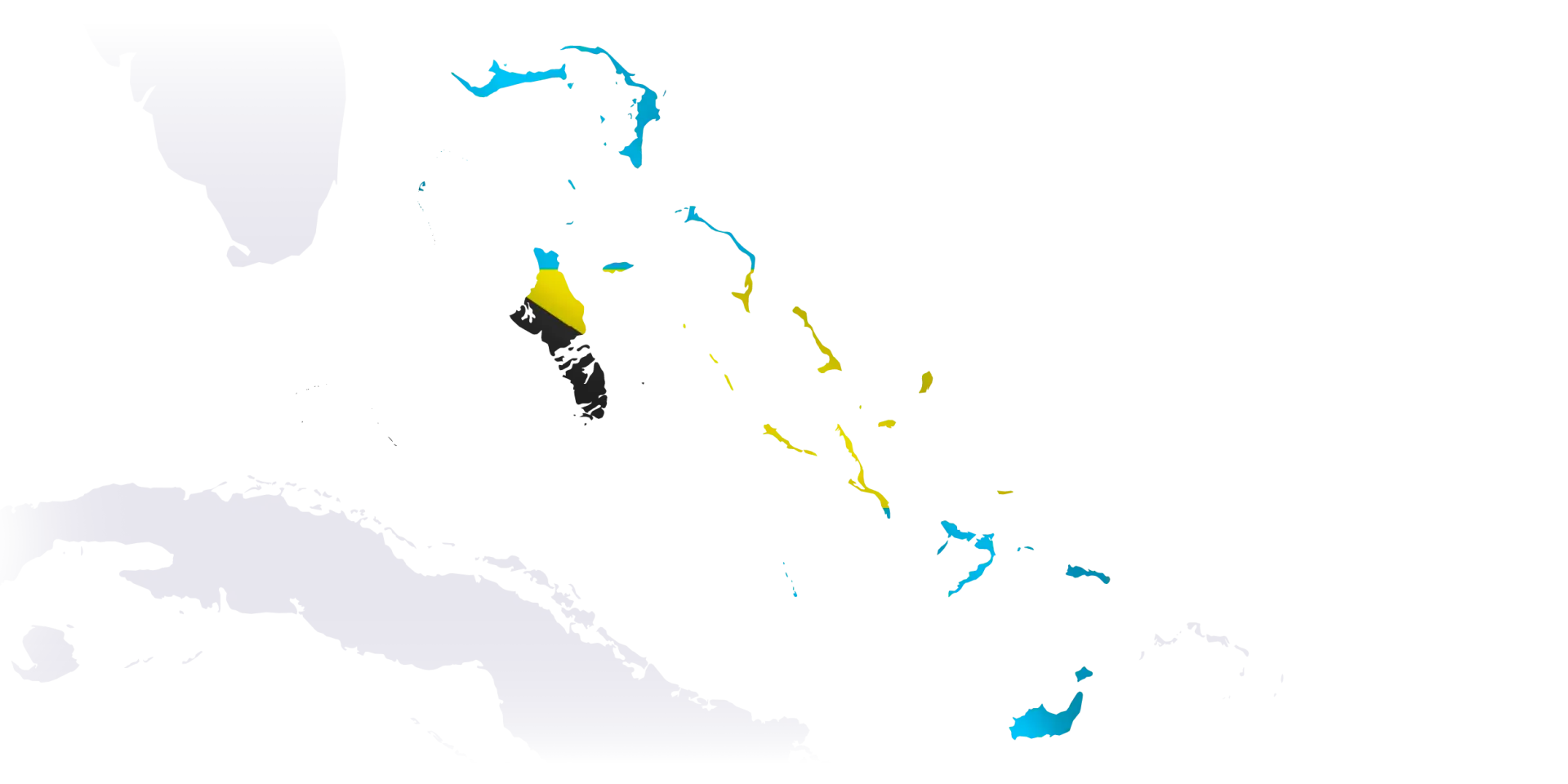
Bahamas
Score: 32.1
out of 100
Rank: 19th
out of 26 countries
Despite longstanding institutional gaps and limited public-private partnership (PPP) transaction activity, the government of the Bahamas is seeking to expand private participation in infrastructure, with new airport concessions and a broader range of potential projects. Recent proposals to strengthen the PPP framework signal an effort to translate these ambitions into a more systematic program, although implementation capacity remains a significant constraint.

MACRO ENVIRONMENT
Population, 2025403,000
Source: The Economist Intelligence UnitGDP (US$), 2025$16.7bn
Source: The Economist Intelligence UnitSovereign risk rating, Oct 2026BB-
Source: S&P Global RatingsPPP INVESTMENT
Number, 2016-25*1
Source: IJ Global‡Total (US$), 2016-25$80m
Source: IJ Global‡% of all infrastructure investment, 2016-25†2%
Source: IJ Global,‡ Infralatam, Economist EnterprisePPP INVESTMENT BY SECTOR (US$), 2016-25


Transport$80m
Policies and institutions
The Bahamas' PPP framework remains anchored in the 2018 Public-Private Partnership Policy, which provides the principal guidance for developing and procuring PPP projects. While the policy envisages dedicated governance arrangements—including a PPP Steering Committee and PPP Operational Unit—implementation remains limited, with PPPs led primarily by line ministries rather than a fully operational central PPP institution.1,2 In September 2026, the government presented a revised PPP Policy and new PPP Assessment Framework to Parliament for public consultation, proposing stronger procedures for project appraisal, risk allocation, value-for-money analysis and fiscal affordability. These reforms could address longstanding preparation gaps, but have not yet been formally adopted.3
Recent market developments
PPP transaction activity in the Bahamas remains limited, although the airport sector has attracted recent investment. A concession covering three Family Island airports reached financial close in August 2025,4 while the 2023 Grand Bahama International Airport Redevelopment PPP failed to secure financing and is now being pursued under alternative development arrangements.5,6 The government is also pursuing potential PPPs across road, water and port infrastructure.7,8 Several initiatives remain at the planning or development stage, and some may fall outside conventional PPP definitions. Nonetheless, the efforts indicate continued government interest in private participation, despite a relatively small market.
Political and public support
The government has maintained an explicit PPP agenda, linking private participation to infrastructure development and fiscal sustainability. Its 2025 Fiscal Strategy Report identifies strategic PPP use for Family Island airport redevelopment, renewable energy infrastructure, and road and water network improvements, while the 2026/27 Budget reaffirms PPP delivery alongside stronger project appraisal and fiscal oversight.9,10 However, political scrutiny has increased: opposition figures have questioned the transparency of some recent PPP arrangements and their treatment of contingent liabilities.11 Greater disclosure and fiscal-risk management will therefore be important as the PPP pipeline develops.
Notable strengths
The Bahamas’ relative strengths are concentrated in specific parts of its PPP framework rather than across the system as a whole. For example, its framework establishes relatively clear processes and transparency around contract variations. The country also ranks 5th for institutional and political risk, reflecting a strong enabling environment around contract enforceability, bureaucratic effectiveness and political stability. Provisions for managing contingent liabilities and strong financial auditing and reporting standards provide further safeguards for PPP projects.
Notable challenges
The Bahamas continues to face significant institutional and implementation gaps. The absence of a fully operational PPP unit and weak inter-agency coordination leave it well behind the regional average on institutional capacity. Project preparation is also constrained by limited dedicated support and underdeveloped methodologies for assessing potential PPPs, including their economic and fiscal merits. Monitoring remains another important gap, with limited public reporting on PPP performance and no established process for ex-post evaluation.
Recent progress
The Bahamas’ overall score declined modestly from 33.1 in 2023/24 to 32.1 in 2025/26, reflecting increased parliamentary criticism of PPPs and the unsuccessful Grand Bahama airport PPP, which was canceled post-procurement after failing to reach financial close. Most other indicators remained broadly stable, consistent with limited changes to the underlying framework. In September 2026, the government presented a revised PPP Policy and PPP Assessment Framework for public consultation, potentially addressing longstanding preparation weaknesses, although neither had been formally adopted.
Top five recommendations for progress
(ordered according to index category)
1
Establish and adequately resource PPP institutions
Establish the PPP Operational Unit and Steering Committee envisaged in the 2018 PPP Policy, with dedicated technical, financial and legal staff, PPP-specific training, and clearly codified processes for coordination across ministries and regulators.
Timeline to achieve
Long term
Difficulty to achieve
High
Impact on category 1: Regulations and institutions
Bahamas: current score
49.3
Score with recommendation applied
80.6
2
Create a public PPP registry
Establish a searchable public PPP registry covering projects throughout their lifecycle, with regularly updated information on project status, procurement and key documentation. This would provide investors and the public with a centralized source of information on the country’s PPP portfolio.
Timeline to achieve
Short term
Difficulty to achieve
Low
Impact on category 1: Regulations and institutions
Bahamas: current score
49.3
Score with recommendation applied
55.6
3
Finalize and operationalize standardized PPP appraisal methodologies
Finalize and implement the proposed PPP Assessment Framework, supported by standardized methodologies and tools for project prioritization and selection, including cost-benefit analysis, fiscal affordability and value-for-money assessment, so potential PPPs are evaluated consistently with other modalities before procurement.
Timeline to achieve
Medium term
Difficulty to achieve
High
Impact on category 2: Project preparation and sustainability
Bahamas: current score
24.0
Score with recommendation applied
35.9
4
Strengthen institutional support for project preparation
Establish a dedicated project-preparation function with standardized processes, sufficient budget and project-tracking arrangements, complemented by a project development fund or similar mechanism to finance the specialist work required to bring viable PPPs to market.
Timeline to achieve
Long term
Difficulty to achieve
Medium
Impact on category 2: Project preparation and sustainability
Bahamas: current score
24.0
Score with recommendation applied
42.8
5
Integrate climate resilience and social objectives into PPP selection
Incorporate climate resilience, social inclusion, gender, employment and small-business considerations into PPP identification and selection criteria, alongside existing environmental safeguards, so sustainability considerations influence which projects advance rather than only how projects are subsequently assessed.
Timeline to achieve
Short term
Difficulty to achieve
Low
Impact on category 2: Project preparation and sustainability
Bahamas: current score
24.0
Score with recommendation applied
42.8
Assessment guidance:
Short term: achievable in months (ie, straightforward activities such as procedural updates)
Medium term: up to a year (ie, moderately involved activities such as building web platforms)
Long term: more than a year (ie, time-consuming activities such as new legislation/institutions)
Difficulty/complexity: rated as low/medium/high—often mirrors the time frame, but can differ based on how technical it is, how many resources are needed and how politically challenging it is, etc.
1. https://www.bahamaslocal.com/files/Bahamas%20PPP%20Policy_September%202018.pdf
2. https://www.imf.org/-/media/Files/Publications/Selected-Issues-Papers/2025/English/SIPEA2025031.ashx
3. https://ewnews.com/government-unveils-revised-ppp-policy-eyes-greater-private-sector-role-in-infrastructure/
4. https://plenary.com/project/island-airports
5. https://www.tribune242.com/news/2025/sep/16/gb-airport-plan-comes-to-a-halt/
6. https://opm.gov.bs/2024-2025-budget-communication/
7. https://www.bahamasbudget.gov.bs/media/filer_public/e6/73/e67365e7-bf5d-4377-81ef-f43a7cb99de4/budgetbook-2025-85x11in-final-digital-2.pdf
8. https://opm.gov.bs/press-statement-on-the-governments-announcement-of-a-public-private-partnership-for-the-port-at-mayaguana/
9. https://bahamasbudget.gov.bs/media/filer_public/be/2f/be2f04d6-9ab4-4b6b-815d-4564383bd0df/fiscal_strategy_report_2025_final_final_version.pdf
10. https://bahamasbudget.gov.bs/media/filer_public/1a/e2/1ae24929-b92b-4a5b-9b46-1cb0d32e7607/budgetbook-2026-final-digital.pdf
11. https://www.tribune242.com/news/2026/feb/10/stop-governing-in-dark-on-ppps-mp-demands/
Infrascope 2025/26
Score 0–100 where 100 = best, rank out of 26 countries
Nascent
0 to <30
Emerging
30 to <60
Developed
60 to <80
Mature
80 to 100


