

Powering what’s next: The new economics of reliable energy
Surging electricity demand is reshaping how renewables, storage and nuclear-power facilities are built and financed
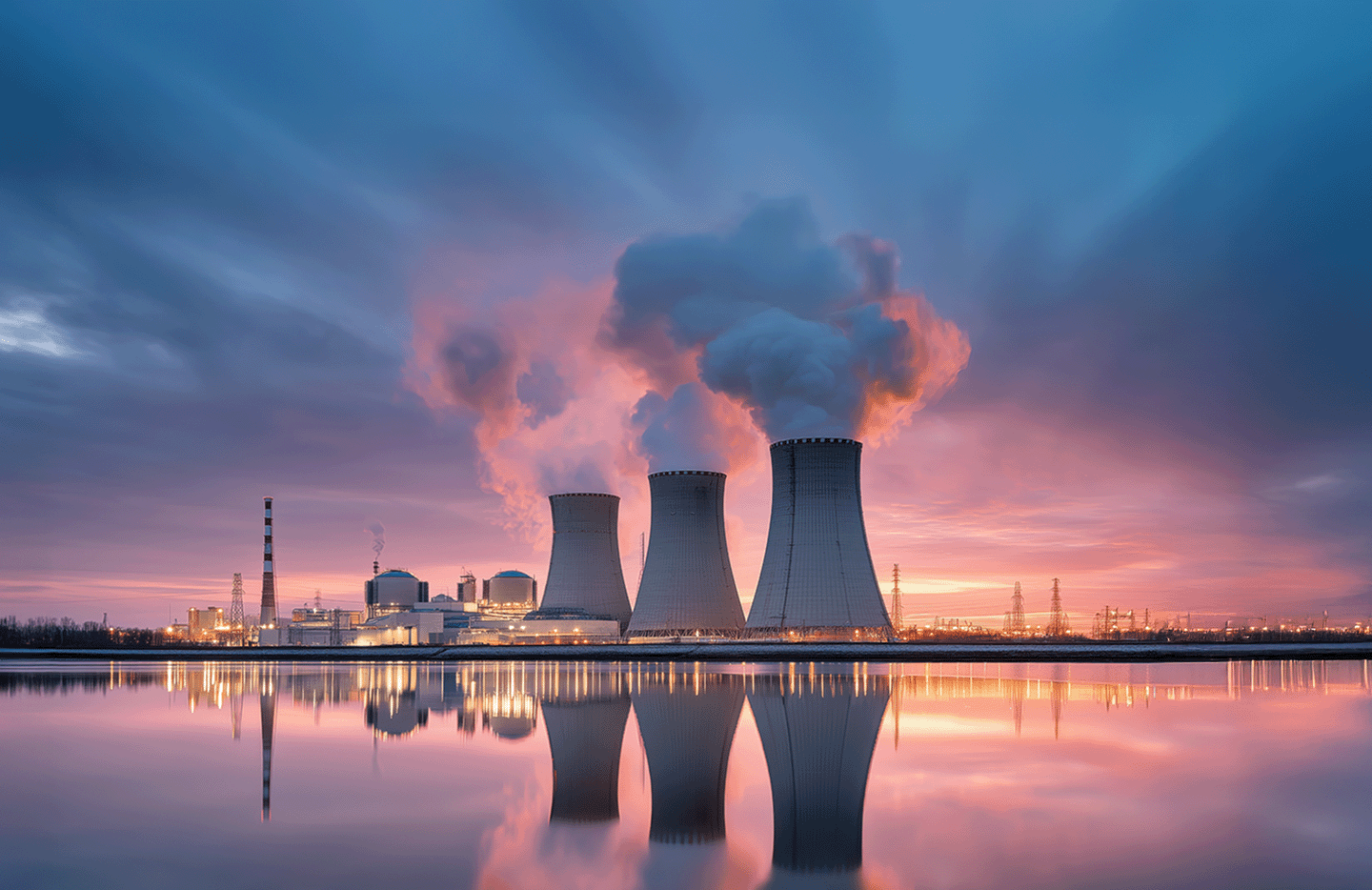
For decades, nuclear power had a reputation for budget blowouts and construction overruns. Late delivery of reactor parts, some of which take years to manufacture, was a major source of delay and increased cost.
“You’d have thousands of workers and expensive equipment sitting idle waiting for a part while the project burned cash,” recalls Sam Meyers, senior vice president at Brookfield Asset Management.
A US$17.5bn programme announced by the US Department of Energy in June aims to tackle this problem by offering utilities low-cost finance to place advance orders from Westinghouse, America’s leading nuclear-power developer.
Governments across the world are acting to secure power to meet a surge in demand from AI data centres, the electrification of transport and the reshoring of industry, with the US programme merely one recent example. But nuclear is only part of the answer. Wind and solar can add capacity more quickly, and typically at the lowest cost, while batteries can store the resulting energy, making the delivery of output from these sources more dependable.
Each technology comes with different timelines, risks and financing needs. Bringing them together increasingly requires coordination between governments, utilities, large electricity users and long-term investors. Brookfield sits at the apex of those relationships as one of the world’s largest renewable-power investors, the leading battery storage developer, and the majority owner of Westinghouse.

Renewables make electricity cheap; storage makes it reliable.”
Arnaud Jouvin, vice president at Brookfield’s energy group
Making cheap power more useful
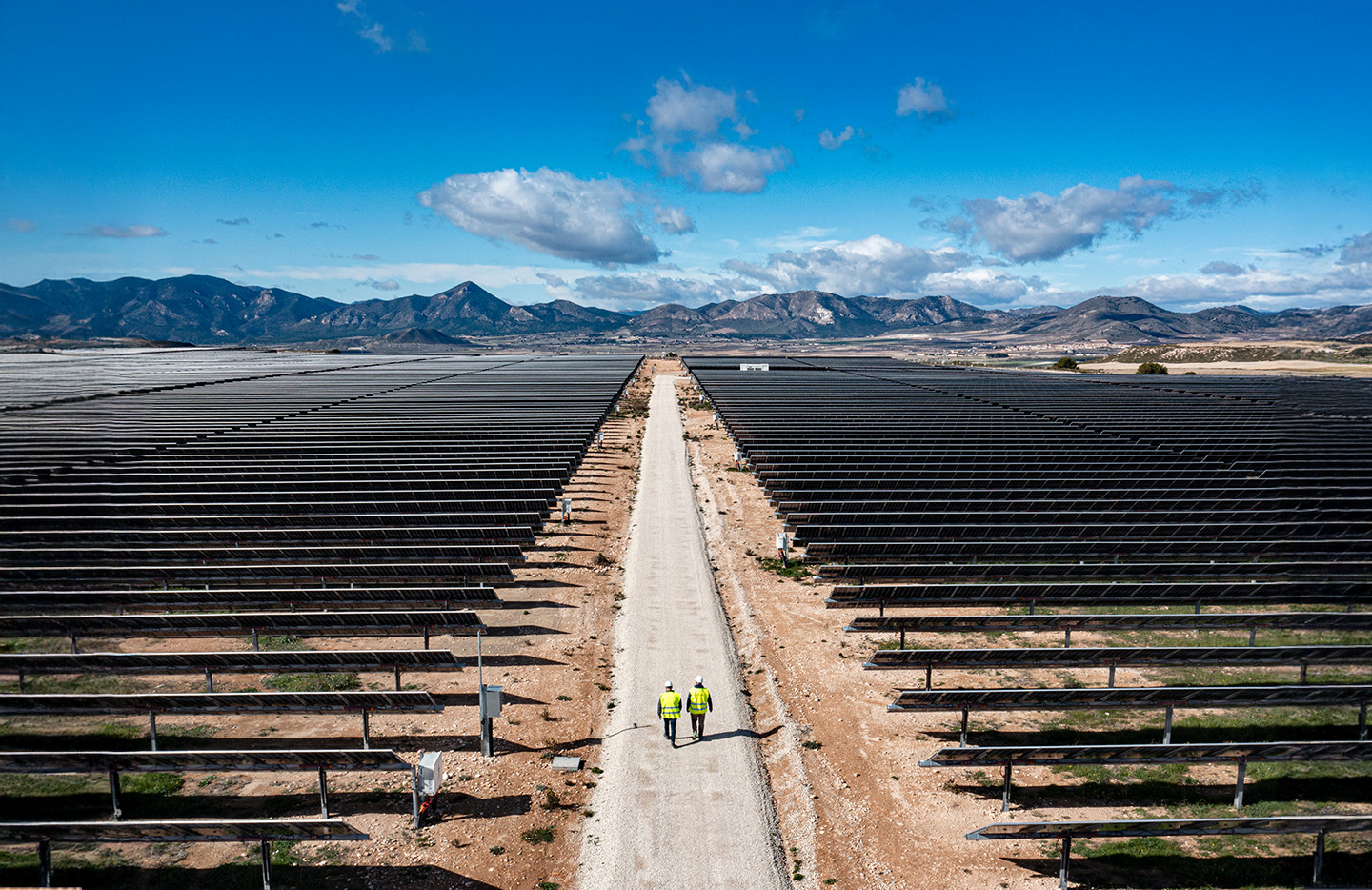
In previous decades, the challenge for renewables was to prove cost competitiveness and end dependence on subsidies. Today, cost is no longer the central question. Wind and solar power costs are now approximately half those of new-build fossil-fuel electricity,1 and solar plants get installed in months, not years.2
The challenge now is how to make that low-cost power available when customers need it. That requires batteries to store electricity during peak generation hours, and release it when the sun is not shining or the wind has died down.
“Renewables make electricity cheap; storage makes it reliable,” says Arnaud Jouvin, vice president at Brookfield’s Energy Group.
Although adding storage capacity raises the upfront capital cost of a solar or wind project, it also makes the electricity more valuable: power can be made available when customers need it most, while reducing curtailment and making better use of constrained grid connections.
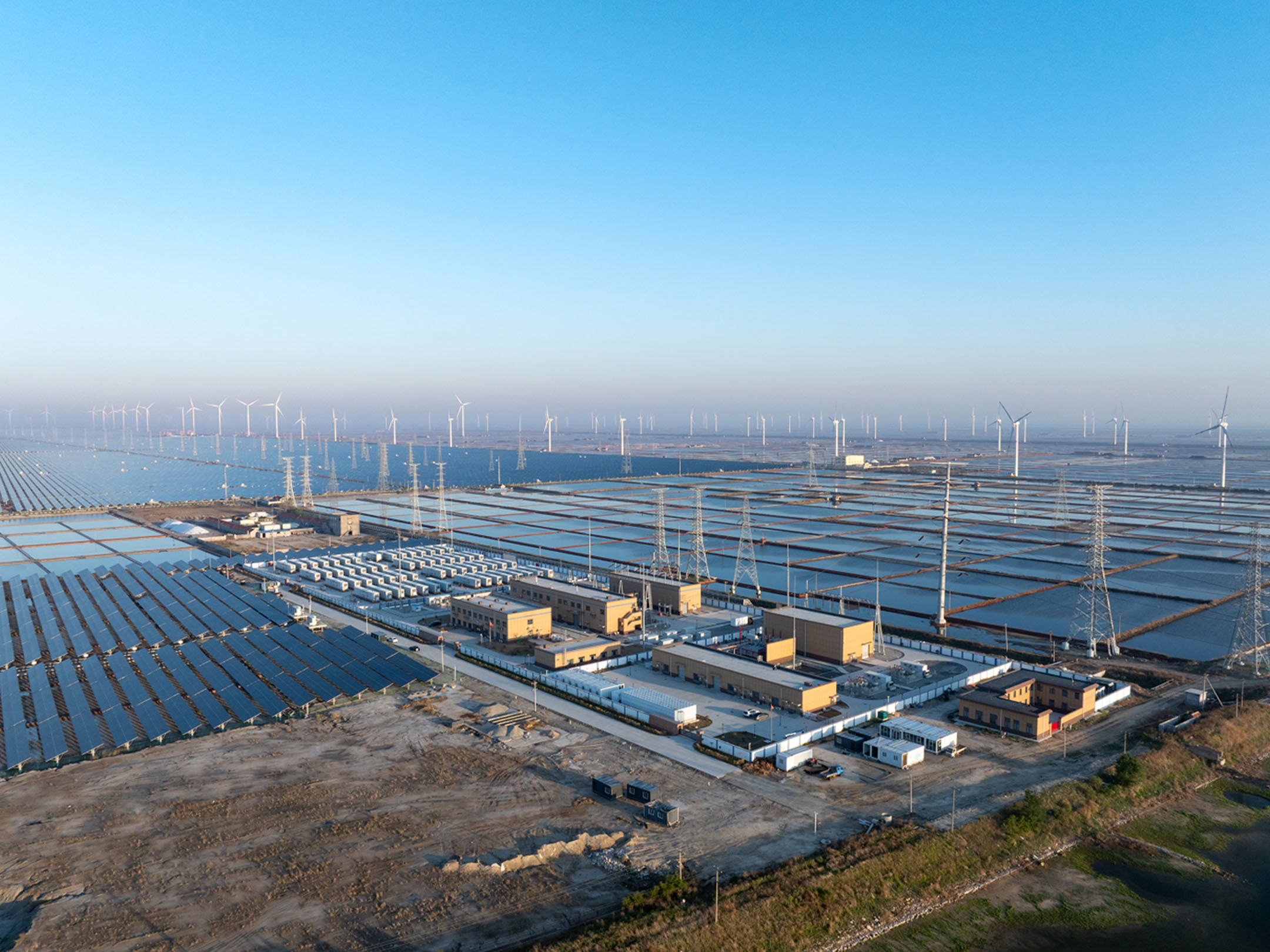
Brookfield is already deploying this renewables-plus-storage model worldwide. In Australia, Amazon has contracted most of the output from Brookfield portfolio company X-ELIO’s solar-plus-battery Forest Glen development. Evren, which is majority-owned by Brookfield, will supply 300MW of reliable, round-the-clock power to an Indian state utility from a 1-GW hybrid wind, solar and battery portfolio.
Battery storage is the fastest-growing power technology. Global installed capacity has grown elevenfold since 2021 as technology improvements have seen costs tumble and efficiency increase.3
Even so, Mr Jouvin cautions that fully “islanded”, large-scale, round-the-clock power from renewables plus storage remains challenging to achieve. Even in the sunniest markets, matching the annual output of 1GW of continuous consumption would require roughly 5GW of solar, with significant implications for land use. For some customers and markets, that makes nuclear an important complement to renewables and storage.
Making nuclear builds repeatable
In a world of data centre-driven demand for always-on power, nuclear power is enjoying a comeback. Renewables, storage and nuclear are not so much competing rival solutions as technologies with different characteristics, economics and deployment timelines. A two-unit reactor site can deliver more than 2GW of clean power with close to 95% availability, which, Mr Meyers points out, is on “a scale nothing else can match”. No wonder most pathways to net zero assume significant use of nuclear energy.4
The harder challenge is delivering nuclear projects on time and within budget. The US government loans package addresses one source of delay: long-lead components. Brookfield and Westinghouse are also trying to make nuclear-power projects more predictable and repeatable, not just in America, but worldwide.
Large nuclear projects now regularly bring utilities, large consumers, governments and investors around the same table.
“The quantum of capital required for long-duration, complex power projects today doesn’t just require a conversation with a utility, but also the commercial and industrial customers of the utility. It is a partnership or consortium-type approach,” notes Mr Meyers.
Repeat builds matter, too. Westinghouse is beginning to work on multiple reactor projects simultaneously. That can support a deeper global supply chain and a more experienced workforce, allowing components to be produced more efficiently and the construction activity to be executed more productively. As more reactors are built, it is also less risky for utilities to order parts, because they are likely to be able to sell them to other Westinghouse customers if their own project does not go ahead.
The quantum of capital required for long-duration, complex power projects today doesn’t just require a conversation with a utility, but also the commercial and industrial customers of the utility.”
Sam Meyers, senior vice president at Brookfield Asset Management
Contracts are also changing. For Westinghouse’s pipeline of new-build projects, for example, customers are working with contractors to enable risk-sharing constructs where margins are reduced in the event of cost overruns or delays, without putting vendors out of pocket. These structures mitigate cost pressures while ensuring contractors still have an incentive to complete projects. Long-term power purchase agreements, meanwhile, are being structured to specify a range of prices that offtakers will pay, depending on the final cost and schedule of the project. That means energy customers can share the pain of cost overruns with project sponsors and contractors, but also share the benefits if the project stays within budget. In the United States, the federal government also plays an important role in sharing risk through tax credits and loan programmes.
This risk-sharing model makes it more likely that projects are completed on schedule. In China, where Westinghouse has been building nuclear-power plants since the 2000s, reactor deployment timelines have already been shortened by 20%, according to Mr Meyers. In the US market, he expects timeframes to shrink as more AP1000 plants are built.
The global economy of the future will be shaped by electrified industries and AI. Clean, reliable power will be its foundation. Meeting that need will require investment in multiple forms of generation, with batteries playing an important role in matching supply with demand. The harder task is building and financing that mix quickly enough, and predictably enough, to keep pace with a new era of electricity growth.
Related articles
Moving what’s next: The new map of global trade

Wiring what’s next: The infrastructure race behind AI
Retooling for what’s next: The reinvention of industrial businesses

References
- 1.International Renewable Energy Agency, “91% of new renewable projects now cheaper than fossil fuel alternatives”, 22 July 2025: https://www.irena.org/News/pressreleases/2025/Jul/91-Percent-of-New-Renewable-Projects-Now-Cheaper-Than-Fossil-Fuels-Alternatives
- 2.International Energy Agency, “Battery storage is scaling up and taking on a larger system role”, 29 May 2026: https://www.iea.org/commentaries/battery-storage-is-scaling-up-and-taking-on-a-larger-system-role
- 3.International Energy Agency, “Technology: Battery Storage”, in Global Energy Review April 2026: https://www.iea.org/reports/global-energy-review-2026/technology-battery-storage
- 4.International Energy Agency, “Net Zero Emissions by 2050”, in World Energy Outlook 2025, November 2025: https://www.iea.org/reports/world-energy-outlook-2025/net-zero-emissions-by-2050