



Inclusive technology: How one Turkish student is applying AI to accessibility
After completing her computer engineering degree in Türkiye, Nisa Nur Taş secured a scholarship to pursue a master’s degree in artificial intelligence in South Korea.
She bridged the period between her undergraduate and postgraduate studies by enrolling in Samsung Innovation Campus, attending classes across coding and AI. Her experience with the programme strengthened her technical confidence and reinforced her belief that AI can, and should, be used to improve people’s lives.
It all started with a toy robot.
A gift from my father when I was three years old, I watched in wonder as it walked and spun around. I was so curious about what was powering its movements, and that curiosity grew into a passion for technology that has shaped my life ever since.
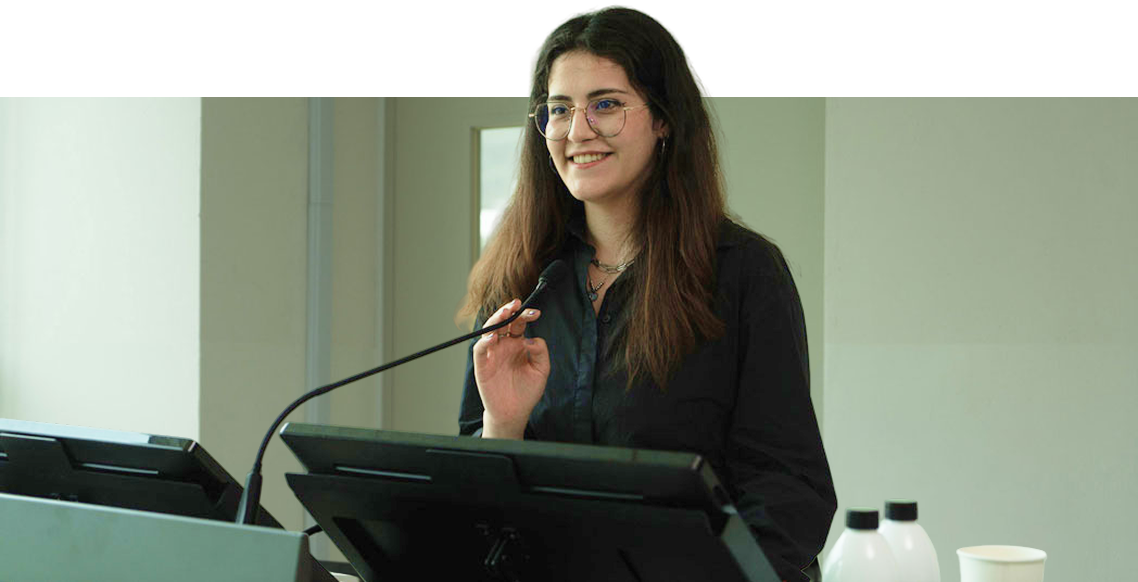
As I got older, that interest deepened, which led me to study computer engineering at university in Türkiye. Over the course of my bachelor’s degree, I became increasingly drawn to artificial intelligence (AI), to the point that I wanted to further my studies in the field. AI just struck me as one of the most transformative technologies of our time. I was most excited by its potential to make a tangible impact in society, and I wanted to be part of that.
After graduating in 2024, I started putting into action plans to pursue a master’s degree in AI. South Korea felt like the best place to do it, given its leadership in technology and strong investment in AI. While preparing for my application, I chanced upon Samsung Innovation Campus, a tech training programme I could attend for free. The practical, solutions-oriented approach appealed to me, so I decided to apply to it as a way of strengthening my skills before embarking on my postgraduate journey. I didn’t expect that it would be a turning point in my life.
Translating theory into application
Samsung Innovation Campus kicked off with a five-week coding course, while I was still in Türkiye. My university education had given me a strong theoretical foundation, but these classes offered the valuable opportunity to gain hands-on experience solving practical problems, for example in the application of Python. Programming concepts can sometimes feel abstract; previously, I struggled to envision how I would apply my theoretical knowledge to real life, so it really helped that programme instructors connected our learnings to real-world examples, making it easier to understand.
What followed next was the Samsung Innovation Campus AI course. As I was already in South Korea (to prepare for my master’s degree) when it started, I had to attend the classes online, which took place between 1am and 3am due to the time difference. It was an intense schedule but extremely worth it. Despite running for just three months, the course extended beyond the fundamentals of AI, and significantly strengthened my understanding of machine learning, data science and deep learning.
From the classroom to the community
The highlight of my Samsung Innovation Campus experience was a capstone project I worked on with four other students. Together as a team, we wanted to focus on improving accessibility and inclusivity using AI. We found that many existing navigation apps lack detailed accessibility information, so we set out to address that gap.
That led us to develop FreeWayIn, an app designed to help people with disabilities navigate urban environments more easily and independently in their daily lives. Integrating skills Samsung Innovation Campus taught us—programming, problem-solving and project planning, to name a few—we built the app to enable users to discover accessible locations nearby, categorising spaces according to accessibility levels using visual indicators.
One of our biggest challenges was ensuring FreeWayIn is truly inclusive and addresses the needs of different disability groups. While brainstorming ways to improve the app, we came up with a community-based feature where people can contribute by adding new locations and updating with the latest information. Throughout this process, our instructors continuously guided us to broaden the scope of the app, ensuring it supported not only wheelchair users but also people with visual and hearing impairments. This isn’t the end for FreeWayIn: I’m continuing to develop the app with my teammates back in Türkiye, with the hope of publishing it for public use once it’s ready.
Attending Samsung Innovation Campus, and working on this capstone project, enhanced my technical expertise and confidence. In addition to hard skills, I learned about the importance of teamwork and sharpened my communication abilities. Without them, the idea for FreeWayIn would have remained just an idea.
It was through the programme that I started to really see technology, and specifically AI, as a tool that can solve social challenges and genuinely make a difference to people’s daily lives. I felt proud to be part of a project based on both technical expertise and empathy.
AI with purpose
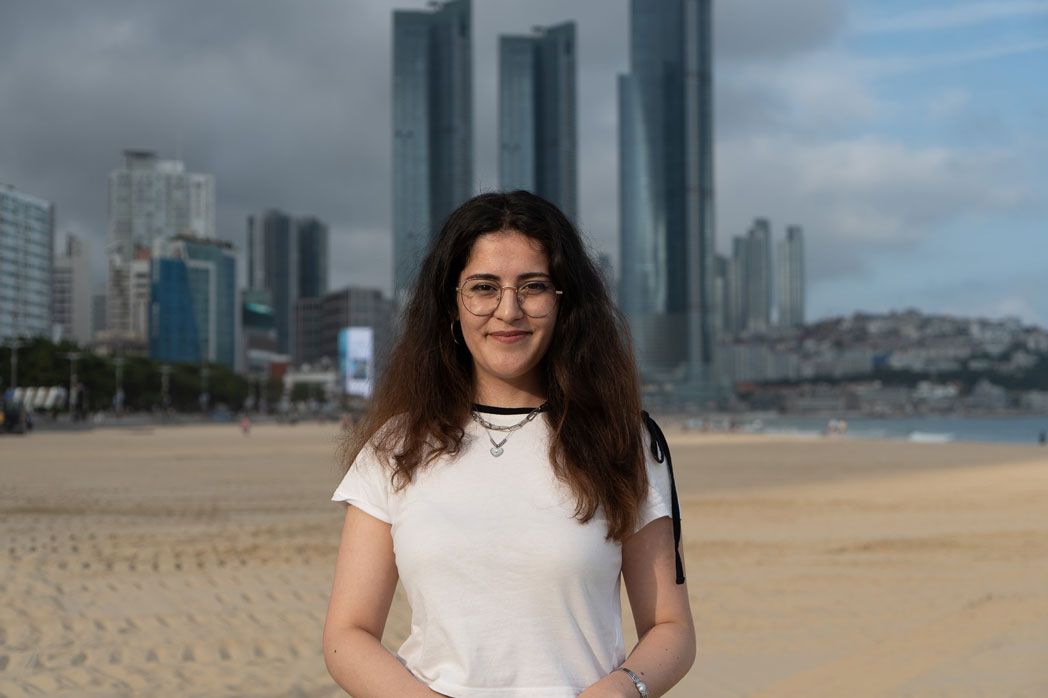
It’s been nearly a year since I moved to Busan, South Korea to prepare for my master’s degree in AI. Living in a different country has been rewarding. I’m learning from a new culture, meeting people from diverse backgrounds, and observing different approaches to innovation. The transition hasn’t always been easy, but I’ve become more adaptable, independent and resilient as a result. If I’m feeling stressed, I go for long walks along the city’s many beautiful beaches.
My postgraduate studies will start in September, and I’m excited to get involved with AI research and working with international researchers. Crucially, I’m looking forward to deepening my expertise in AI, building on my new skills and a renewed belief in using technology to create a positive social impact, thanks to Samsung Innovation Campus. The programme really strengthened my belief in the importance of human-centred technology, and inspired me to think more about accessibility and inclusivity,
Looking ahead, I hope to apply AI in the field of healthcare, where I believe it has enormous potential to improve people’s lives. Samsung Innovation Campus taught me how to translate ambition into action and helped me become more confident in turning ideas into real solutions. I can’t wait to show the world how technology can be used to make a meaningful difference in society.


What is the Samsung Innovation Campus?
Samsung Innovation Campus is a global education program that helps youth build advanced IT skills and practical capabilities to create better opportunities. The program offers structured AI education suitable for the digital age, along with hands-on training, expert mentoring, and instruction in key future technologies like big data and IoT. Tailored programs are available for marginalized groups such as people with disabilities and women, to expand access to IT education.
Graduates pursue various career paths including IT employment, tech-driven startups, and social impact initiatives. Since its launch in 2013, more than 204,000 youth in 40 countries have joined the program, using technology to design their future and realize greater potential.

Bridging science and AI: How one Peruvian student is working to improve public health
No coding background, no problem.
Fabricio Chimoy Ayala taught himself to code and is now using artificial intelligence to detect disease earlier, working to build a stronger bioimaging community and improve public health across Peru.
