


Health literacy is a person’s ability to find, understand, critically appraise and use health information and services
A high level of health literacy improves health outcomes and reduces health system costs, yet the task of improving health literacy cannot be left to individuals alone. Health information and services are extensive and complex, and a person’s ability to navigate them can be affected by diverse factors, including misinformation.
Productive health literacy improvements happen when governments and health systems take greater responsibility, and work towards a shared, system‑wide approach that operates across three interlinked levels.

Personal health literacy
Empowering people with the skills, resources and confidence to navigate health services and make informed decisions about health.
Professional health literacy
Building the knowledge, attitudes and communication practices of staff so they understand the needs of different groups.
Organisational health literacy
Ensuring health institutions and systems make it easy for everyone to access and use health information and services.

A 25% reduction in the share of people reporting low health literacy could save US$303bn in annual healthcare costs for the 40 countries studied by the Health Inclusivity Index
Explore the five key health literacy priorities
Expert panel members
Our health literacy spotlight has been developed with the support of many experts in the field, spanning leading institutions around the world.
Start of carousel.

Dr Guda Alemayehu
Lead, African Health Literacy Network, Ethiopia

Prof Virginia Visconde Brasil
Professor of nursing, Faculty of Nursing, Federal University of Goias, Brazil; lead, Brazilian Health Literacy Network

Dr Shyam Sundar Budhathoki
Senior teaching fellow in global health, Imperial College London, United Kingdom

Prof Lorie Donelle
Professor of nursing, College of Nursing at the University of South Carolina, United States

Prof Diane Levin-Zamir
Professor of public health, School of Public Health, University of Haifa; Research Co-Chair of the WHO Action Network on Measuring Population and Organizational Health Literacy (M-POHL), Israel

Prof Donald Nutbeam
Professor of public health, University of Sydney, Australia; Chair of the WHO Ad-hoc Advisory Group on Health Literacy

Prof Orkan Okan
Professor of health literacy, School of Medicine and Health, Technical University of Munich; president, International Health Literacy Association; head, WHO Collaborating Center for Health Literacy, Germany

Dr Catina O'Leary
President and CEO at Health Literacy Media, United States

Prof Enny Rachmani
Vice president, Asian Health Literacy Association; associate professor of public health informatics and health literacy, Faculty of Health Science, Universitas Dian Nuswantoro, Semarang, Indonesia

Geoffrey So
Head of strategic engagement, WHO Foundation, Switzerland

Kristine Sørensen
Founder, Global Health Literacy Academy; honorary professor, Aalborg University; executive chair, Health Literacy Europe, Denmark

Prof Lilliana Villa Vélez
Associate professor, Faculty of Medicine, University of Antiquia, Colombia
End of carousel.
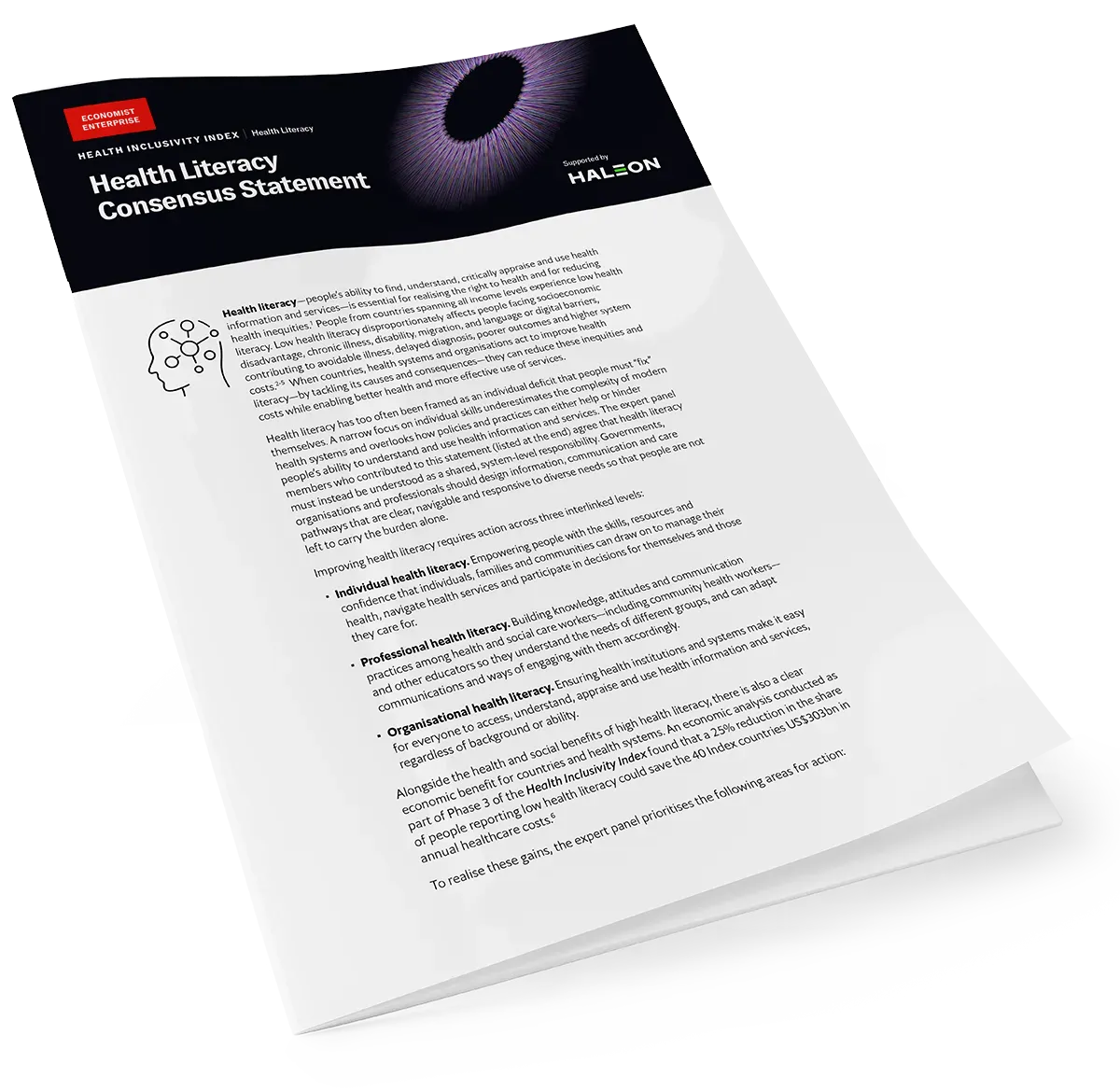
Expert consensus statement
Learn more about the impacts of health literacy and the key priorities for improving it with a short consensus statement compiled by our expert panel members.
Policy briefing paper
Dive deeper into the five key priorities to learn how they reduce health inequities and system costs, and improve health outcomes across society.
Article
How is Haleon making health literacy part of its mission to deliver better everyday health with humanity?
Case studies

 Advertisement feature · HaleonCase study
Brazil
Care rooted in community: how Brazil is using health literacy to close the health gap
View case study Advertisement feature · HaleonCase study
Pakistan
From awareness to action: improving maternal health literacy in South Punjab
View case study Advertisement feature · HaleonCase study
Singapore
A focus on healthy ageing: for Singapore, health literacy is critical
View case study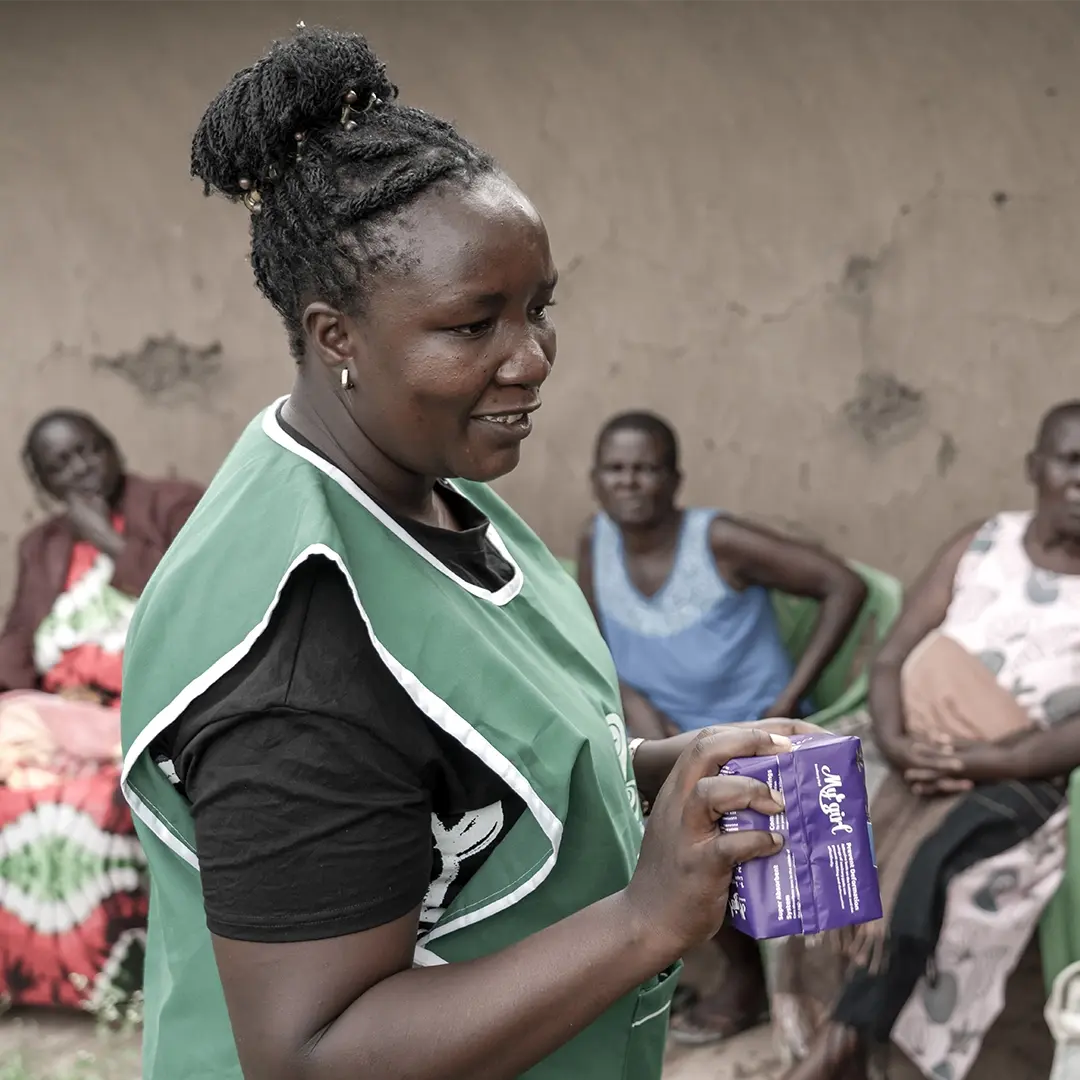 Advertisement feature · HaleonCase study
Kenya
Local knowledge: why community health promoters hold the key to health literacy in Kenya
View case study Advertisement feature · HaleonCase study
Portugal
Making the healthy choice the easy choice: Portugal’s health literacy revolution
View case study