

The Compound Return
Milan has the assets — finance, research, enterprise, talent — and it has made them work as a single system. Each reinforces the other, and together they turn the decision to land a business here into one that repays itself.
MILAN | November 2026
Capital is a reliable narrator. It has no loyalty to a city's self-image and no patience for its brochures. So one useful way to read Milan today is through the decisions that smart money has recently made about it.
In 2026 Algorithmiq, a quantum software company founded in Helsinki, moved its global headquarters to Milan and closed an €18m round led by United Ventures and CDP Venture Capital — the largest venture investment ever made in an Italian quantum business, bringing its total funding to €36m. In the spring, the European Commission approved €211m of Italian state aid for CamGraPhIC, the University of Cambridge spin-out developing graphene-based photonic transceivers and now a subsidiary of Milan-based 2D Photonics — the largest single grant ever made to a Cambridge spin-out. It will fund a pilot manufacturing line near Milan, due to open in 2028, alongside collaborative work in Bergamo and Pisa, and it followed by a few months a €25m private round co-led by CDP Venture Capital, the NATO Innovation Fund, Sony Innovation Fund and Join Capital. In September, AstraZeneca committed €66.2m over three years to clinical research across 200 Italian centres, launching 71 new registrational trials with Alexion; Milan's research hospitals sit at the centre of that network.
None of these decisions was made for sentimental reasons. Each was made because the surrounding system was judged capable of repaying it.
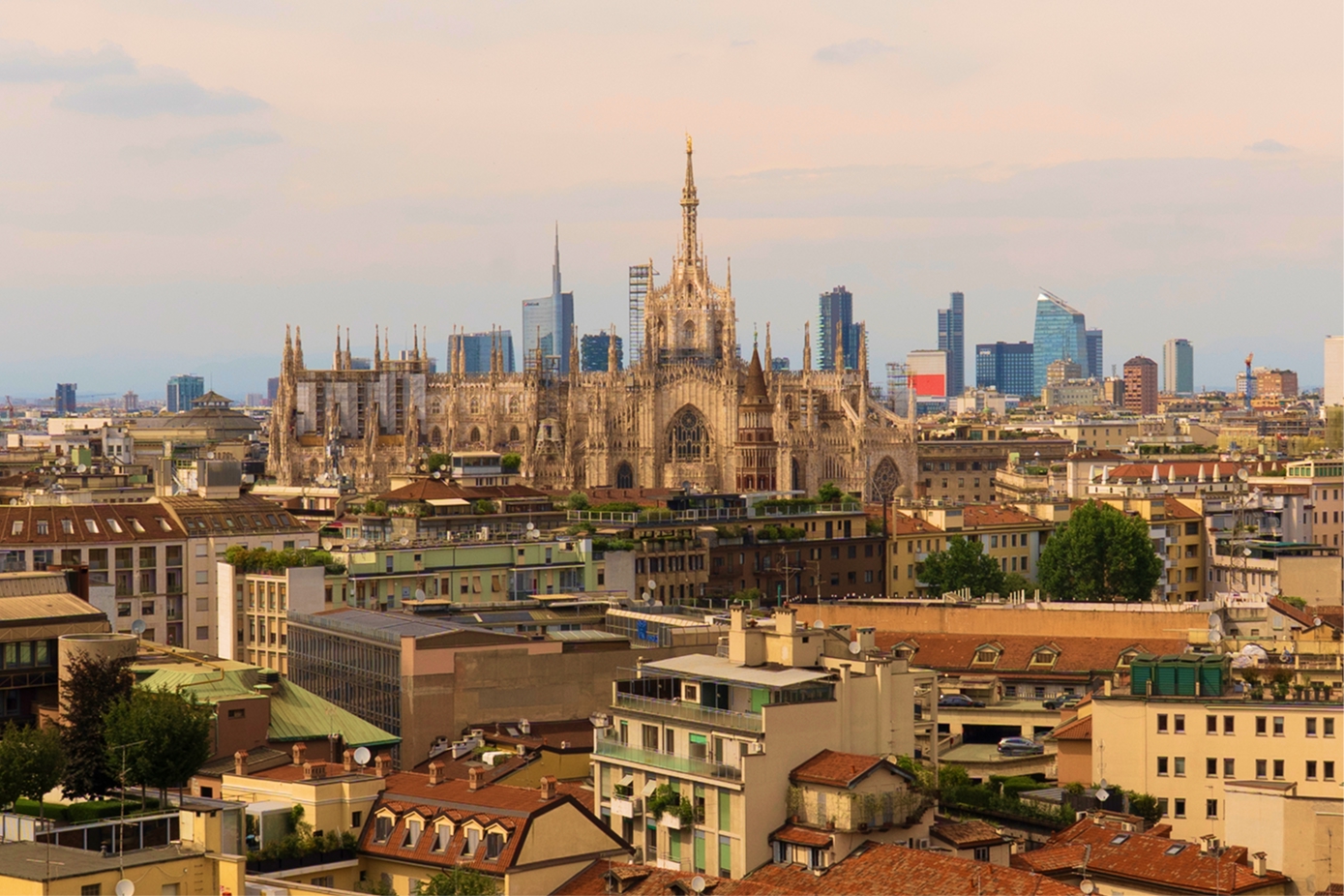
That judgment is the subject of this article, and it rests on two things working in tandem. Milan holds a substantial inventory of universities, hospitals, companies and investors — the raw material any serious location needs. What compounds it is that these parts move together, compactly and at speed, so that an investment arriving in one of them is quickly connected to all the others. The assets make the system possible; the system makes the assets worth more than their sum.
A SYSTEM THAT MOVES TOGETHER
Finance, research, entrepreneurship and qualified human capital are the four conditions any location needs in order to turn an idea into a business. It should be said at the outset that Milan has all four at scale — and the distance between them, institutional as much as physical, is unusually short, which is what allows them to compound.
The scale is straightforward enough. Eight universities and some 235,000 students. Twenty research hospitals within the national IRCCS network of excellence. More than 300,000 companies, among them roughly a fifth of all Italy's startups and innovative SMEs. More than half of all venture capital invested in the country. The talent base is international by composition, not by aspiration: research by Centro Studi Assolombarda puts 18,375 international degree-seeking students in the metropolitan area — 80.4% of all foreign scholars in Lombardy — with nearly 47% of them in STEM disciplines, drawn predominantly from Asia.
Assets on this scale would place Milan on any shortlist. What has turned shortlists into decisions is the behaviour that sits on top of them. Milan's institutions have developed an unusual habit of consolidating rather than competing. In January 2026, Università Bocconi and Politecnico di Milano - that together account for around half of Italy’s startup founders and 92% of the capital raised by companies founded by Italian graduates - folded their respective entrepreneurial arms into a single deep-tech hub under Tech Europe Foundation — created with the ION Foundation, FSI and the Chamber of Commerce of Milano Monza Brianza Lodi.
To date, Tech Europe Foundation has empowered 860 aspiring entrepreneurs, funded 126 scientists and accelerated 167 startups, drawing over 2,100 applications along the way. Its goal is to support 1,000 startups by 2030.
Two universities that elsewhere would have run parallel incubators built one platform instead, and in doing so made their combined research base available through a single door. That is the mechanism in miniature: existing strength, deliberately pooled, becomes something an international investor can actually reach.
The habit does not stop at the city boundary. Milan is the dense core of a regional system, and the working relationship between the city's institutions and Lombardy's means the innovation ecosystem operates at broader scale.
The companies, universities and investors are the assets. The ecosystem is what they produce once they decide to move in the same direction — and the two keep raising each other's value.
THE CITY AS A MOVING PART
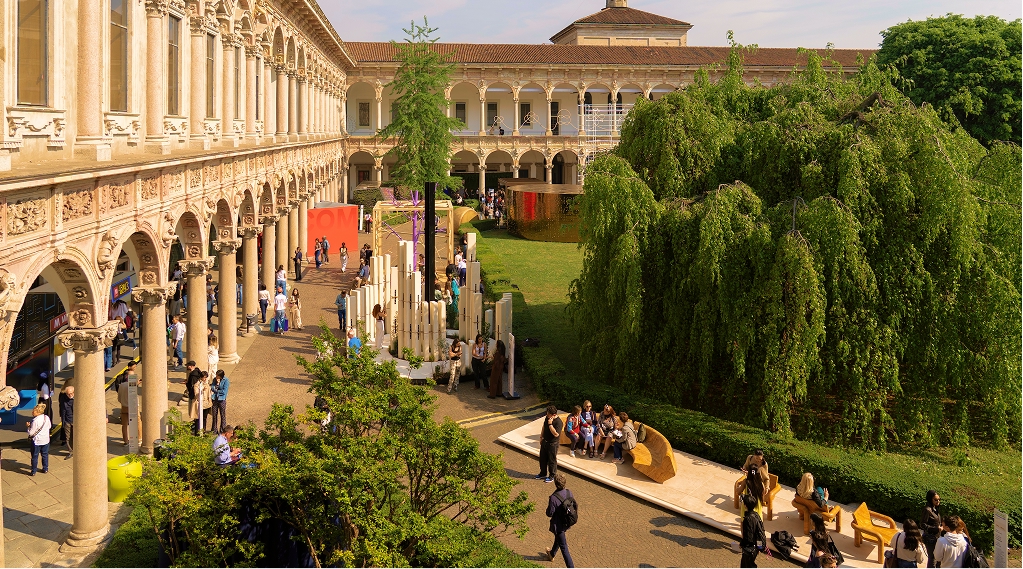
There is a second layer, harder to quantify, and it is the one visitors notice first: Milan does not stand still. Its calendar runs in two registers, and both do the same work.
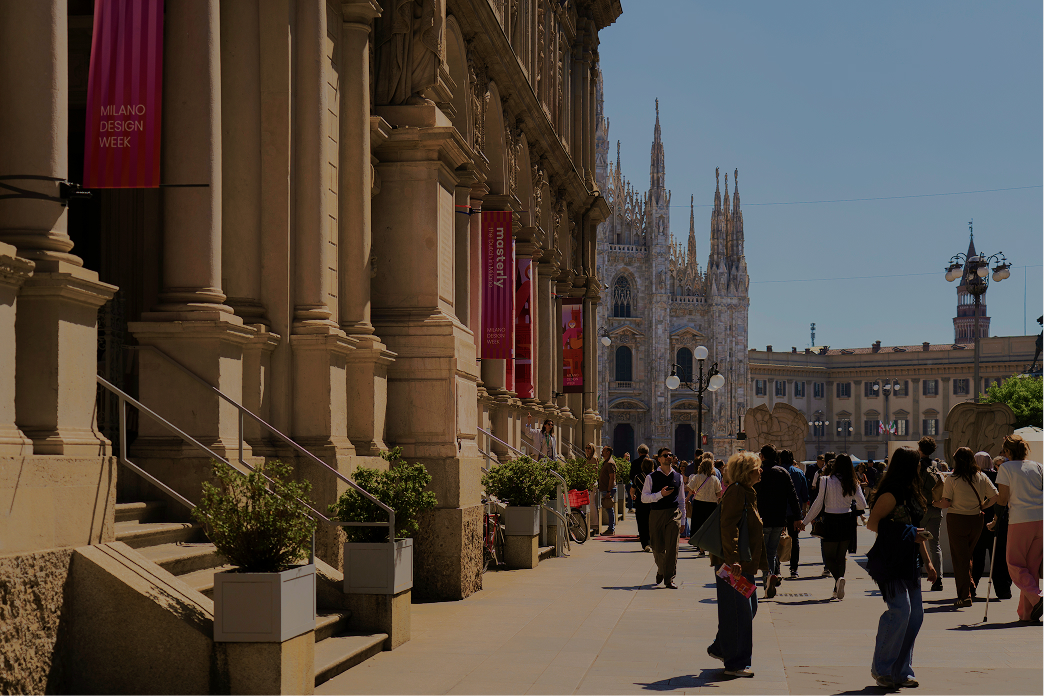
The first is the one the world already associates with the city. Fashion Week and Design Week return every year and consolidate as they go, now measured in economic impact rather than column inches.
The second is scientific and industrial, and it is where the city's clinical depth is on show. At the start of October the European Association for the Study of Diabetes brought thousands of clinicians to Allianz MiCo for its 62nd annual meeting. CPHI, the world's largest pharmaceutical trade fair, has now been staged in Milan twice, in 2024 and again this year, drawing more than 60,000 people from over 160 countries. The pipeline for the coming years is just as full: in 2028 the city will host the ESMO Congress of the European Society for Medical Oncology, the leading European oncology congress and one of the three most significant in the world.
The two registers look unrelated. They are not. What arrives in both cases is talent — designers, engineers, clinicians, researchers — and in both cases the city puts itself at that talent's disposal rather than simply renting it a hall. A congress is treated as an opening rather than an occasion: at EASD, a legacy programme gave local organisations exhibition space inside the congress, among them an early-stage company and Centro Cardiologico Monzino, putting young businesses and high-impact clinical projects in front of an international audience they would otherwise have spent years trying to reach.
THREE WHO CHOSE MILAN
Milan's third characteristic is the least discussed and arguably the most telling: the city actively recognises those who have succeeded within it, and brings them into the work of attracting the next arrivals.
Three recent examples come from fields with nothing in common.
Sabrina Maniscalco is a theoretical physicist from Mazara del Vallo who spent twenty-two years abroad — Bulgaria, South Africa, Scotland, and finally Finland, where she taught quantum information at the University of Helsinki and co-founded Algorithmiq in 2020. The company builds the software layer that makes quantum hardware commercially useful, with applications in chemistry, materials science and drug discovery. When it moved its headquarters to Milan, she moved with it.

“We did not come to Milan for the view. We came because the three things a deep-tech company needs — capital that understands long horizons, physicists we can actually hire, and customers in pharmaceuticals and materials within an hour of the office — are all here at the same time. That combination did not exist in Italy five years ago.”
Luca de Angelis is chief executive of Tech Europe Foundation, chaired by Ferruccio Resta. A Bocconi graduate who spent years at Bridgewater Associates in the United States before returning, he now runs the platform built to industrialise the decision Maniscalco made on her own.
“Italy is the world’s eighth-largest economy and roughly its thirty-third by the value of its unicorns. That gap is not a shortage of capital — capital finds good ideas. It is a shortage of conversion. Our job is to make it ordinary for a doctoral student in Milan to stay here, build a company and compete globally, rather than exceptional.”
Professor Stefano Del Prato works in Pisa. He helped bring the EASD congress to Milan nonetheless, choosing the city as the national platform on which to stage it — a judgment from outside Milan about what Milan can carry.
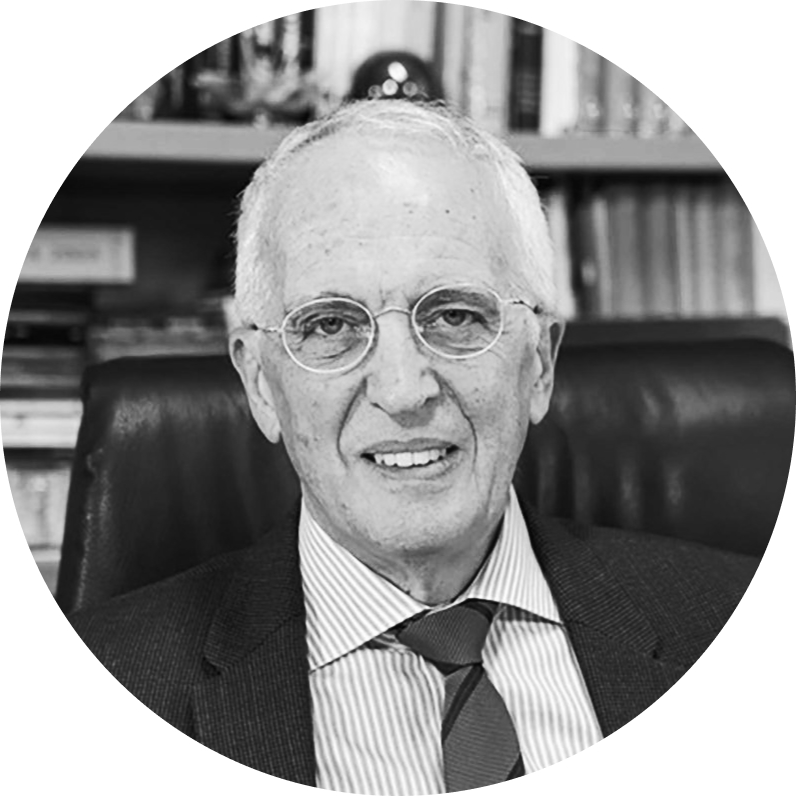
“The European Association for the Study of Diabetes always seeks locations for its Annual Meeting that can ensure a strong clinical network, foster connections, and create an environment where five days can become something truly lasting. Milano certainly delivered on all these fronts.”
THE PART THAT DOES NOT APPEAR ON THE BALANCE SHEET
None of this survives contact with reality unless people want to live in the city, which is why Milan's cultural life belongs in an investment argument rather than in a footnote to one.
On 7 December, Teatro alla Scala opens its 2026-27 season with Verdi's Otello, conducted by the Korean maestro Myung-Whun Chung — one of Europe's oldest institutions opening with an Italian masterwork under an international baton, on a date the whole city observes. It is as concise a statement of Milan's position as any economic indicator.
Culture here is not the dividend paid once the economy has performed; it is part of how the economy performs. Cultural institutions have regenerated whole districts. Design Week works because the city participates as an actor rather than a backdrop. And for the researcher or executive weighing a move, culture rarely appears as a line item in the decision — but it is almost always the reason the decision still holds five years later. It is also why the city's cultural institutions are treated as public infrastructure rather than ornament — funded, programmed and opened up on the understanding that they belong to the people who live here, not only to the people the city is trying to recruit.
THE RETURN
Cities competing for international investment lead with what they have, and Milan has a great deal: the universities, the hospitals, the capital, the companies, the talent. What it offers on top of that inventory is how the inventory behaves — as a system that moves compactly, connects an incoming investment to an open ecosystem within months rather than years, and treats each success as a reason to go looking for the next one.
For anyone deciding where to land a business, or where to stage an international event, that combination is the whole proposition. The assets make Milan worth considering; the way they work together is what makes the choice pay. The result is not simply attraction. It is a return — on the capital, on the research, on the decision to be here. That is a harder thing to build than a pitch, and a much harder thing for a competitor to copy.
CONNECT WITH MILAN
Milano & Partners is the official promotion agency of the city, established by the Municipality and the Chamber of Commerce. Its FDI team supports international companies, research institutions and investors looking to establish or expand a presence in Milan, while its Convention Bureau works with organisers of international congresses and events. Services are provided free of charge.
Get in touch at business.yesmilano.it

