
Ending AIDS is now a question of politics and medicine access
The tools to end AIDS exist, but millions still lack treatment, prevention and care. Closing these gaps demands affordable medicines, sustained financing at scale, stronger community leadership and the protection of human rights for everyone.
25 Nov 2026
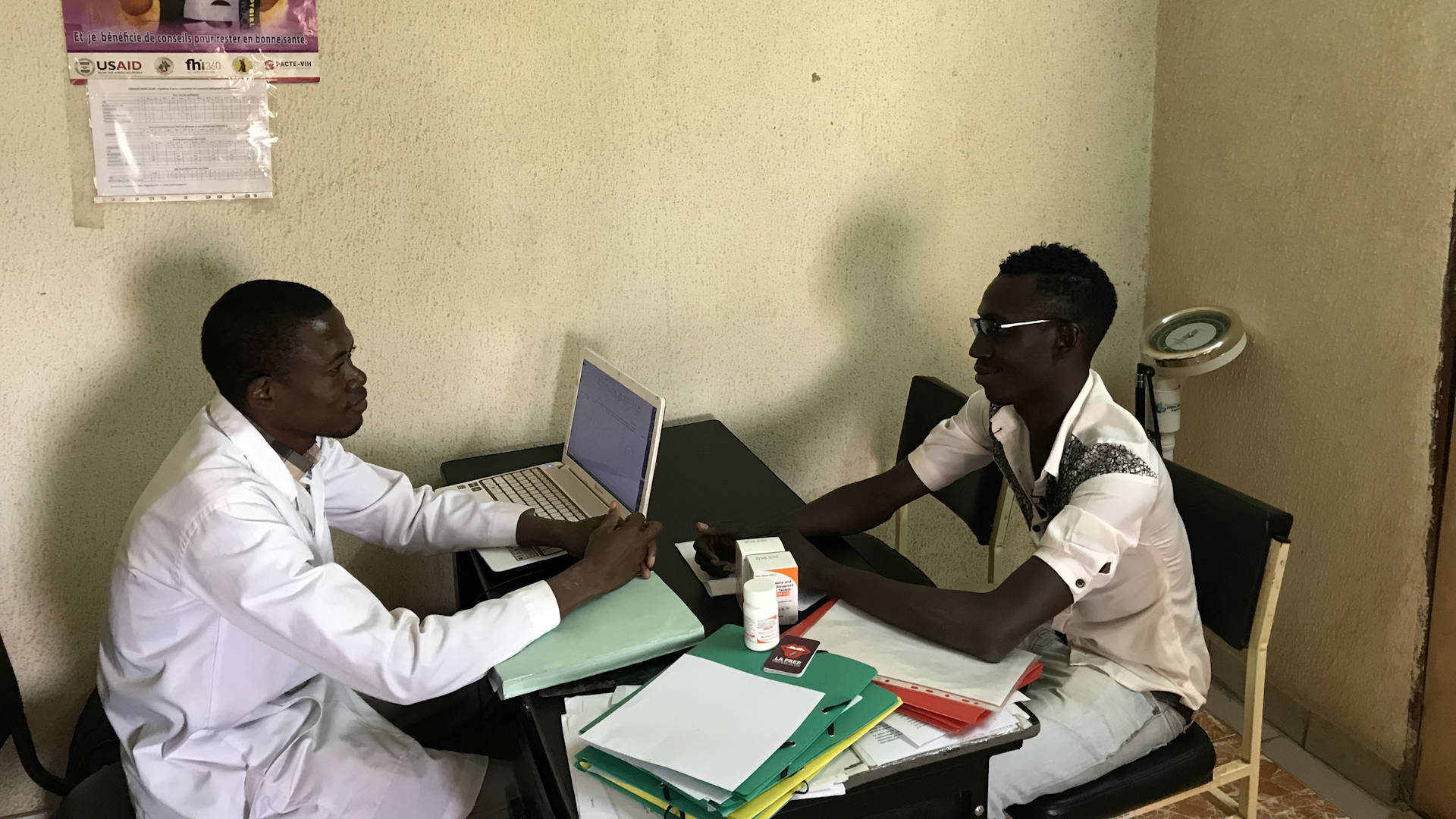
The world has the scientific tools to end AIDS. Yet progress risks unravelling—not because science has failed, but because political choices and economic barriers deny millions of people life-saving treatment.
Consider the contradiction. Today, 32m people1 are receiving life-saving HIV treatment. Medicines that can suppress the virus and prevent its transmission exist. A new preventive injection, given just twice a year, could dramatically reduce infections and help turn the tide of the epidemic. Yet in 2025, 1.2m people acquired HIV and 570,000 died of AIDS-related illnesses. Nearly 9m people living with HIV still lack treatment.2 Almost half of children living with HIV are not receiving life-saving medicine that could save their lives.
These are not failures of science. They are failures of access.
This World AIDS Day, our message is simple: Ending AIDS starts with access. Access to medicine, access to health services as well as new HIV-prevention tools, access to adequate financing and, fundamentally, access to human rights.
The history of AIDS shows what the world can achieve when it confronts inequality. In the early years of the epidemic, effective treatment was largely reserved for people in wealthy countries. Millions died unnecessarily elsewhere, particularly in Africa.
It took extraordinary mobilisation by people living with HIV, activists, governments and international partners to challenge monopolies, reduce medicine prices and build the Global Fund and the President’s Emergency Plan for AIDS Relief (PEPFAR). That struggle transformed global health. It established a powerful principle: life-saving medicines should not be a privilege of wealth or geography.
Today, that principle is being tested again.
First, comes access to basic care: HIV testing, therapies and medical innovations. The rollout of lenacapavir, a preventive injection given twice a year, provides a rare opening to halt transmission for young women facing high HIV risk, and for people who struggle to access daily prevention medicines, it could be transformative.
By June 2026, more than 50,000 people in nine3 African countries had received this innovation. Agreements should bring its annual price down to around $40 in lower-income countries from 2027. This is progress. But it is nowhere near the scale required. Millions need access, and affordable prices remain uncertain for many middle-income countries. The world cannot repeat the injustice of the early AIDS epidemic, when effective medicines existed but were priced beyond the reach of those who needed them most.
Securing affordable treatments will require governments to pool purchasing power and ease patent rules, and pharmaceutical firms to offer equitable pricing and licensing. Regional manufacturing capacity, particularly in Africa, must be strengthened. And innovation cannot replace the basics. New prevention technologies are arriving just as funding cuts are dismantling existing prevention programmes. Both are needed.
Second, access requires financing—and a fairer global economic system.
In 2025, international HIV financing fell by 18%,4 its steepest decline in almost two decades. The consequences are already visible. Thirteen million fewer HIV tests were conducted than in 2024. Across 47 countries,5 a survey of community organisations found that delivery of HIV-prevention medicines had fallen by half. These are not abstract budget reductions. They mean people going undiagnosed, infections that could have been prevented and lives placed at risk.
Countries are stepping up. Domestic HIV financing rose by 4% in 2025 to $10.4bn.6 More than 55 countries have committed to increasing their own investments. But governments cannot finance health with resources they do not have.
In 2020, more than 40% of African countries spent more on debt repayments than on healthcare.7 Many lose substantial public revenues through tax avoidance, illicit financial flows and unfair international tax arrangements. They are being asked to assume greater responsibility for health while the global financial system constrains their ability to do so.
The answer cannot simply be to tell poorer countries to spend more.
These nations need debt relief, fairer international taxation and stronger domestic revenue mobilisation. International financial institutions should support public investment in health, not squeeze it through austerity. There is also a vital role for wealthy countries, where they can honour their responsibilities through predictable financing and orderly transitions, rather than abrupt withdrawals.
Health spending is not merely a cost. It is an investment in human capabilities, economic productivity and social stability. Preventing HIV infection avoids decades of treatment costs. Keeping people healthy enables them to work, care for their families and contribute to their economies. Equitable access to health is both an economic necessity and a matter of justice.
Third, and most fundamentally, access depends on human rights. An innovative treatment is useless to someone who is afraid to enter a clinic. Across the world, discriminatory laws and practices continue to exclude people most at risk of HIV. Same-sex sexual relations are criminalised in 66 countries.8 Sex work is criminalised in 168.9 People who use drugs face punitive laws in much of the world. These policies do not stop HIV. They drive people underground, away from prevention, testing and treatment. Gender inequality is another powerful driver. In sub-Saharan Africa, around 3,00010 adolescent girls and young women acquire HIV every week. Violence, poverty and unequal power in relationships undermine their ability to protect themselves.
It also requires investing in communities. People living with HIV and organisations led by marginalised communities have been the backbone of the AIDS response. They reach people whom conventional health systems often fail to reach. They challenge stigma, defend rights and hold governments to account.
Yet these organisations are among the first to lose funding and increasingly face restrictions on their civic space.
Governments should fund community-led services, including through public contracts, and protect the freedom of communities to organise, advocate and deliver care. Community leadership is not an optional addition to health systems. It is essential to their effectiveness.
In June 2026, governments adopted a new United Nations Political Declaration committing to expand treatment and prevention, remove discriminatory barriers and mobilise $21.9bn11 annually for the HIV response by 2030.
If these commitments are fulfilled, an estimated 3.2m new HIV infections and 1.3m AIDS-related deaths could be averted by 2030.12
The commitments are there; the science is there; what remains uncertain is the political will.
The AIDS response has taught us that epidemics thrive on inequality and that determined collective action can overcome it. It has also shown that health breakthroughs deliver their greatest economic and social returns when their benefits are shared widely, rather than captured by a privileged few.
Scientific progress risks being undermined by shrinking public budgets and growing inequality. If new treatments are to transform lives, governments must fund resilient healthcare systems that guarantee care to all, irrespective of gender, income or location.
The world does not lack the means to end AIDS. It risks lacking the courage to make those means available to everyone.
Ending AIDS starts with access. And access starts with political choices.
Views or opinions expressed are those of the authors and any individuals cited, and do not necessarily reflect those of Economist Enterprise or any other member of The Economist Group.
References
- 1.UNAIDS. UNAIDS Special Report for the 26th International AIDS Conference: United to End AIDS [Internet]. Geneva: Joint United Nations Programme on HIV/AIDS; 2026 Jul [cited 2026 Nov 16]. Available from: https://www.unaids.org/sites/default/files/2026-09/20260727_special_report_IAC.pdf
- 2.UNAIDS. UNAIDS Special Report for the 26th International AIDS Conference: United to End AIDS [Internet]. Geneva: Joint United Nations Programme on HIV/AIDS; 2026 Jul [cited 2026 Nov 16]. Available from: https://www.unaids.org/sites/default/files/2026-09/20260727_special_report_IAC.pdf
- 3.Expanding prevention choice: Early lessons from twice-yearly Lenacapavir introduction, 26th International AIDS Conference satellite session. Rio de Janeiro; 2026 Jul 27.
- 4.Wexler A, Kates J, Oum S. Donor government funding for HIV in low- and middle-income countries in 2025 [Internet]. KFF; 2026 Jul 27 [cited 2026 Nov 18].; and UNAIDS. Overcoming disruption: transforming the AIDS response [Internet]. Geneva: Joint United Nations Programme on HIV/AIDS; 2025. Available from: https://www.kff.org/global-health-policy/donor-government-funding-for-hiv-in-low-and-middle-income-countries-in-2025/
- 5.Coalition PLUS, Sidaction, Frontline AIDS, Aidsfonds. US funding freeze: one year on, HIV response under pressure – survey [Internet]. 2026 Jan 20 [cited 2026 Nov 18]. Available at : https://www.coalitionplus.org/wp-content/uploads/2026/01/Enquete_CoalitionPLUS_VEN-Copie.pdf
- 6.UNAIDS. UNAIDS special report for the 26th International AIDS Conference: United to end AIDS [Internet]. Geneva: UNAIDS; 2026 Jul [cited 2026 Nov 18]. Available from: https://www.unaids.org/sites/default/files/2026-07/20260727_special_report_IAC_0.pdf
- 7.United Nations Office of the Special Adviser on Africa. Unpacking Africa’s debt: towards a lasting and durable solution [Internet]. New York: United Nations; 2024 [cited 2026 Nov 18]. Available at: https://www.un.org/osaa/sites/default/files/files/documents/2024/publications/2024-nepad-report_en.pdf
- 8.UNAIDS. UNAIDS Special Report for the 26th International AIDS Conference: United to End AIDS [Internet]. Geneva: Joint United Nations Programme on HIV/AIDS; 2026 Jul [cited 2026 Nov 16].; and UNAIDS and World Health Organisation. National Commitments and Policy Instrument 2017–2024 [Internet]. Supplemented by additional sources (see http://lawsandpolicies.unaids.org/) and Available from: https://www.unaids.org/sites/default/files/2026-09/20260727_special_report_IAC.pdf
- 9.UNAIDS. UNAIDS Special Report for the 26th International AIDS Conference: United to End AIDS [Internet]. Geneva: Joint United Nations Programme on HIV/AIDS; 2026 Jul [cited 2026 Nov 16].; and UNAIDS and World Health Organisation. National Commitments and Policy Instrument 2017–2024 [Internet]. Supplemented by additional sources (see http://lawsandpolicies.unaids.org/) and Available from: https://www.unaids.org/sites/default/files/2026-09/20260727_special_report_IAC.pdf
- 10.UNAIDS. UNAIDS Special Report for the 26th International AIDS Conference: United to End AIDS [Internet]. Geneva: Joint United Nations Programme on HIV/AIDS; 2026 July [cited 2026 Nov 16]. Available from: https://www.unaids.org/sites/default/files/2026-09/20260727_special_report_IAC.pdf
- 11.United Nations. UN Political Declaration on HIV/AIDS: United to End AIDS by 2030 [Internet]. 2026 Jun 19 [cited 2026 Nov 16]. Available from: https://docs.un.org/en/A/80/L.79
- 12.United Nations. UN Political Declaration on HIV/AIDS: United to End AIDS by 2030 [Internet]. 2026 Jun 19 [cited 2026 Nov 16]. Available from: https://docs.un.org/en/A/80/L.79