Water Access Imperative
The Water Access Imperative is a research programme designed to showcase the transformative impact of water-related investments

Water is an essential resource, fundamental to drinking, sanitation, agriculture, industry and energy production. It is indispensable for both individual well-being and global progress.
Despite advancements in recent decades, the United Nations estimates that 2.1bn people—one in four worldwide—still lack access to safely managed drinking water.
The crisis is most severe in Sub‑Saharan Africa and East Asia, where the majority of the communities continue to rely on unsafe and unreliable water sources.


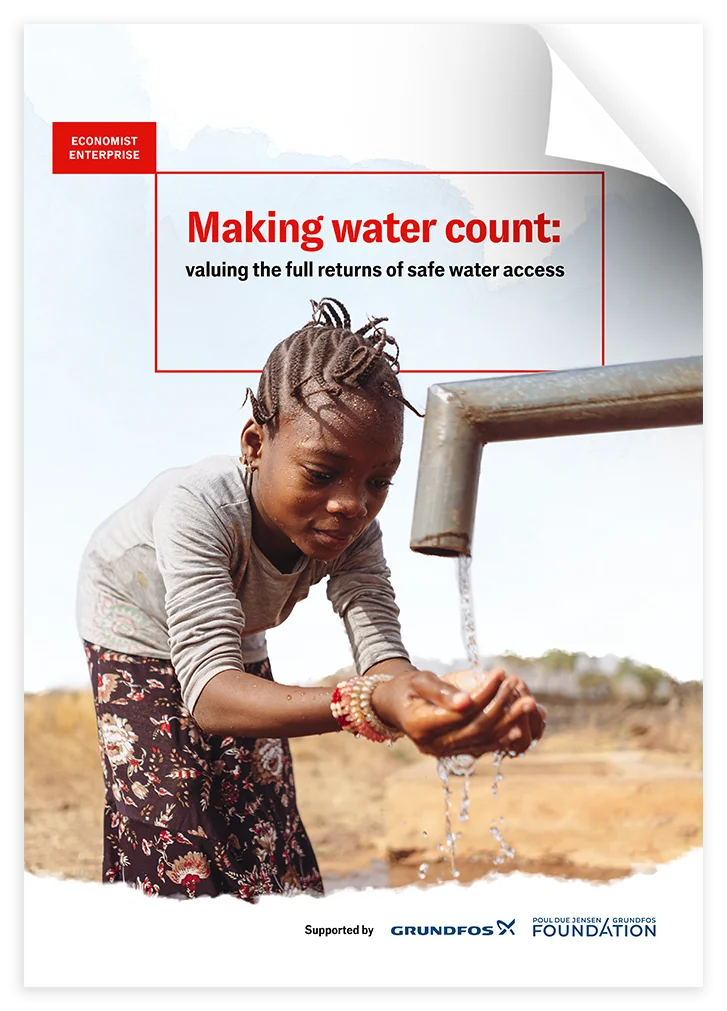
Making water count: valuing the full returns of safe water access
This report uses case studies to show how investment in safe water can drive economic and social gains, and what is needed to close the water financing gap.
Share of the population with access to safely managed drinking water services, 2024

To track global progress on drinking water access, the WHO and UNICEF Joint Monitoring Programme (JMP) developed a water service ladder, which has become a key global benchmark. At the top of this ladder is safely managed drinking water—defined as water that is safe to drink, available on premises, accessible when needed and free from contamination. This represents the gold standard in water access.
Drinking water service levels
Service level
Definition

Drinking water from an improved source that is accessible on premises, available when needed, and free from faecal and priority chemical contamination

Drinking water from an improved source, provided collection time is not more than 30 minutes for a round trip, including queuing

Drinking water from an improved source, for which collection time exceeds 30 minutes for a round trip, including queuing

Drinking water from an unprotected dug well or unprotected spring

Drinking water directly from a river, dam, lake, pond, stream, canal or irrigation canal
The scale of the global water access challenge is evident in the numbers. Among the 2.2bn people without safely managed water, 1.5bn rely on basic water services, 287m only have access to limited services, 302m use unimproved sources and 106m depend on rivers, lakes and other surface water sources for drinking water.1
This lack of access to clean drinking water has severe consequences for human health, economic productivity and environmental sustainability.

Impacts

Health

Labour market

Economic

Environmental
In human terms, contaminated water is a leading cause of waterborne diseases such as cholera and diarrhoea, putting millions at risk. The WHO estimates that nearly 1m people die each year from diarrhoea, which is linked to unsafe drinking water, poor sanitation and inadequate hygiene.
Women and girls, who often bear the responsibility for collecting water, are disproportionately affected: globally, women and girls collectively spend approximately 200m hours each day fetching water—time that could otherwise be dedicated to their education or other productive activities.2
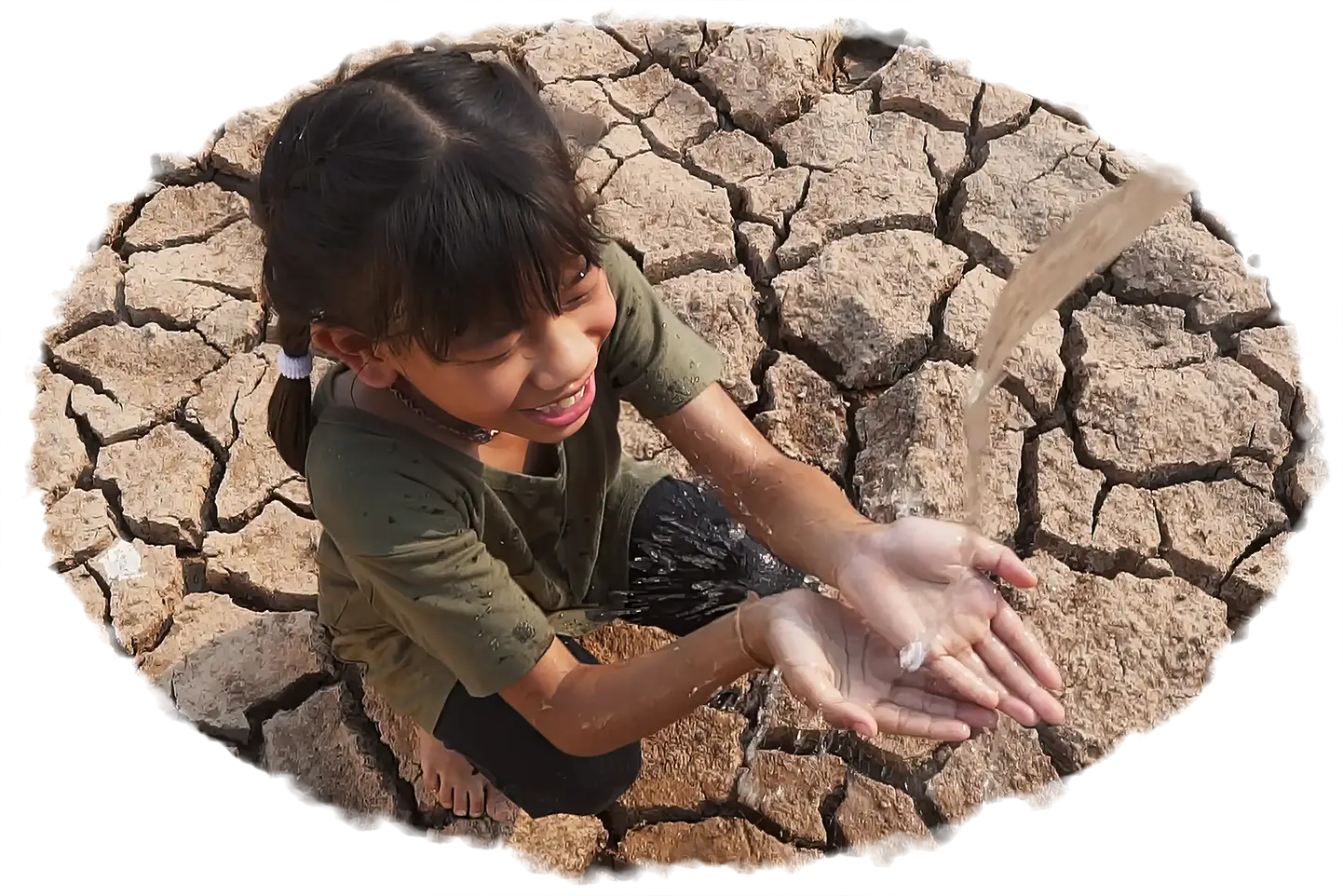
Inadequate access to clean water also provokes extensive environmental and climate-related consequences, creating a vicious cycle that exacerbates both global water stress and climate change.
In water-scarce regions, communities often rely on unsustainable groundwater extraction to meet their needs. Over-pumping depletes aquifers and lowers water tables, which leads to long-term damage to ecosystems. The resulting groundwater depletion significantly reduces the availability of fresh water for future generations, posing long-term risks to water security.
Despite the severity and breadth of the impacts, shrinking funding gaps remain a significant challenge. The World Bank estimates that an additional US$85.6bn annual investment is needed to achieve safely managed water and sanitation for all by 2030, while current investments stand at just US$28.4bn per year, according to a 2024 report.3
worldwide lack access to safely managed drinking water
are spent daily by women and girls globally collecting water
is the additional annual investment needed to achieve safely managed water and sanitation for all by 2030
Addressing the global water crisis requires co-ordinated action from governments, international organisations, the private sector and local communities. Investments in water infrastructure, innovative technologies and comprehensive water management strategies are essential to ensure universal and equitable access to safe drinking water.
Methodology report
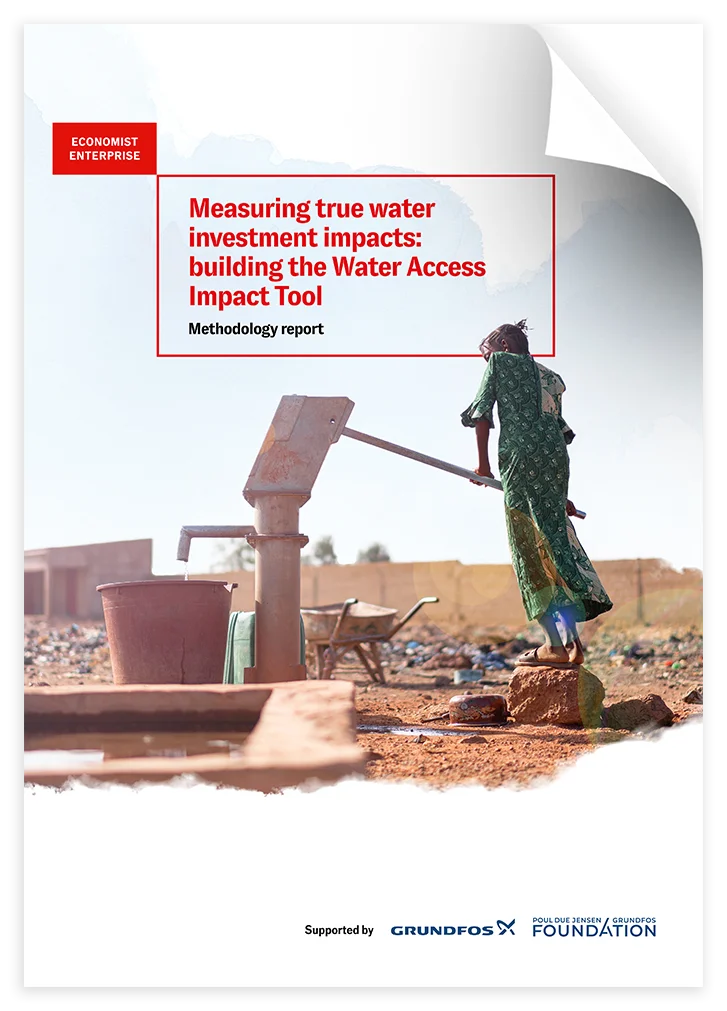
The Water Access Impact Tool methodology report details how user inputs feed into the model to produce cost and impact estimates, while also outlining the key assumptions and limitations underpinning the current framework.
Sources
- UNICEF: Drinking Water. August 2025. Available at: https://data.unicef.org/topic/water-and-sanitation/drinking-water/
- Water.org: A Women's Crisis. Available at: https://water.org/our-impact/water-crisis/womens-crisis/
- Water.org and WaterEquity: Invest in people, progress, and possibility. September 2024. Available at: https://waterequity.com/wp-content/uploads/2024/09/Water.org-WaterEquity-overview-LE-digital.pdf

The Water Access Impact Tool measures the social and economic impacts of enabling access to safe drinking water.
It provides investors, businesses and other key water stakeholders with estimates of the benefits of investing in water access in countries around the world.