
Ocean innovation: the engine shaping the next phase of the ocean economy
When coral reefs, mangroves, fisheries, and coastal ecosystems weaken, the economic consequences follow quickly: lost yields, declining tourism, damaged ports, rising insurance costs and shrinking local employment.


8 Jun 2026
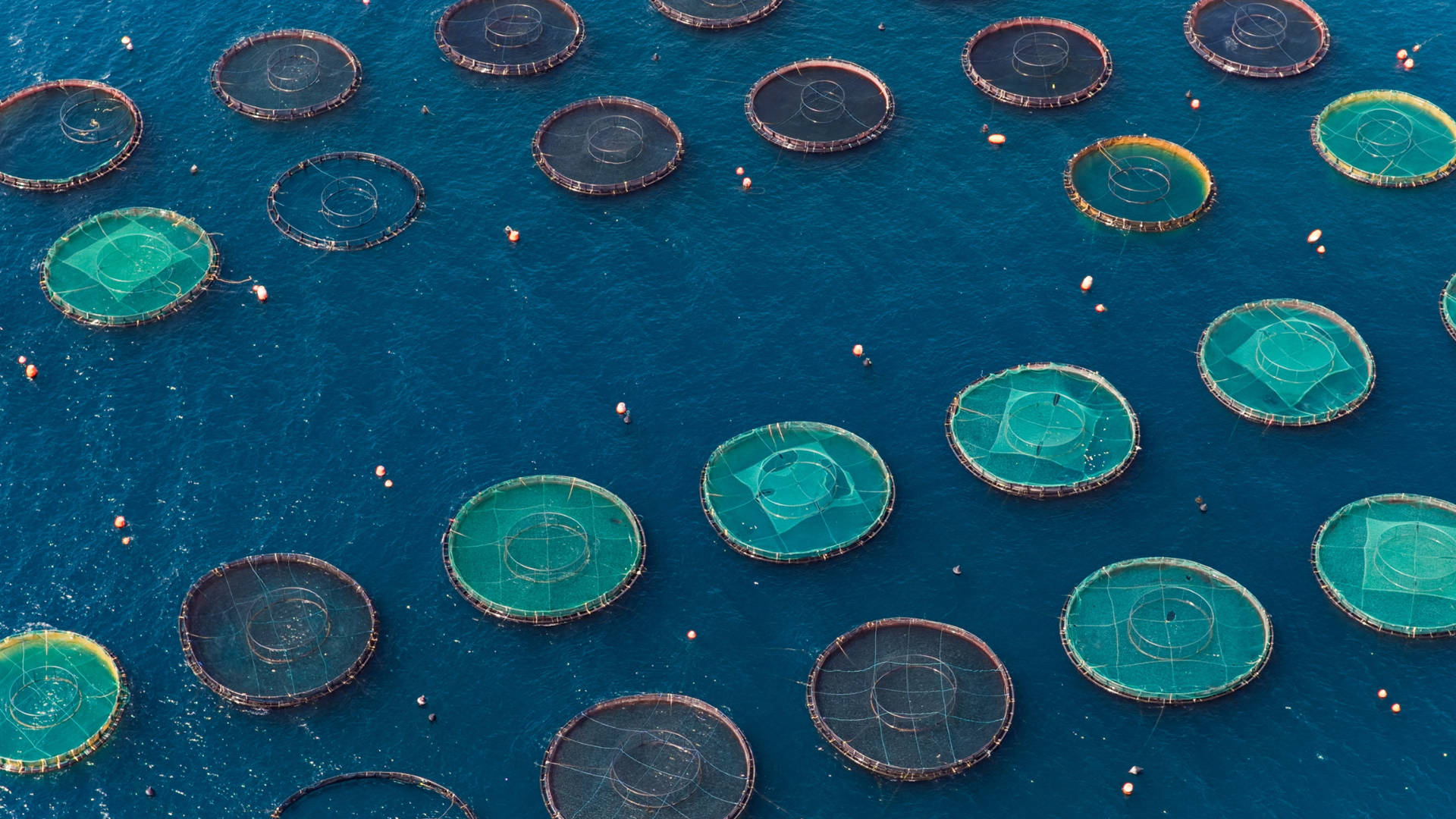
Over the past 25 years, economic activities based on the ocean have expanded roughly 1.3 times faster than the rest of the global economy. Advances in energy, food systems, logistics and digital infrastructure have pushed ocean-based industries into the core of global growth. Today, the ocean economy generates an estimated $3.3trn in annual value, and employs more than 100m people worldwide.
This trajectory is often presented as a success story. Yet beneath the headline lies a harder truth: the oceans regulate the climate systems on which all economic growth ultimately depends.
If degradation continues at its current rate, up to $8.5trn in ocean-dependent economic value could be exposed to physical and transition risks over the next 15 years, with costs that are immediate and systemic. Coral reefs, mangroves, fisheries, and coastal ecosystems are not only environmental assets; they are productive infrastructure. When they weaken, the economic consequences follow quickly: lost yields, declining tourism, damaged ports, rising insurance costs and shrinking local employment.
The best tool for resilient growth
Ocean innovation refers to the growing range of technologies, business models, and practices that aim to generate value from the ocean while restoring its health. It is a field that spans multiple sectors rather than a single sector.
Ocean innovation is often presented as an environmental solution, and it is. Ocean-based solutions could deliver up to 35% of the emissions reductions needed to limit global warming to 1.5°C by 2050. But the stakes are equally human and economic: protecting the systems that underpin ocean-based production sustains jobs, stabilises returns and reduces long-term risk.
Currently, this sector is experiencing an unprecedented moment of convergence. For years, ocean innovation advanced in silos, with restoration, marine renewables, biotech, shipping and monitoring each developing within their own communities of funders and buyers. Today, that dynamic is beginning to shift: enabling technologies such as AI, autonomous platforms and satellite data are increasingly applicable across multiple ocean sectors; capital is flowing at growing scale through blue bonds and blended finance; the policy environment is taking shape, from the IMO's 2050 net-zero target for shipping to the EU Nature Restoration Regulation and the High Seas Treaty; and corporate scope-3 commitments are starting to pull ocean solutions into mainstream supply chains. In this movement, sectors including shipping, aquaculture, offshore energy and coastal infrastructure are showing early signs of transitioning from extractive to regenerative models. The Spanish company bound4blue points to how this convergence is playing out: its eSAIL wind-assisted propulsion systems are reducing fuel consumption on commercial vessels. Recently, the company closed a $44m funding round in December 2025, and its technology has been adopted by shipowners including Maersk Tankers, Eastern Pacific Shipping and Odfjell.
Innovation also has the potential to close the ocean-economy investment gap, which has historically attracted less than 0.01% of total investments and under 1% of both international philanthropic funding and official development assistance. For example, the cumulative enterprise value of early-stage ocean innovation from marine biotechnology, ocean-based energy, pollution mitigation and restoration has grown from $1.1bn in 2010 to nearly $25bn by 2025. Investment is also surging. Blue-labelled sustainable bonds totalled $19bn between 2015 and 2024, with 58% issued in just the past two years.
As this momentum builds, the question becomes less about whether solutions exist and more about whether they can be deployed at speed. Ocean-focused accelerator programmes are playing a role in bridging this gap. One example is the StartBlue accelerator at University of California San Diego’s Scripps Institution of Oceanography, which has disbursed $1.26m in non-dilutive funding to 34 early-stage companies, which have in turn raised over $17m while on the programme.
The ocean economy can shift from an extractive growth model to one built on regenerative approaches. In practice, the following examples illustrate what resilient, regenerative growth looks like today.
Transformation across sectors: key examples of innovation today
Coral Vita has built a scalable business around reef regeneration: using advanced cultivation techniques to accelerate coral growth by up to 50 times natural rates. The company has cultivated over 100,000 coral specimens across 52 species, becoming one of the first coral-restoration companies to raise Series A funding.
Norwegian start-up Ava Ocean's technology transforms seabed shellfish harvesting worldwide, replacing environmentally destructive dredging and trawling with a precision system that uses cameras and sensors to selectively harvest scallops, leaving the seafloor intact and minimising bycatch.
The Irish start-up Gazelle Wind Power is advancing floating offshore-wind platforms that use approximately 70% less steel than conventional designs, reducing costs and unlocking access to deep-water sites where wind resources are strongest, which is essential for scaling ocean-based renewable energy beyond shallow coastal waters.
Hullbot's autonomous hull-cleaning robots cut fuel consumption by 15-26% across more than 80 vessels globally by addressing marine biofouling, demonstrating how operational improvements can benefit both economics and the environment across the maritime sector.
Del Mar Oceanographic (DMO), a spin-out from the Scripps Institution of Oceanography, developed the Wirewalker at Scripps. This wave-powered autonomous platform delivers high-resolution ocean-observation data globally. While in the StartBlue programme, DMO conducted a successful sea trial of its new product, Livewire, which integrates onboard power generation for long-endurance oceanographic monitoring—increasingly vital as ecosystems face mounting pressure.
The ecosystems that can scale it The future of the ocean economy depends on cross-sector collaboration at scale to bring together science, finance and policy with on-the-ground conservation efforts and the latest innovations. Resilience is increasingly being priced into ocean markets. Solutions that protect the productive base of the ocean economy are starting to attract capital not because they are “good”, but because they reduce risk and support long-term returns.
Capital alone, however, is not enough. Scaling ocean innovation also requires a co-ordinated ecosystem that links science, entrepreneurs, investors, corporates and public institutions, so that ideas move from research to market adoption.
Many initiatives are under way to grow entrepreneurship efforts, such as at organisations like 1000 Ocean Startups and academic institutions like UC San Diego. Together these communities help good ideas move from early-stage concepts to scaled solutions, combining science, investment and entrepreneurial talent.
Economies that plunder the ocean will, in time, plunder themselves.
Views or opinions expressed are those of the author and any individuals cited, and do not necessarily reflect those of Economist Enterprise or any other member of The Economist Group.