


Behind every product on grocery-store shelves is a journey: how that product got from the farm where it was grown to the shopping basket of the consumer. And right now, that journey is undergoing a revolution.
Over the next decade, the global agriculture industry must meet two key challenges. First, it needs to increase food production. More than 800m people around the world are undernourished,1 and the population continues to grow. By 2050, there will be almost 2bn more people on the planet than there are today.2
Second, the industry needs to reduce its carbon emissions. According to the Intergovernmental Panel on Climate Change (IPCC), 22% of global greenhouse gas emissions are derived from agriculture, forestry and other land use—and once our food has been grown, it needs to be distributed. Transportation contributes a further 15% of global greenhouse gas emissions.3
Meeting these challenges will mean that agriculture and transportation will play a central role in decarbonising the world.
Cargill, a global leader in both agriculture and transportation, is one of the companies at the forefront of driving this change. It is the largest privately held company in North America, employing over 160,000 people across 70 countries and transporting 220m tonnes of cargo each year in a fleet of 700 ships. Cargill’s scale makes it a crucial player, on both land and sea, as the world tries to reduce carbon emissions while producing the food we need to feed a growing global population.

1m
Cargill RegenConnect® has enrolled nearly 1m acres across 24 US states, and is also being rolled out in France, Poland, Romania and Germany
Evolution in farming
The roots of change start on the farm. New technologies for planting and monitoring are being devised each year, and new crop varieties are frequently introduced. To stay ahead of these developments, farmers need support from educators and innovators to take advantage of the opportunities to increase productivity and reduce greenhouse gas emissions.
Cargill is providing that support. In 2021 the company launched Cargill RegenConnect®, which helps farmers adopt regenerative agriculture practices through agronomic and financial support. This is one of many programmes developed by Cargill to drive the company towards an ambitious goal: to support farmer adoption of regenerative agriculture practices across 10m acres of farmland in North America by 2030.4
“All roads in our decarbonisation journey begin with the farmer,” says Roger Watchorn, who heads Cargill’s agricultural supply chain. He says that Cargill RegenConnect® is encouraging farmers to think about how regenerative agriculture can help build climate resiliency and improve farm productivity.
Cargill RegenConnect® supports farmers as they switch to lower-carbon farming practices that produce positive environmental outcomes. These practices include the planting of cover crops, which enables the soil to draw down and store more carbon from the atmosphere; and low- or no-till planting, which helps to prevent the release of carbon sequestered in soil back into the air.
So far, Cargill RegenConnect® has enrolled nearly 1m acres across 24 US states, and is also being rolled out in France, Poland, Romania and Germany. As the programme expands, so does Cargill’s network of on-the-ground experts, who partner with farmers to help them adapt.
“We work directly with farmers to help make the transition easier,” Mr Watchorn says. “Every farm is unique and in a different place when it comes to adoption, which is why the partnership is so critical.”
As farmers adopt regenerative practices, they need to be able to measure their progress. Cargill has partnered with Regrow, a carbon-measurement firm, to help farmers monitor, report and verify carbon outcomes using in-field data, remote sensing, and crop- and soil-health modelling.
Farming practices are not universal. What works in Wisconsin may not work in New South Wales. Cargill has developed partnerships with local organisations around the world, including Nutrien Ag Solutions in Australia, where they aim to reduce emissions from canola production by 20-25%, while helping farmers maintain or increase yield and profitability.5

“Every farm is unique and in a different place when it comes to adoption, which is why the partnership is so critical.”
Roger Watchorn, head of Cargill’s agricultural supply chain
The transportation factor
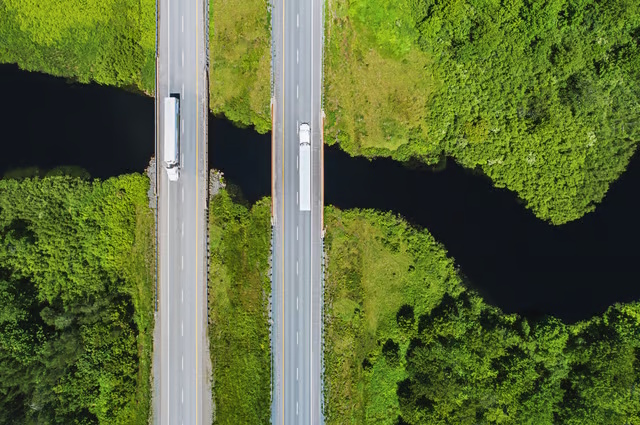
Changes on the farm are only half the story. Beyond adapting how we grow food, we also need to transform how we transport it.
For Cargill, this has two components: offering lower-carbon fuel options through lower-carbon fuel feedstocks, and providing decarbonisation solutions for its ocean transportation business (a sector that moves about 60% of the world’s food).6
Renewable fuels offer an opportunity to decarbonise not only the movement of food, feed and fibre, but also the broader transportation sector. Cargill is partnering with the travel stop company Love’s on a venture called Heartwell Renewables to produce biofuels using tallow. The company’s plant in Nebraska will produce 80m gallons of this fuel each year.7 Cargill has also developed an advanced biodiesel plant in Ghent, Belgium, which will convert waste oils and residues into renewable fuel. The plant is expected to produce 115,000 metric tonnes a year. Using that quantity of biodiesel instead of regular diesel delivers big emissions savings—the equivalent of removing roughly 90,000 cars from the road.8
“Cargill has ambitious targets for decarbonising its shipping fleet. The company aims to reduce carbon emissions from shipping by 30% by 2030.”
Jan Dieleman, president of Cargill Ocean Transportation

Looking to the ocean
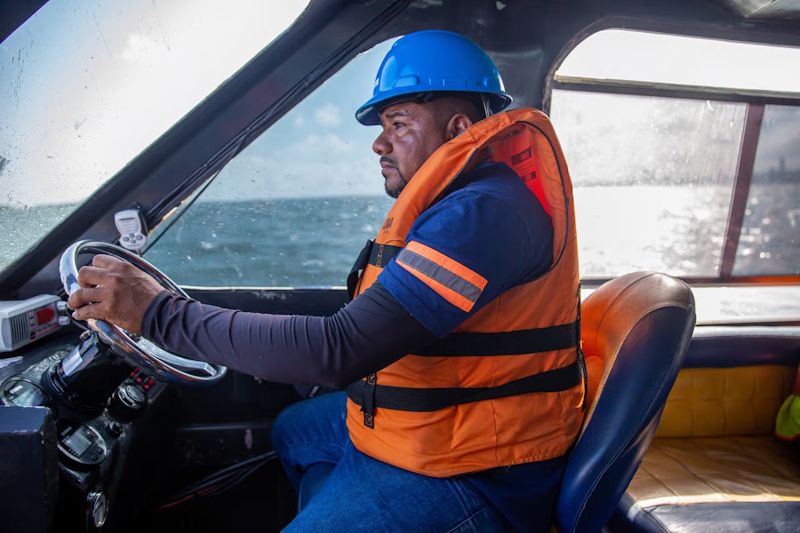
Maritime cargo is the backbone of global trade. Around 80% of goods are transported by ship.9 That puts the shipping industry at the centre of solving the carbon challenge, and doing so will require a broad approach.
“There’s not going to be one solution,” says Jan Dieleman, president of Cargill Ocean Transportation. “There will be multiple solutions.”
At sea, Cargill has ambitious targets for decarbonising its shipping fleet. The company aims to reduce carbon emissions from shipping by 30% by 2030. It is investing and working with partners to create solutions that combine digital technologies and other innovations to make shipping more sustainable.
One strategy is to increase the adoption of biofuels in shipping. Biofuels present a readily available solution without the need for additional investments or modifications to shipping fleets. Cargill has a biofuels programme in place between Singapore and the ports of Rotterdam and Amsterdam in the Netherlands, one of the world’s busiest shipping routes.
The company was also one of the first to order methanol-fuelled, ocean-going, dry bulk vessels, which will help to achieve Scope 3 emissions goals. Replacing fuel oil with methanol fuel reduces emissions of carbon dioxide, nitrogen oxides and particulates.
Another transformation is taking place on deck, rather than below it, thanks to innovative partnerships. This year, Cargill launched its first vessel fitted with WindWings—sails for cargo vessels that were designed with BAR Technologies, a firm founded by Olympic sailor Ben Ainslie, to harness wind energy. The sails, which tower over the ship, dramatically increase the fuel efficiency of the vessel.
“If you optimise the ship for wind, you can probably reduce fuel consumption by up to 30%,” Mr Dieleman says.
The sight of these ships is a vision of a cleaner future—a new age of sail. “The transition,” Mr Dieleman points out, “is going faster in shipping than people expected.”
References
- 1.Food and Agriculture Organization of the United , “UN Report: Global hunger numbers rose to as many as 828 million in 2021,” 6 July 2022.: https://insights.economistenterprise.com/sustainability/decarbonising-agriculture-and-transportation/
- 2.
- 3.Intergovernmental Panel on Climate Change, “Climate Change and Land” special report, 2020. : https://www.ipcc.ch/site/assets/uploads/sites/4/2020/02/SPM_Updated-Jan20.pdf
- 4.Cargill, “Digging in: Cargill’s regenerative agriculture program brings healthier soil and profits to more European, U.S. farmers,” 23 May 2023. : https://insights.economistenterprise.com/sustainability/decarbonising-agriculture-and-transportation/
- 5.Nutrien Ag Solutions, “Nutrien and Cargill collaborate on lower emission canola pilot in Southern NSW.” : https://www.nutrienagsolutions.com.au/nutrien-and-cargill-collaborate-lower-emission-canola-pilot-southern-nsw#:~:text=in%20Southern%20NSW-,Nutrien%20and%20Cargill%20collaborate%20on%20lower%20emission%20canola%20pilot%20in,farm%20emissions%20in%20canola%20production.
- 6.Our World in Data, “Very little of global food is transported by air; this greatly reduces the climate benefits of eating local,” 28 Jan 2020. : https://ourworldindata.org/food-transport-by-mode#:~:text=World%20in%20Data-,Very%20little%20of%20global%20food%20is%20transported%20by%20air%3B%20this,miles%20are%20from%20air%20travel.
- 7.Cargill, “Renewable diesel production expanding thanks to Love’s and Cargill joint venture,” 20 April 2021. : https://www.cargill.com/2021/renewable-diesel-production-expanding-thanks-to-loves-cargill
- 8.Cargill, “2023 Annual Report - Finding Solutions.” : https://www.cargill.com/about/2023-annual-report/finding-solutions
- 9.United Nations Conference on Trade and Development, “Review of Maritime Transport 2022.” : https://unctad.org/publication/review-maritime-transport-2022
