


Procurement has long relied on historical data, reactive analysis and professional expertise to manage economic risks and deliver sustained value for chief experience officers (CXOs). As markets become increasingly volatile, faster and sharper analysis is essential for leaders to act confidently—without it, even highly skilled professionals will be tested.
Happily, along with uncertainty, technological advancement is also a feature of today’s world. Artificial intelligence (AI) in particular is enabling procurement to become the home for forward planning, forecasting and supply-chain modelling. That, in turn, is thrusting procurement teams, as trusted partners, into a more critical position through which they can deliver sustainable business value. One recent innovation transforming supply-chain operations is agentic AI, a strand of AI that can make decisions and take actions to achieve specific goals autonomously.
Consider a typical three-week Request for Proposal (RFP) analysis cycle. Category managers run dozens of these each year across various categories. Their teams work through complex scenarios, managing large spreadsheets, handling currency conversions, gathering insights on supplier capacities and developing what-if models. By the time this analysis is complete, new information will almost certainly have arrived and market conditions will have shifted, in some cases even requiring teams to start afresh.
“Now, we have trained AI agents to understand the nuances, and we can leave it to the agent to run scenario analysis, understand supplier sentiments and build real-time award bundles, which serve as the starting-point for a category manager. This removes much of the time spent on analysis, allowing more focus on relationship management,” says Vasant Mugada, vice president, consulting at GEP, a procurement and supply-chain software provider specialising in AI-enabled technology.

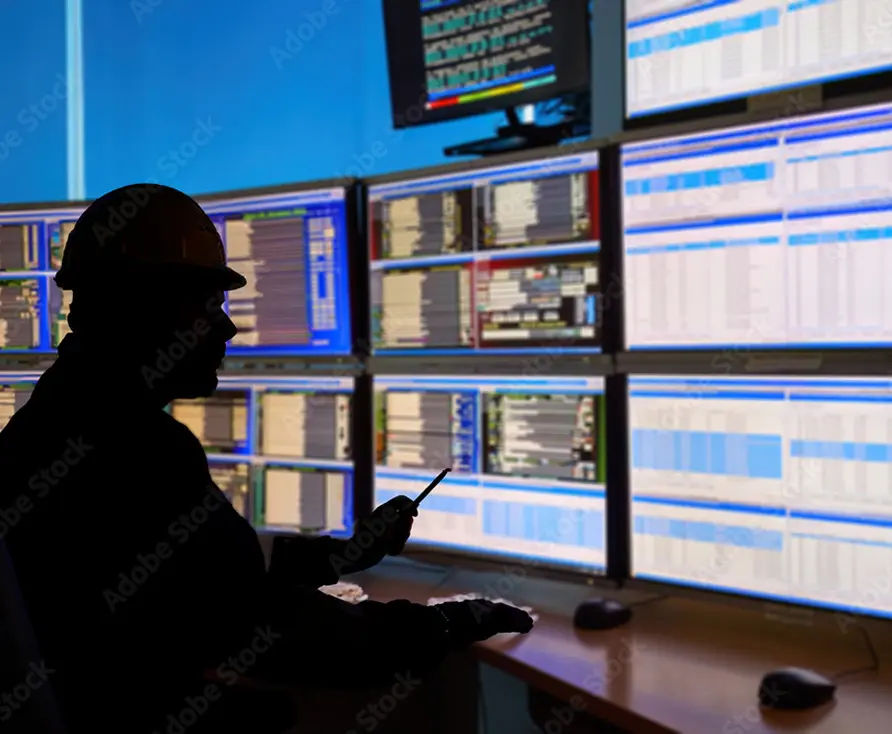
AI agents are becoming so advanced that they can process data about suppliers, currency and situational market dynamics to generate an accurate—and current—picture of procurement landscapes. Tariff information, which can shift rapidly, falls to the agent to incorporate into its models. These digital co-workers also lighten the load for clients managing multiple suppliers, producing cost models, pricing forecasts, budget plans and risk-mitigation strategies. Some are trained to help firms understand the risks and rewards of supplier relationships too, including which suppliers to negotiate with, and in what tone. Mr Mugada says that in one case, he used 14 different AI agents to support contract renewals. Each one handled the complex business landscape and provided continuously updated cost structures, risk exposure maps and opportunity assessments. This helped his team plan using live analysis, rather than relying on historical data for decisions.
One challenge in deploying AI agents at scale is that every organisation operates differently. Off-the-shelf solutions are unlikely to fit neatly into existing workflows, while bespoke systems can be costly and slow to build. For GEP, adaptable “low-code, no-code” platforms, where pre-built agents serve as a foundation that can be customised to specific data and parameters, are the answer. “Everyone wants something which is very specific to them,” Mr Mugada explains. “The low-code/no-code approach helps us tailor something—and quickly—which makes it a lot more powerful.” When an agent is learning continuously within the procurement and supply-chain context in which it operates, its ability to generate useful insights for forecasting, planning and risk management improves exponentially.

“Everyone wants something which is very specific to them. The low-code/no-code approach helps us tailor something—and quickly—which makes it a lot more powerful.”
Vasant Mugada
Vice-president, consulting at GEP
One key aspect that makes this approach valuable is the current VUCA (volatile, uncertain, complex, ambiguous) environment. Some AI systems, for example, can calculate exposure and weigh strategic questions in real time, including when and where to diversify geographically. If a tariff becomes less favourable in one country, the system can identify opportunities to shift operations elsewhere. As policies update weekly, continuous monitoring replaces one-off analysis, feeding directly into forecasting, and procurement teams become the enterprise’s early-warning system against risks.

Procurement is undoubtedly undergoing a technological revolution, the impact of which will reach every aspect of the profession—from the skills needed to effectively do the job, to the size of the teams required, to the role of leaders. Mr Mugada notes that the need for an increased headcount may reduce because the function will “become more effective, more efficient, more reliable and more real-time”. He also points out that employees will need to be upskilled to ensure they are able to use these essential AI tools. The strategic value and influence of procurement is set to increase as a result. “Real-time forecasting capability makes procurement a C-suite partner in scenario planning, risk mitigation and strategic pivots,” Mr Mugada adds.
“Real-time forecasting capability makes procurement a C-suite partner in scenario planning, risk mitigation and strategic pivots.”
Vasant Mugada
Vice-president, consulting at GEP
With market conditions expected to remain volatile, the old model of quarterly planning in procurement is unlikely to hold up. Companies need to embrace real-time intelligence gathering to make informed decisions. Procurement, at the intersection of spending, supplier relationships and market dynamics, must be well equipped to provide analysis, strategic insight and risk forecasting that keeps pace with such complex geopolitical movements.
More from GEP
Start of carousel.
How agentic AI is transforming procurement’s strategic focus
The AI revolution sweeping across corporate functions, promising to increase efficiency by not just delivering but acting on radically improved data insights, is changing the fundamental nature of procurement.

How ACR is crafting a strategic procurement function
Before being reeled in by automation’s allure, high-performing procurement teams are upskilling

Agentic should-cost modelling is changing procurement and product design
Procurement teams can now negotiate, uncover value and inform product development by delivering cost intelligence at unprecedented speed and scale

More than the ghost in the machine: human agency in agentic AI deployment
The increasing uptake of agentic AI by procurement departments is not marginalising human roles. But it is changing them

Agent of agents: working towards total agentic orchestration in procurement
As multiple agents collaborate across complex workflows, they increasingly deliver not just automation of routine tasks, but strategic business goals

How Indorama Ventures built an AI strategy on long-term thinking
The petrochemicals producer has embarked upon an ambitious digital transformation journey

The AI bridge between finance and procurement functions
CFOs and CPOs are building strategic alliances in the war against costs
Inside Caterpillar’s indirect-procurement reboot
The Fortune 100 manufacturer has enhanced visibility, efficiency, compliance and savings through strategic centralisation
End of carousel.
Contact GEP to learn more about supply chain transformations
More from Economist Enterprise

Start of carousel.

How far will AI agents go?
Examine how autonomous AI agents are reshaping procurement and supply chain operations. Based on an Economist Enterprise survey.

The transformative role of supply-chain leaders in today’s business
Explore how executive supply chain roles are evolving to manage geopolitical risk, disruption, and modern procurement strategies.

The current and future use of gen-AI in supply chains
Discover how global enterprises are adopting generative AI across procurement and supply chain workflows to boost efficiency and insights.

Reskilling procurement teams for the age of agentic AI
This Economist Enterprise report which explores the reskilling challenges for procurement teams in the age of Agentic AI.

Greener supply chains need smarter AI systems
Learn how artificial intelligence helps enterprises build greener supply chains and overcome environmental, social, and operational challenges.

The agentic AI implementation challenge
The Agentic AI Implementation Challenge explores the challenges of adopting artificial intelligence in procurement and supply chain.
End of carousel.