

Trade & Geopolitics
In good company: where high impact meets low ego
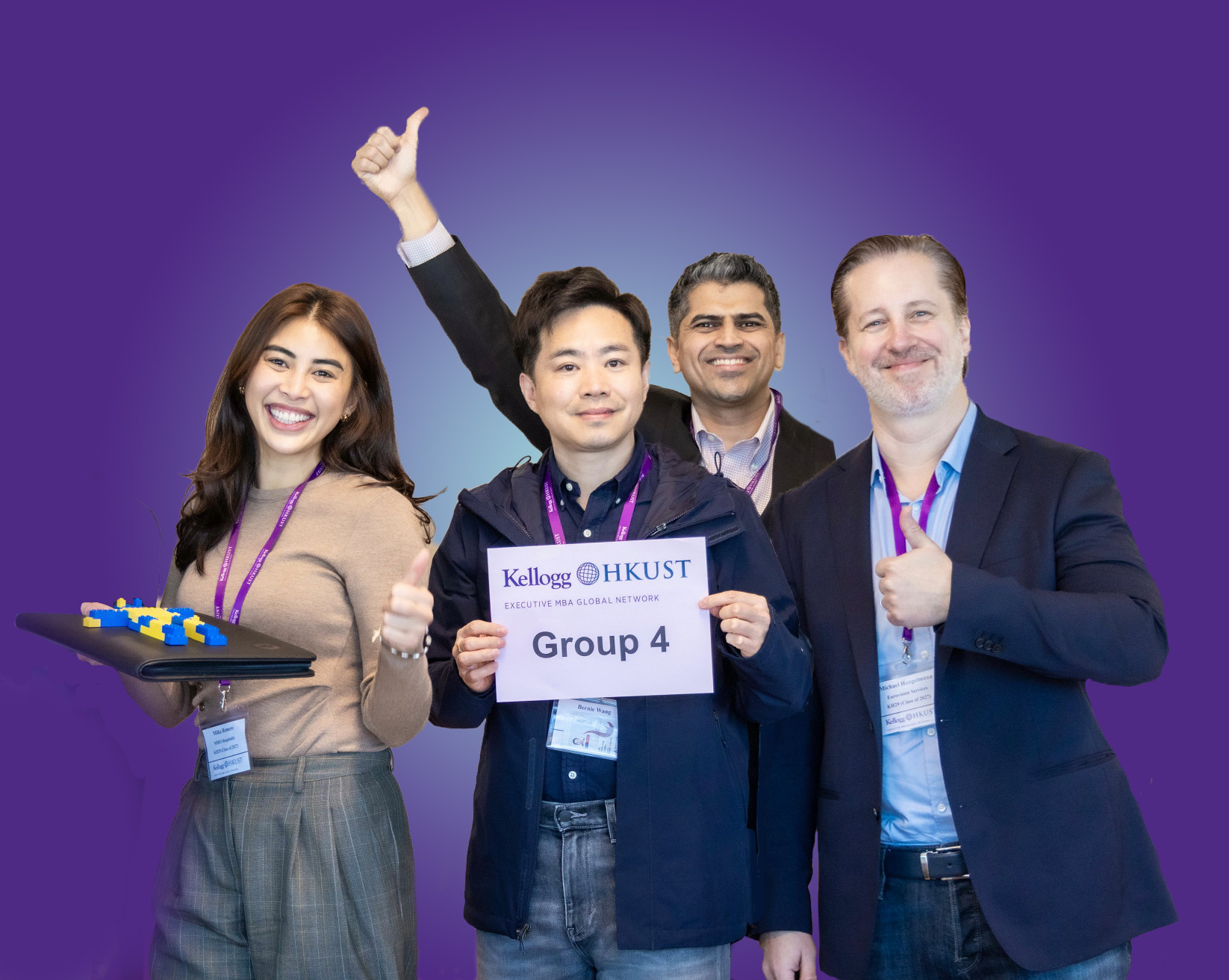
The Kellogg-HKUST Executive Master of Business Administration has been ranked the no.1 in the world 12 times. Like the students it attracts and teaches, the programme is consistently at the top of its game. But isolation isn’t one of its features: Kellogg-HKUST EMBA is built around a selective yet humble cohort of leaders who share experiences as they expand their professional horizons.
When you rise to the C-suite, or are well on your way, it can begin to feel like a diminishing number of people share your perspective. Managing teams of hundreds around the globe and steering an organisation’s big-picture strategy simply aren’t things that many people do. But there are places where leading at that level is the norm. The Kellogg-HKUST Executive Master of Business Administration (EMBA) programme, which the Kellogg School of Management and the HKUST Business School have been running out of Hong Kong for three decades, is one example: almost half the cohort holds either C-suite or senior executive leadership titles. When everyone in the room is already a success, there’s no room for posturing. The programme’s “high impact, low ego” ethos drives students to give as much as they get, acknowledge doubts without fear of showing weakness, and share their experience with candour and generosity.
Inspired to go further

Experienced high-level managers choose the Kellogg-HKUST EMBA to broaden their perspectives through a curriculum that unites Eastern and Western business disciplines. Maggie Li, class of 2027, finds value in being part of a student cohort that mixes industries, geographies and mindsets.
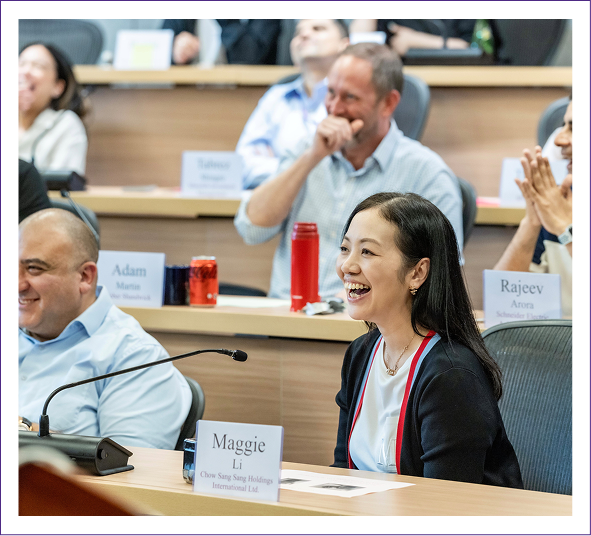
Maggie Li’s eldest daughter has been getting higher marks at school lately, which she jokingly attributes to some healthy competition at home. “Mummy also has homework to do,” Ms Li will say when it’s time to open the books. “Let’s do it together.”
As she entered her 40s, Ms Li had 13 years under her belt at Chow Sang Sang, a jewellery retailer, where she currently oversees more than 120 stores and 1,100 staff across Hong Kong, Macau and Taiwan as chief retail operations officer, covering jewellery (excluding Mainland China) and watches. But she had begun to feel that the depth of her experience came with a price. “I had a good development path, but I was limited in my understanding of how other companies do things,” she says. “I started to think, ‘What should be next?’”

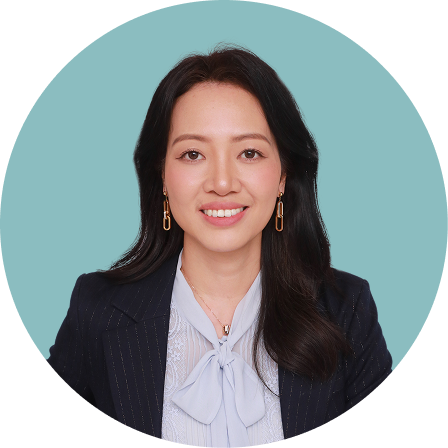
I was limited in my understanding of how other companies do things. I started to think, ‘What should be next?’
MAGGIE LI, CHIEF RETAIL OPERATIONS OFFICER, JEWELLERY (EXCLUDING-MAINLAND CHINA) & WATCHES Chow Sang Sang (KH29)
She saw two main options: find a new job to broaden her outlook or go back to studies. Deciding the latter would serve her better, she chose to stay in her role at Chow Sang Sang, and instead applied to become part of the 29th Kellogg-HKUST EMBA cohort (KH29).
Six months in, the programme, which commenced in February 2026, has already shifted her thinking in surprising ways. Ms Li expected to focus on her areas of experience—leadership, branding and operations—but peers and the curriculum have widened her horizons. The valuable perspectives of classmates whose paths have differed from hers, from entrepreneurs to family-business owners, informed her selection of global electives. She now plans to explore subject areas she’d not seriously contemplated before.
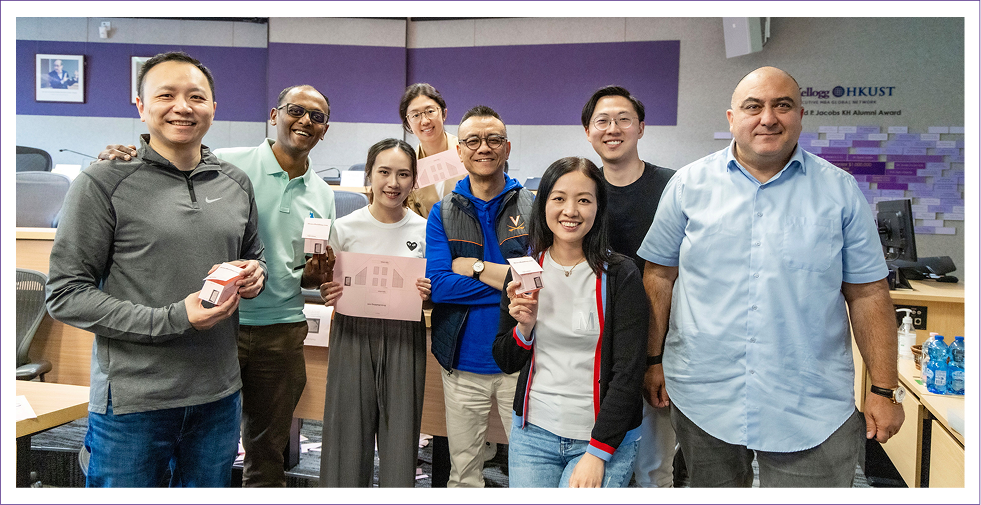
Residential weekends also help build trust quickly. As classmates live and eat together, “we can openly talk about the situations we face, and we are happy to receive advice.” Ms Li has even invited classmates to Guangdong to visit one of Chow Sang Sang’s factories, showing how Kellogg-HKUST EMBA students can introduce each other to and benefit from on-the-ground reality across a range of industries.
On the academic side, Ms Li notes how the curriculum mixes Western and Asian case studies as a positive. Francesca Cornelli, dean of the Kellogg School of Management, expands on why that mix matters. The partnership at the heart of the programme unites Kellogg’s rigorous academic standards and expertise in leadership development with HKUST’s foundation in Asian markets and culture. “The programme builds on a shared vision of developing globally minded executives with international insight and local fluency,” she says. “Together, Kellogg and HKUST offer a unique level of academic excellence and network reach.”

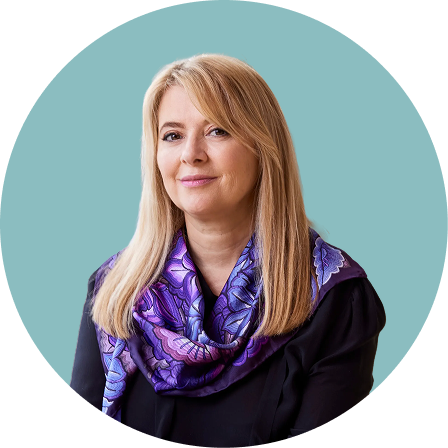
The programme builds on a shared vision of developing globally minded executives with international insight and local fluency. Together, Kellogg and HKUST offer a unique level of academic excellence and network reach.
FRANCESCA CORNELLI Dean, Kellogg School of Management
For students like Ms Li, who arrive with deep experience and high expectations, the partnership and diverse cohort take the programme beyond theory to applied, peer-driven learning. “Our participants bring significant leadership expertise into the classroom,” says Professor Cornelli. “So we create an environment where they can challenge each other and test ideas in real time across industries and geographies.” Kellogg-HKUST EMBA faculty members contribute global perspectives and deep research that equip leaders “to approach decisions with strategic precision and cultural sensitivity”.
Alongside the decision to pursue an EMBA raised another question for Ms Li: which programme? In her conversations with friends who came with recommendations, Kellogg-HKUST EMBA stood out. She then attended a sample class and a campus tour, which gave her the first-hand knowledge she needed to decide. Ms Li spent the following week writing up her application. “Just talk to the interviewer and see what the feeling is,” she suggests, to anyone considering enrolling. “That will answer a lot of questions.”
The EMBA that asks more, gives more
High-performing leaders will find the Kellogg-HKUST EMBA appealingly selective and demanding. Michael Hangelmann, class of 2027, finds that the programme offers a setting where he can explore high-stakes questions in the company of others who face similar pressures.
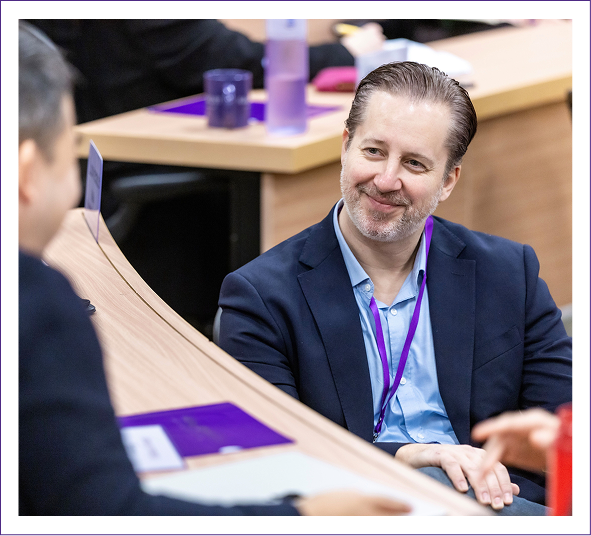
When executives are already at or near the top of their organisation, one might naturally wonder whether they are beyond lecturing.
Not Michael Hangelmann, a Madrid-based chief executive who has spent nearly 15 years leading corporate turnarounds for private-equity firms. Having reached the top job, he asked what was next—as he always does. “Operating in this role is quite an isolated situation,” he says. “There is not much time to entertain a very broad network or perspective.” Seeking a “safe space to be vulnerable and open outside of the spotlight of competitiveness,” which his role does not always afford, he landed on Kellogg-HKUST EMBA.
With a cohort that has 18 years of experience on average, the programme’s curriculum is designed to push accomplished businesspeople to enlarge their horizons. According to Frederik Anseel, dean of the HKUST Business School, who is acclaimed as a scholar of leadership, learning and organisational feedback, the goal is “to challenge leaders to pivot from individual achievement to build something that will last, something that is bigger than themselves. This is the very definition of being ‘high impact, low ego’.”

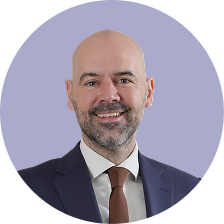
Our goal is to challenge leaders to pivot from individual achievement to build something that will last, something that is bigger than themselves.
FREDERICK ANSEEL Dean, HKUST Business School
In today’s context, the programme has to also attend closely to the way frontier technology interacts with business models, Professor Anseel explains. With artificial intelligence use now the default in Asian markets such as China, the East-West aspect of the programme makes the classroom a workshop where a tech entrepreneur from Shenzhen and a multinational executive from Chicago might come together to stress-test each other’s frameworks for harnessing technology. “By stripping away executive pretence, these seasoned leaders feel comfortable asking each other the right, high-stakes questions,” he says. “Because of the hand-picked composition of the cohort, they get access to insights that you simply can’t get anywhere else.”
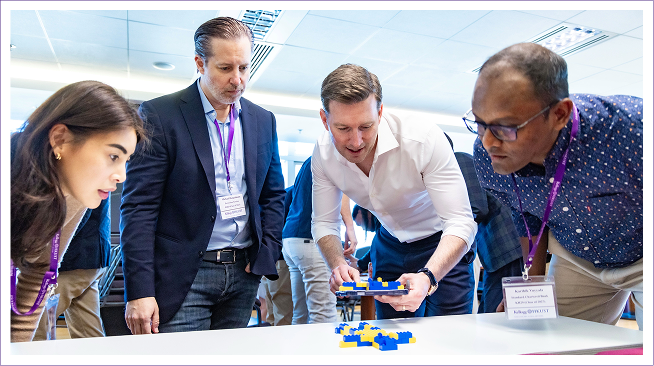
Mr Hangelmann highlights this aspect of Kellogg-HKUST EMBA as one of the main draws. The selectivity of the programme was crucial. In application interviews, “the questions were about how I lead culture, what I want to invest into the cohort and how I deal with certain situations.” This showed him that the programme would demand something from him and from his classmates, and that signalled how much the programme would give. “Everyone will get out what they are putting in,” he says.

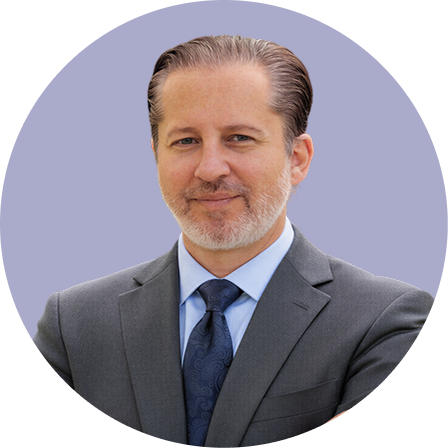
In my professional environment, although I’m embracing my team, it’s still a bit isolated. The position does not really allow for a lot of second-guessing or question marks. So I wanted to experience something that gives me a safe space to be open and invest in myself.
MICHAEL HANGELMANN Chief executive, Eurovision Services (KH29)
Mr Hangelmann’s effort doesn’t go unnoticed by other students. Ms Li, for example, names him as one of the KH29 students who travels the furthest, flying regularly into Hong Kong from Madrid so that he can attend classes and participate in discussions with his peers in person. But it’s a journey that Mr Hangelmann is more than willing to make; he wants to get the most out of the programme’s global scope. Taking these 14-hour flights ensures his experience and education cover the three most important geographies for international business: Europe, where he works; Asia through HKUST; and America through the Kellogg school at Northwestern. At the same time, he’s building a worldwide network that will help him source investment and counsel as he grows with the businesses he leads.
The Kellogg-HKUST Executive MBA programme has been shaping leaders for nearly 30 years. Ranked the no.1 EMBA in the world for 12 years by the Financial Times, it unites the strengths of two world-class business schools: Kellogg with its North American network and legacy of collaborative leadership, and HKUST with its unparalleled expertise in Asian business and markets.
If you are an executive asking what comes next, information sessions and sample classes run in Hong Kong, Shanghai and online, and coffee chats with staff take place in additional locations including Tokyo, Jakarta and Taipei.
Start the process today by requesting a programme brochure.
