

Technology & Innovation
Using AI to answer local problems in Apulia

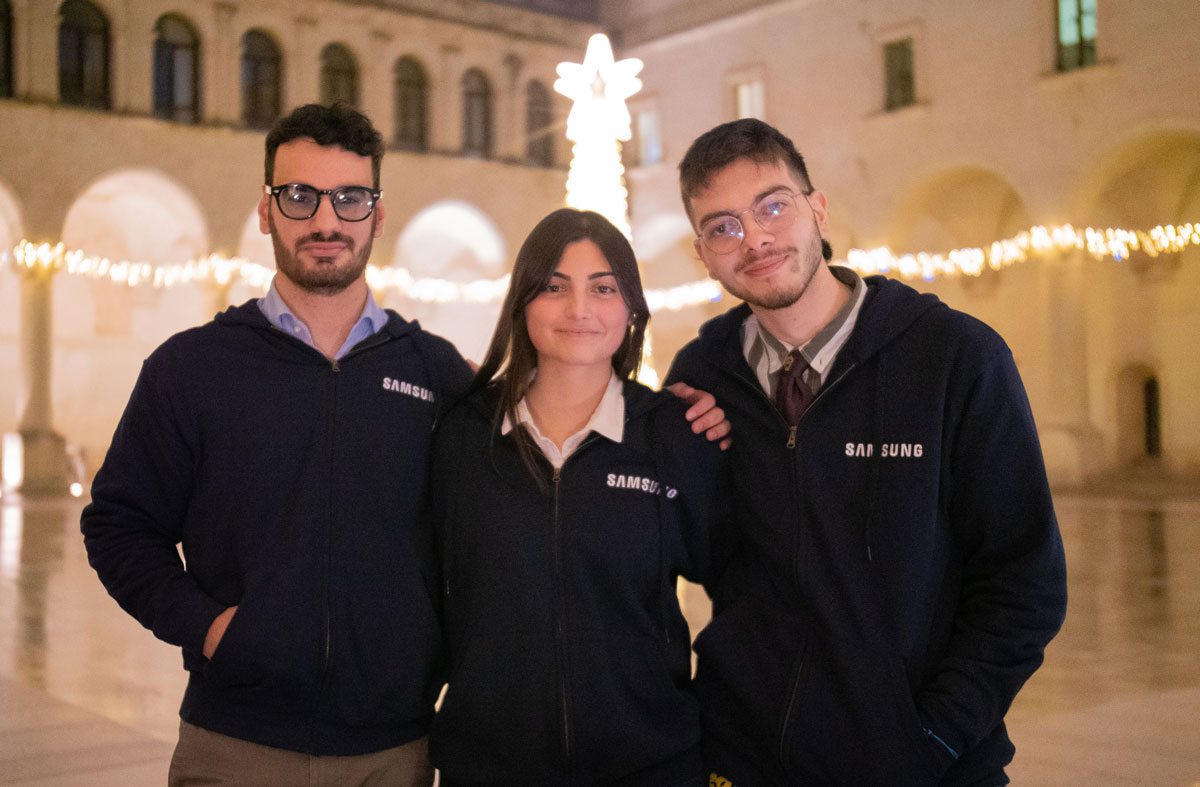
Thanks to theoretical and practical knowledge gained, three Italian students developed artificial intelligence (AI) programs with the potential to help wine producers and support sustainable tourism in their local communities.
“I just can’t see technologies in the same way as before. [This course] has had an impact on my everyday life,” says Federico Rinelli, a philosophy student at Salento University in Lecce, in southern Italy’s Apulia region. He’s referring to a course he recently completed, run by Samsung Innovation Campus. It’s one he credits with giving him a new appreciation for the implications of technology.
“A deeper comprehension of technology changes the way we interact with them, how we structure our environment and the choices we make,” he remarks.
With his classmate in the course, Gaia Carparo, Federico Rinelli made good on this new perspective— they worked on a project that sought to repurpose and redevelop abandoned buildings for sustainable tourism, as well as provide transport options between different sites for travellers.

We took things that actually already existed, and with minimal costs, we made them something valuable for the community.

Federico Rinelli, graduate of Samsung Innovation Campus

Apulia—famous for its beautiful coastline, Roman ruins and Baroque architecture—also happens to be one of the poorer regions in Italy. The students’ solution isn’t just one that can help local economies create jobs; it also considers benefits to the environment and how to salvage old buildings.
“We took things that actually already existed, and with minimal costs, we made them something valuable for the community,” Federico explains. His background in philosophy also played a role in helping him look closer at his surroundings, at things he had taken for granted. “We often see abandoned buildings near railways and no one knows what they were used for. And that’s when I started questioning… [and] then the [project] idea came to me.”
Kickstarted in 2013, the programme relaunched in 2019 under the current moniker, with some 120,000 students across 35 countries attendingand benefitting so far.
These kinds of realisations aren’t particularly unusual for students on the course. Fellow classmate, Federico Izzi, similarly had his eyes opened to different possibilities.
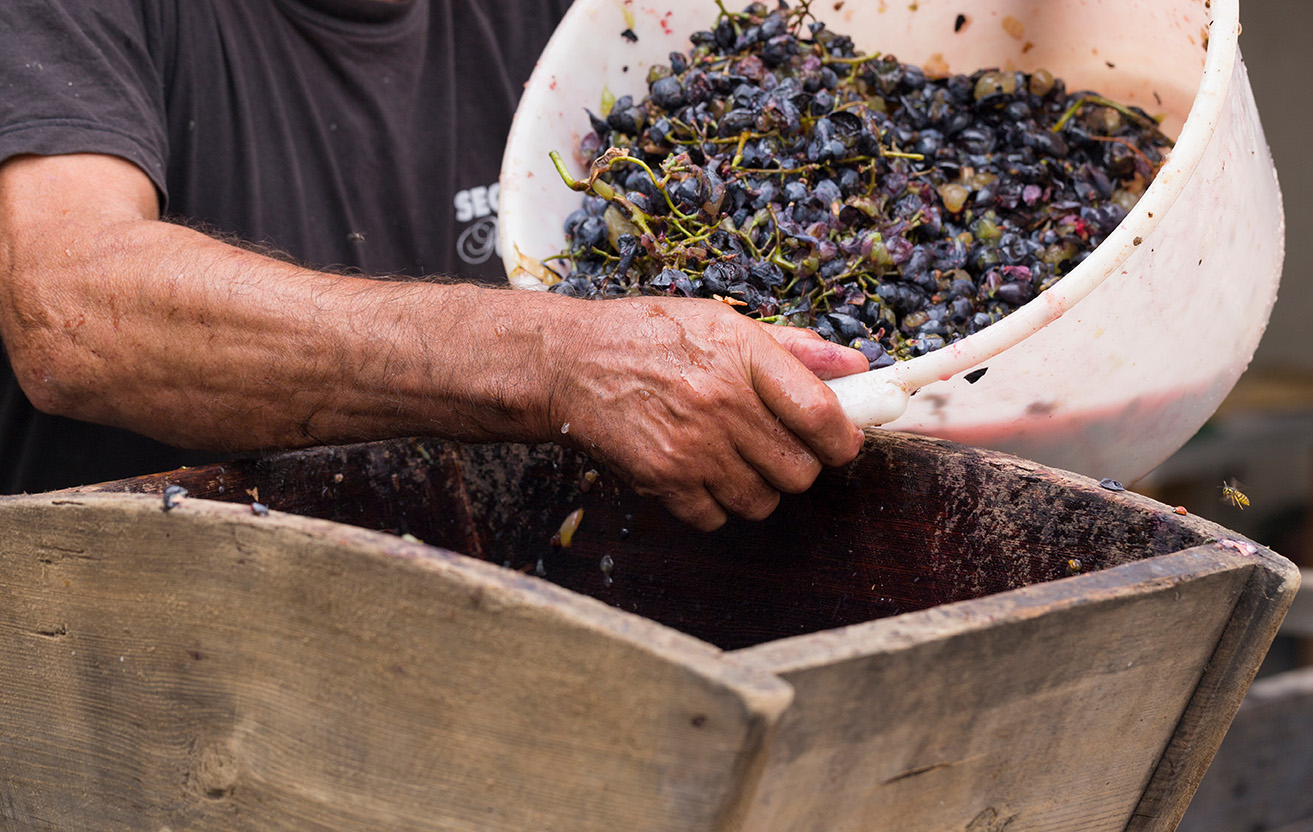
During what he describes as the “favourite part of the course”, the project phase, Federico Izzi helped design a program, using a combination of Internet of Things-enabled sensors and machine learning, to help improve wine fermentation in the region. “The mathematical algorithm serves exclusively to detect the correct colour of the wine (from a sensor) and, consequently, its state, during fermentation with an error margin of 3%,” he explains. The data is then combined with information gathered from other sensors, to help pinpoint and analyse the wine’s fermentation stage.
At the same time, water and energy are saved, and production costs reduced. With Apulia renowned for its wine, and the southern regions particularly hard hit by climate change, protecting the industry is becoming even more of an urgent imperative. And this innovation might just be a winning formula for wine producers.
New skills and opportunities
Samsung’s free-to-attend courses were designed to help young people find employment in this ever-evolving world of technology, through a mix of theoretical and practical classes centred on advanced technologies—and, in these students’ case, AI. Students are guided in both in-person and online classes through a series of modules on AI. They also have access to an online platform with extra materials and resources to study in their own time. Guiding them are university professors, specialists from Samsung, and experts from fields like marketing and cybersecurity, who share their industry experience and knowledge. In tandem, students are taught a range of applicable skills that will help them propel their careers; these include marketing, how to persuasively present their ideas, and creating business plans. And this is just the first part of the course.
The second part of the course sees the students put their knowledge into practice with their capstone project. In small teams, the students brainstorm a concept that is centred on sustainability, before designing and creating it, and finally, presenting their innovations in front of specialist judges and an audience.
Kickstarted in 2013, the programme relaunched in 2019 under the current moniker, with some 120,000 students across 35 countries attending and benefitting so far.
[I’ll focus on] topics like artificial intelligence or informatics so I can contribute to areas of life sciences or technology.
Gaia Carparo, graduate of Samsung Innovation Campus
Cross-disciplinary learning
On the Samsung Innovation Campus programme, learning also often comes from unexpected quarters. Take the recent Italian cohort of Samsung Innovation Campus. Students hailed from diverse backgrounds, from humanities to STEM. This not just made lessons more dynamic and interesting, but also helped both sides see new points of view and plug gaps in knowledge. Describing this cross-pollination of ideas, Federico Rinelli says, “the humanities and scientific disciplines are complementary… and when someone doesn’t know what to do, the other helps.
”For the three interviewees, a desire to expand their horizons and learn new tech skills initially drove their interest in the course. But through it, they’ve come to realise different things about their future—and uncovered new sides to themselves—along the way.
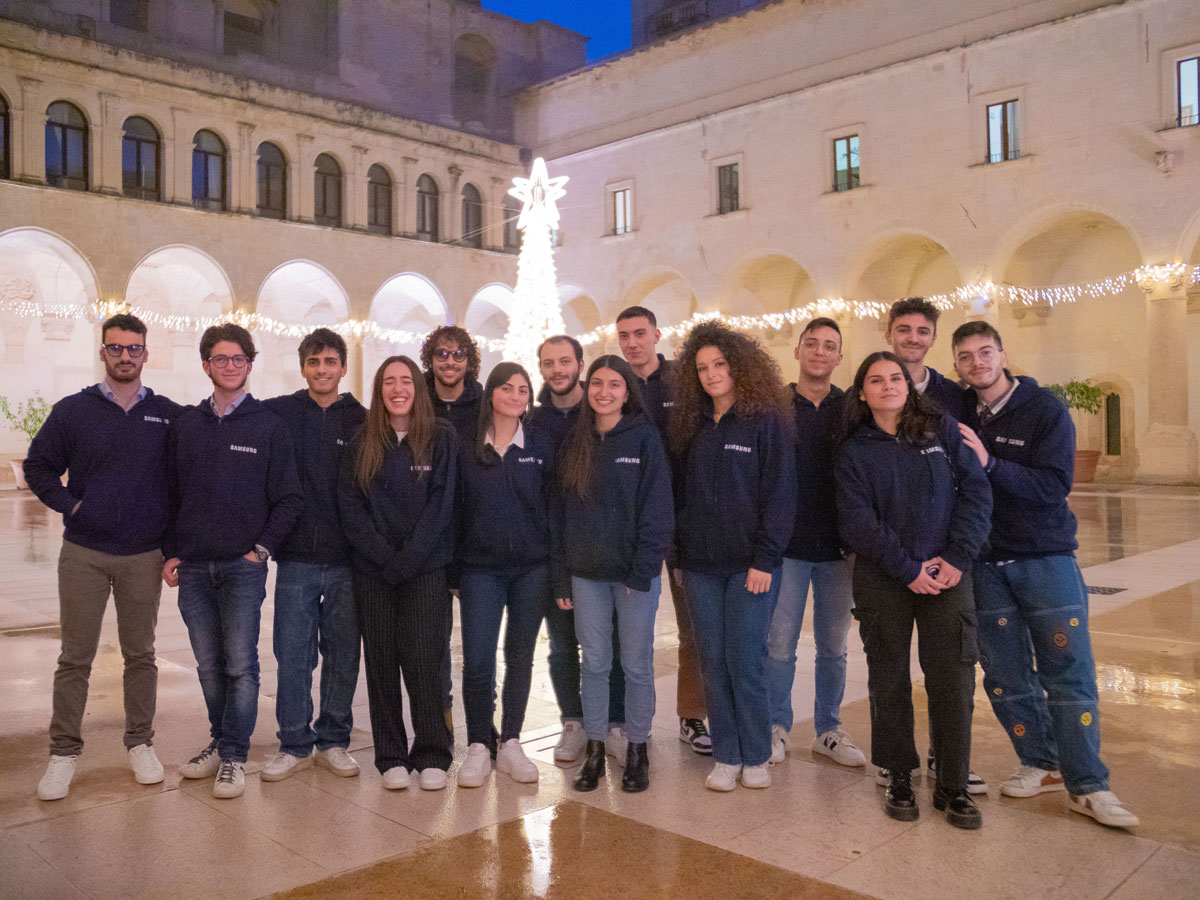
Gaia, who describes herself as “quite shy”, says her confidence has been boosted, particularly with public speaking. Federico Izzi added that he had, in addition, gained the ability to better pitch and present his ideas as part of a team.
All had started out with an interest in technology, and this has been further deepened and refined thanks to the course. Gaia, who studies mathematics at Salento, now has a clear vision of her path ahead—studying applied mathematics. “[I’ll focus on] topics like artificial intelligence or informatics so I can contribute to areas of life sciences or technology,” she explains. Federico Izzi, who studies marketing at the same university, has similarly found a new ambition for his future career: working for tech companies in order “to use my ideas to create something new.”
The way forward
Samsung Innovation Campus has meant so many things to its alumni: new-found confidence, a fresh take on the world, a like-minded community, even discovering new possibilities for the future. And what appear as private benefits have the potential to reverberate so much further—amplified with each graduating class, in the countries it is offered.
In just a matter of months, Federico Izzi, Federico Rinelli and Gaia conceptualised and created AI-based systems that hold the promise of supporting their local communities in sustainable and innovative ways. With such ideas, skills and ambition present, imagine what could come next.


What is the Samsung Innovation Campus?
Samsung Innovation Campus is a global education program that helps youth build advanced IT skills and practical capabilities to create better opportunities. The program offers structured AI education suitable for the digital age, along with hands-on training, expert mentoring, and instruction in key future technologies like big data and IoT. Tailored programs are available for marginalized groups such as people with disabilities and women, to expand access to IT education.
Graduates pursue various career paths including IT employment, tech-driven startups, and social impact initiatives. Since its launch in 2013, more than 204,000 youth in 40 countries have joined the program, using technology to design their future and realize greater potential.