

Start of tap story.
In Italy, amplfying the voices of the next generation
In collaboration with some of Italy’s top universities, Samsung Innovation Campus aims to equip young people with future-ready tech skills. ...

Lessons from the classroom to real life
Carmen Panepinto Zayati applied for Samsung’s programme hoping to attend a practical course....
Samsung Innovation Campus in Italy
Training the next generation: Samsung Innovation Campus partners with 25 universities throughout Italy...

Discovering hidden skills
Carmen credits Samsung Innovation Campus with unearthing skills she didn’t know she had. ...

The power of speaking up
Samsung Innovation Campus helped Carmen find, harness and amplify her voice, ...

Opening more doors
Samsung Innovation Campus not only brought Carmen out of her shell, and also teased out a different, more ambitious, side of her. ...
End of tap story.


Breaking—and reshaping—the mould
How one Italian student is defying STEM stereotypes and carving her own space
Since its launch in 2020, Samsung Innovation Campus in Italy has partnered with 25 universities throughout the country to equip bright, young minds with future-ready skills like IoT and AI technologies. Carmen Panepinto Zayati, who attended the inaugural programme, recounts how it inspired her to find her voice and awaken dormant talents. Now, she wants to use her platform to help others and create a better world.
It was in high school when I first discovered my passion for science—biology, to be exact. I hadn’t expected to feel this way because until then, I’d been more interested in creative pursuits, like drawing and dancing. I didn’t know that science was a career option for me. So, I decided to explore my growing fascination by attending summer schools, and was eventually introduced to biomedical engineering. I realised then that by mixing biology with technology, I could do something good for the world.
To make this a reality, I made the tactical choice to study electronic engineering at the University of Pisa, hoping it would open the most doors for me. And indeed it did: it introduced me to Samsung Innovation Campus in 2020, a free course which piqued my interest as I was looking to attend a more practical course, since most of what I was studying for my degree was theoretical. I wanted to apply my knowledge to real world problems.
The importance of real-life practice
Samsung Innovation Campus covered topics I hadn’t studied before, such as artificial intelligence, machine learning and the Internet of Things. As I attended it during covid-19, these subjects were taught virtually, with in-depth online preparatory materials made available to us.
More importantly, the programme culminated in a group project in which I joined forces with like-minded attendees from a range of tech and engineering backgrounds. Together, we worked with Vitesco Technologies, a company that makes robots that perform pick and place tasks in factories. Our goal was to optimise the algorithms that control these robots to ensure that the workload is shared equally among them, reducing the maintenance load and improving efficiency.
Working on this project gave me the valuable opportunity of real world problem-solving that I had been looking for. This group project was also my first experience handling such a huge data set; but mining and visualising the data, and transferring it across different devices, was a huge success. I definitely benefitted from the diverse expertise of my peers in the programme.
Effective communication is key
Core technical skills aside, Samsung Innovation Campus helped me develop more holistically too. For one, it taught me time management skills. As I had to balance my University’s engineering course load with over 100 hours of the programme’s digital learning, it was the first time in my life that my calendar was completely full. So it was very intense—but it was worth it.
Samsung’s programme opened my eyes as well to how vital good communication is. During the programme, I studied how to turn technical ideas into business models, which made me realise that simply having ideas isn’t enough. Instead, it’s essential to be able to convey those ideas to others.
This got me thinking about my current work as research assistant at the Regenerative Technologies Laboratory in the BioRobotics Institute of the School of Advanced Studies Sant’Anna, where I work on tissue regeneration: how do I get all this research to the market, and to the people that actually need it? Good and confident communication is as important as the innovation itself.

Coming out of my shell
Crucially, the course enabled me to discover skills I didn’t know I had, and allowed me to realise my true potential. I’ve always been more of an introvert and don’t like being the centre of attention, but my experiences throughout the programme proved me wrong. Instead, I found myself a natural in front of a camera. I learned that I have this innate skill, that I can speak to the public, convey my ideas to them and convince others.
Now, I use this skill in a lot of things I do. Notably, to challenge misconceptions about STEM (science, technology, engineering and mathematics) subjects—that it’s not boring, that it’s not for a specific person, and that you don’t have to look a certain way to be a scientist. I have been advocating for STEM on social media since gaining a platform from being crowned Miss Universe Italy in 2023; today, I also teach science classes in schools all over Italy, and give speeches at science and motivational events.
While my activism work targets the next generation of young innovators, it’s also laser-focused on girls. My aim is to show them that even though we’re not well-represented in STEM industries, we can still do it. And that doesn’t mean fitting into the current mould; rather than adapting ourselves to stereotypes, we can create our own space that fits us.
Inspired by a salamander
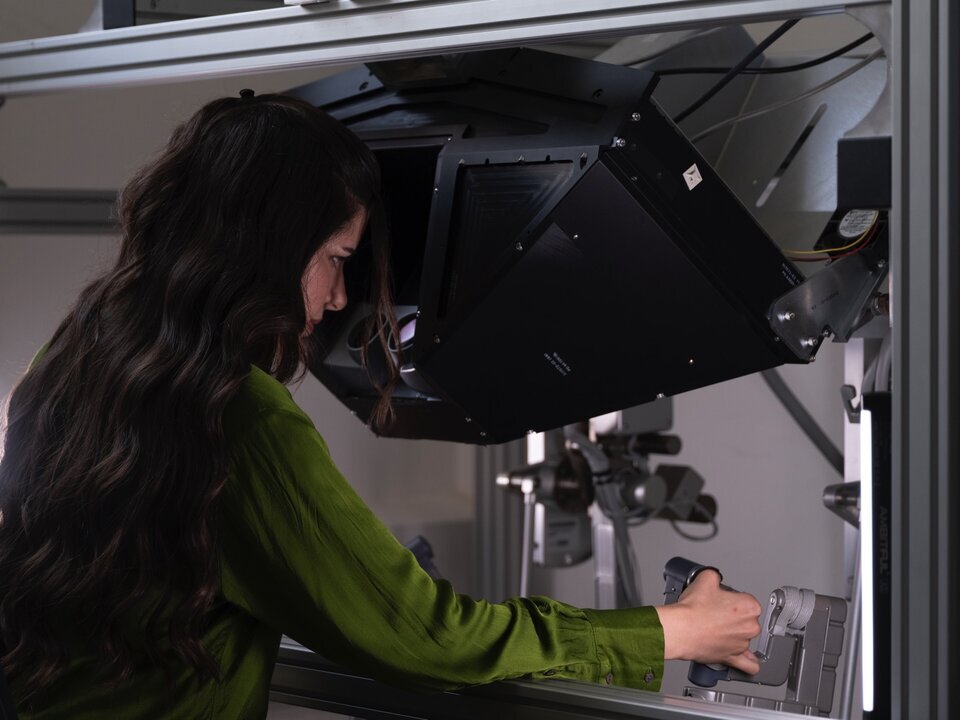
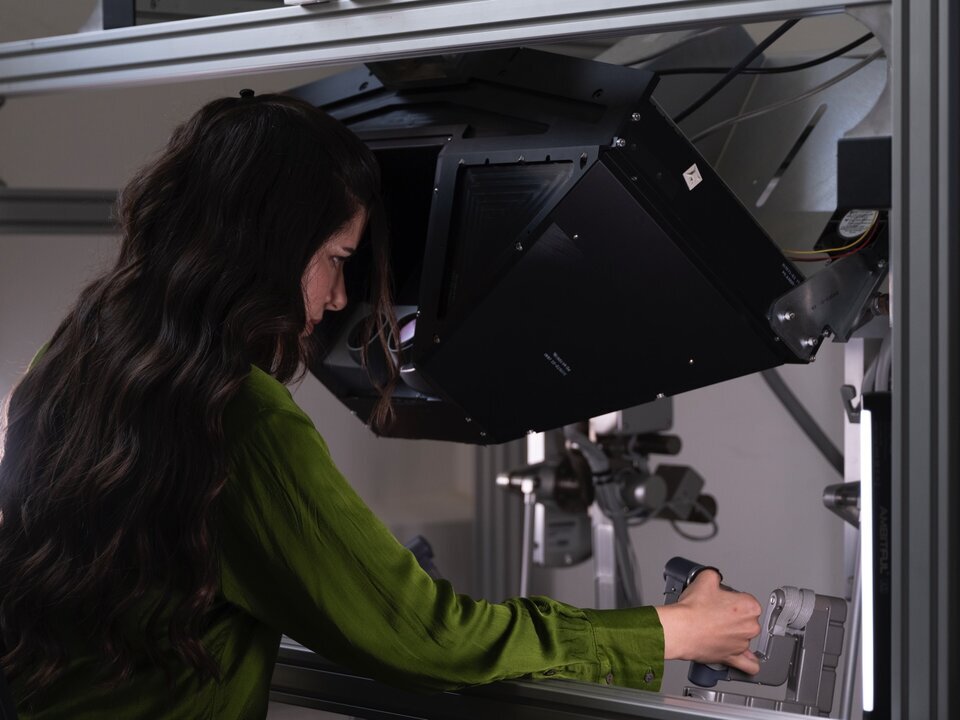
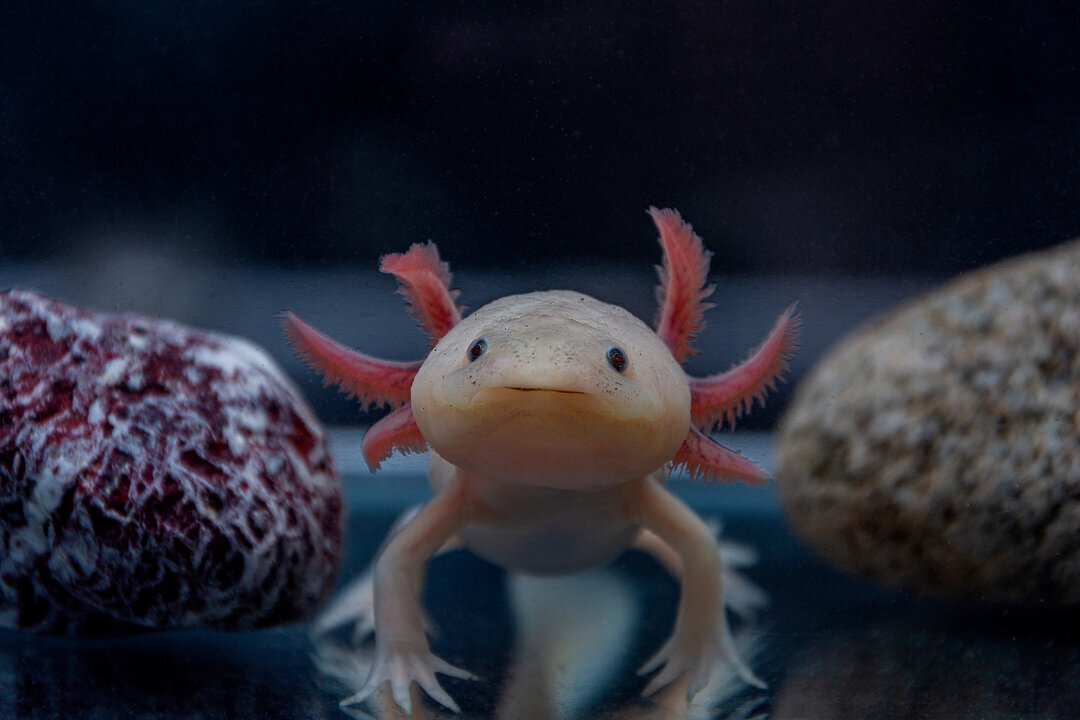
I aim to lead by example: now done with my master’s degree is bionics engineering, I’m currently a research assistant looking into stem cells, and soon, I will start work on my PhD, which will explore limb regeneration. This will involve investigating the axolotl, a type of salamander that can regrow missing limbs. My plan is to figure out what gives some species these incredible powers, and then try to replicate the processes.
Alongside my research, I also want to develop my entrepreneurial skills so that if a solution is found, I will know how to bring it to market to help people. Samsung Innovation Campus inspired me to pursue these ambitions in parallel. Before attending the programme, I always thought of myself as research-oriented and assumed I would take a purely academic path. But Samsung Innovation Campus changed me forever. It gave me a valuable opportunity to see how I can bring my ideas out from the lab to actually help people, and create a better world.


What is the Samsung Innovation Campus?
Samsung Innovation Campus is a global education program that helps youth build advanced IT skills and practical capabilities to create better opportunities. The program offers structured AI education suitable for the digital age, along with hands-on training, expert mentoring, and instruction in key future technologies like big data and IoT. Tailored programs are available for marginalized groups such as people with disabilities and women, to expand access to IT education.
Graduates pursue various career paths including IT employment, tech-driven startups, and social impact initiatives. Since its launch in 2013, more than 204,000 youth in 40 countries have joined the program, using technology to design their future and realize greater potential.