Aviation engineers are paid to be rational pessimists. They design machines that hurl hundreds of people through freezing air at 900kph while operating under immense mechanical stress. To avert disaster, a strict regime of rules compels them to assume that anything that can fail will. They respond by building redundancy into every circuit and testing engine parts to destruction.
Such caution might seem hostile to artificial intelligence (AI), a technology that is, at bottom, probabilistic. But Rolls-Royce, a British engineering giant whose engines power more than 35 types of aircraft that more than 500 airlines fly, shows that rational pessimism is a useful habit of mind for a technology that many adopt too optimistically. The firm stress-tests its AI projects just as it does its engines, judging where the technology can add clear value. The result is a set of AI tools that support some of the world’s most exacting technical work.
Three features of this approach hold lessons beyond aerospace. First, Rolls-Royce lets ideas emerge from the workers closest to the problems AI can help solve. Second, it tests every idea for value before scaling it up. Third, it uses AI to broaden what its engineers can design, not just to speed up what they already do.
“All of our highest-value AI use cases were generated at the front line, by people who understand where the problems are and where the value is.”
Kaveh Pourteymour
Chief digital information officer, Rolls-Royce
Let the front line lead
In 1945, Friedrich Hayek, an Austrian-born economist and later Nobel laureate, argued that economic order cannot be centrally planned because the insight required is scattered among people, each holding “knowledge of the particular circumstances of time and place”.1 Modern bosses hoping to profit from AI would do well to remember this. When they search for ways to put the technology to work, they often appoint heads of innovation and convene strategy away-days. The best ideas, however, tend to lurk in the daily frustrations of those who do the work.
Rolls-Royce puts Mr Hayek’s theory into practice. Kaveh Pourteymour, the group’s chief digital information officer, notes that the company’s most prized AI projects share a common origin: “All of them were generated at the front line.” Teams closest to the work, from engineers to maintenance staff and supply-chain planners, could articulate “where the problems are and where we could bring value”. The job of the central AI team, says Mr Pourteymour, was to “marry those problems with the right data scientists and AI capabilities”.
To help its employees spot where AI can add value, Rolls-Royce has invested in AI literacy. Mr Pourteymour sees “AI awareness” as a “critical success factor” and recalls running some of the first briefings on the technology with the firm’s executive team and senior management.
Yet raising awareness without setting guardrails would be unwise. “You can’t just give it to everybody and say, ‘experiment’,” Mr Pourteymour says, noting the high stakes in an industry “where you are dealing with lots of regulations”. When Rolls-Royce began rolling out its AI tools, it set a number of constraints. The firm’s cyber, legal and commercial teams drew up clear AI policies covering both “product safety” and “organisational safety”, designed to safeguard the firm’s data assets and ensure compliance with the European Union’s AI rules.
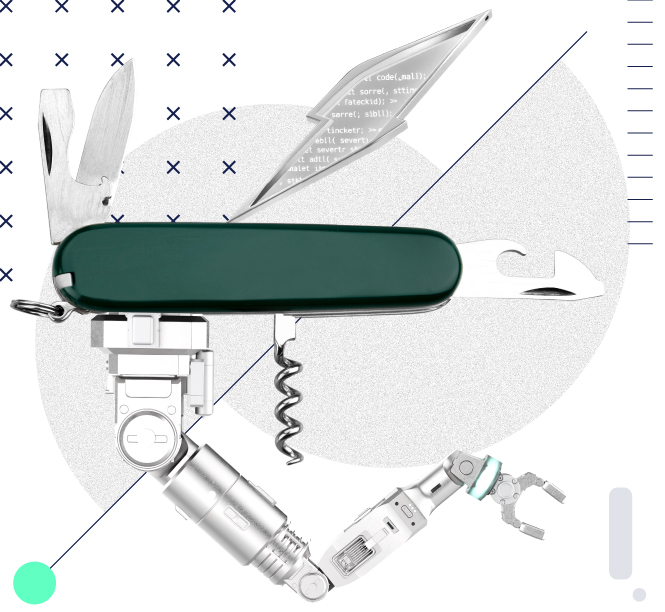
To give its employees a common and safe route into the technology, Rolls-Royce has built an internal AI framework called AiRR, short for AI for Rolls-Royce. Mr Pourteymour describes it as a “Swiss Army knife” of AI tools, spanning traditional machine learning, generative AI and, more recently, autonomous AI agents. AiRR gives the firm oversight over how its employees use the technology and helps prevent the use of unlicensed tools (read about shadow AI use in this series). It also inherits Rolls-Royce’s existing permission structures, so an AI agent can do only what the employee using it is allowed to do. That guards against privilege creep, limits the damage from over-eager automation and keeps the firm’s AI use auditable, which is handy in an industry where regulators take a close interest in both innovation and mistakes.
“I always ask: what problem are you trying to solve, and what value can your project add?”
Kaveh Pourteymour
Chief digital information officer, Rolls-Royce
Hypotheses before horsepower
When engineers at Rolls-Royce design a new machine, it would be unwise to bolt some parts together, fire up the ignition and hope for the best. They begin with a hypothesis about how the engine will behave, and estimates of its performance. They scale up only when the hypothesis holds.
Rolls-Royce treats AI much as it designs its engines. Each AI project begins with what Mr Pourteymour calls a “hypothesis on value” that specifies the business improvement it should deliver. “We try to have these value conversations at the beginning,” he says, “rather than just saying ‘let’s experiment and see what happens.’” The path from hypothesis to result then follows three stages: proof of concept, pilot and scaling up. The decisive gate is the last. “If the project cannot move from pilot to scale-up, we have not been successful,” Mr Pourteymour says.
One project that has cleared that process involves what Rolls-Royce calls “technical variations”: the process by which any observation of wear and tear must be documented, reviewed and approved. The work is tightly governed by aviation regulators and was, until recently, intensely manual, requiring engineers to spend hours filling in documents. Now an AI agent drafts large sections of those documents based on preset parameters, with engineers reviewing and editing its outputs for final approval. Rolls-Royce has consulted regulators throughout on using AI for the task, and believes the solution is the first of its kind. Because technical variations are often needed during engine overhaul, using AI for the task means engines return to airlines sooner—a gain that directly flows through to customer satisfaction.
The technical-variations tool lives inside AiRR as a reusable product. Mr Pourteymour says Rolls-Royce does this as a way of “productising AI tools rather than creating one-off solutions”. When a capability built for one part of the business proves its worth, the platform makes it available for adaptation elsewhere, turning individual wins into shared kit.
Rolls-Royce is bringing the same rigour to its maintenance, repair and overhaul work, the chain that begins while an engine is still on the wing and stretches through inspection, repair and return. The firm is building a suite of AI agents that each tackle a single bottleneck in that chain. One sizes up the scope of work an engine needs. Another judges whether repairs can be done on the wing or need a shop visit, which can save large sums. A third handles fleet planning and scheduling, a process Mr Pourteymour describes as “quite manually intensive”. Each agent tackles a real problem. Together, they should mean shorter turnaround times, lower costs and earlier warnings to suppliers about what parts and services are needed. “The earlier you can give signals of what the scope of the work is, what materials you need and what services you need, the more effectively you can schedule them,” Mr Pourteymour says.
“Our aim is to supplement and complement our engineers and really give them superpowers with AI.”
Kaveh Pourteymour
Chief digital information officer, Rolls-Royce
Make AI your superpower
Few corporate bosses will ever need to design a jet engine. Yet many will recognise the dilemma that confronts the Rolls-Royce engineers who do. Sifting through alternatives, running simulations and weighing trade-offs form the bedrock of good design—and impose a heavy tax on time and patience. AI is changing that arithmetic in ways that matter well beyond aerospace.
Rolls-Royce tackles the problem on two fronts. The first concerns how its engineers access knowledge. Consider a modern jet engine. It contains tens of thousands of parts, each governed by specifications that reflect decades of accumulated insight. The information needed to modify a design or assess a maintenance decision is often scattered across technical documents, inspection reports, maintenance logs and design histories. Going through those stores, putting bits of information together and turning them into something that supports a judgement absorbs the time of highly trained people on work that demand more patience rather than engineering skill.
Mr Pourteymour says AI helps engineers reach “the right intelligence and insights rather than searching for data and trying to assemble it together”. The technology is unlikely to match the expertise of Rolls-Royce’s engineers, but it is starting to give them what he calls “superpowers”.
The second front is closer to the creative heart of engineering. Rolls-Royce’s engineers already rely on simulation and modelling to test designs before any metal is cut. Layering AI onto those tools turns the model into what Mr Pourteymour calls “a co-pilot for engineers”. It helps them see “different patterns and alternatives”, and it speeds up the testing of hypotheses.
The goal, Mr Pourteymour stresses, is to “supplement and complement” the firm’s engineers, whom he describes as “some of the most experienced and brightest in the world”.
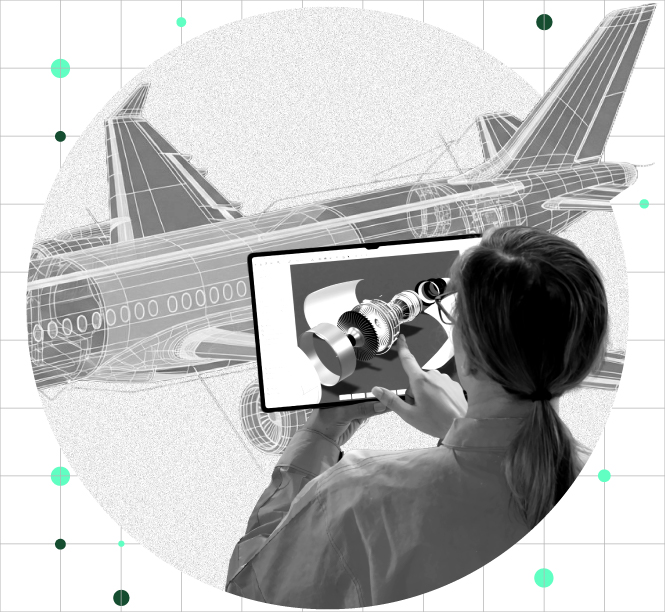
The longer-term prize lies beyond the design lab. Mr Pourteymour describes a future built around digital twins—not just of engines, which Rolls-Royce already keeps, but of factories and supply chains. These digital doubles would let the firm “plan, simulate, predict” across its whole operation, from design and factory output to logistics and supplier planning. Getting there will demand the same discipline that governs the AI work of Rolls-Royce today: a real problem, a clear value case and wise use.
“AI should help our engineers get to the right intelligence, insights and knowledge faster, rather than spend their time searching for data and trying to assemble it.”
Kaveh Pourteymour
Chief digital information officer, Rolls-Royce
Fostering AI-driven innovation
Rolls-Royce is turning AI into an innovation engine by treating it like machinery: useful only when tested, governed and put in the hands of people who understand how to use it. Its approach shows how AI can help firms move beyond modest gains in efficiency and towards better design, faster learning and sharper decisions. This idea anchors the second pillar of our Enterprise AI in action series. Another article in the pillar draws on a conversation with Ethan Mollick of the Wharton School, who argues that firms gain most when they build the right architecture for AI-led invention. That includes three core elements: a crowd of employees empowered to experiment with AI, leadership that sets clear incentives and reassurances, and a dedicated AI lab to test, refine and scale what works.
Sources
Hayek, F. A. (1945). The Use of Knowledge in Society. American Economic Review, Vol. 35, No. 4 (September), pp. 519–530.