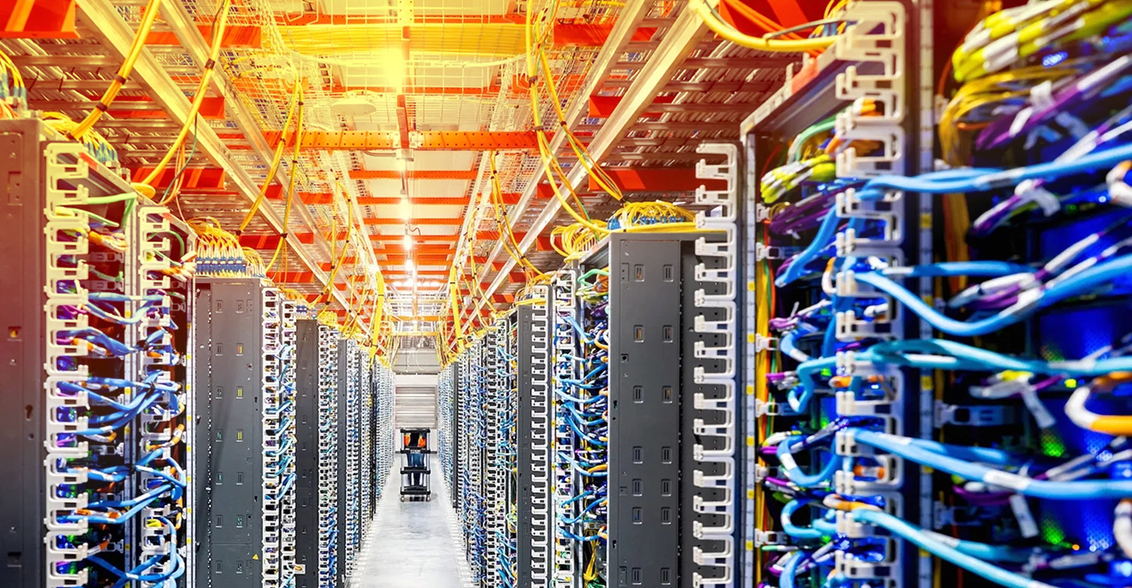
Prize assets
As AI raises the stakes for data centres, resilience determines whether they get backed and remain valuable in the long run.

The data centre industry has always prized uptime—the percentage of time a facility stays fully operational—as a key metric of operational success. Now, AI’s energy demands mean individual facilities are strategic assets that can make or break a balance sheet. That is putting a greater premium on resilience: the ability to withstand disruption and recover quickly. Michael Perron, renewable energy market lead at FM, and Aimee Sienkiewicz, vice president and global new business manager at FM Intellium, explain why operators are building resilience into data centres—and what’s at stake for owners, insurers and investors.
Why resilience matters
In the AI economy, resilience is becoming the clearest signal of a data centre’s long-term value. Resilient facilities are more reliable, recover faster and could benefit from better insurance terms, cost-effective financing and higher valuations.
Risk, rewritten
Much of a data centre’s value is determined before construction even begins. Its resilience, says Mrs Sienkiewicz, depends on three key forces: scale, speed and interdependence.
Scale creates new risks in power supply and supply chains. For example, a routine breakdown within one data centre can now pose a system-wide problem by disrupting multiple facilities at once. Speed puts pressure on construction quality and fire protection, both of which need enough time for recovery testing and checks on how interconnected systems perform under real conditions, even as project deadlines tighten.
Interdependence means that a single fault in one area can spread and escalate quickly. AI's high power density amplifies that risk, since more systems now sit closer together and depend on each other, making failures more likely to cascade.
Designing a data centre to withstand disruption means ensuring all these interdependent systems are equally robust. “System-level resilience means looking at the data centre as part of this much larger connected ecosystem,” says Mrs Sienkiewicz, “not just as a standalone building.” That means accounting for the grid, batteries, cooling, building design, automation, operating procedures, supply chains and people, as well as the facility’s core infrastructure. Rather than considering whether each component might fail in isolation, her team looks for the points at which one failure could trigger another.
The importance of system-level resilience is highlighted by climate risk. In June 2026, CNBC reported that 79% of data centres globally are at acute risk from severe weather events, such as flooding and fire. And the costs are high. In Texas, for example, hail is a leading cause of costly damage to commercial facilities. In 2022, a series of hailstorms across the state caused more than US$300 million of damage to solar installations.
“If you lived in Texas, you knew there was hail there, but we didn't have much meteorological data on it,” says Mr Perron. “One of my colleagues used to say, the cows never reported the hail.” With many new facilities globally being built in regions with little historical weather data to guide planning, early risk assessment is critical.
To meet this demand, FM is working with clients worldwide on everything from site selection to emergency response. For example, its 2026 acquisition of FortressFire, a wildfire-modelling firm that uses scientific research to assess risk at the level of individual structures across the US, helps its clients make better decisions about long-term resilience and asset value.
“The exposure to business interruption is many times higher for data centres than for solar. These companies cannot afford to be down for days, let alone months. A solar plant that had a loss in 2022 took over a year to rebuild, and data centres can't afford that.”
Michael Perron, renewable energy market lead at FM
Power-hungry: How to meet the energy demand
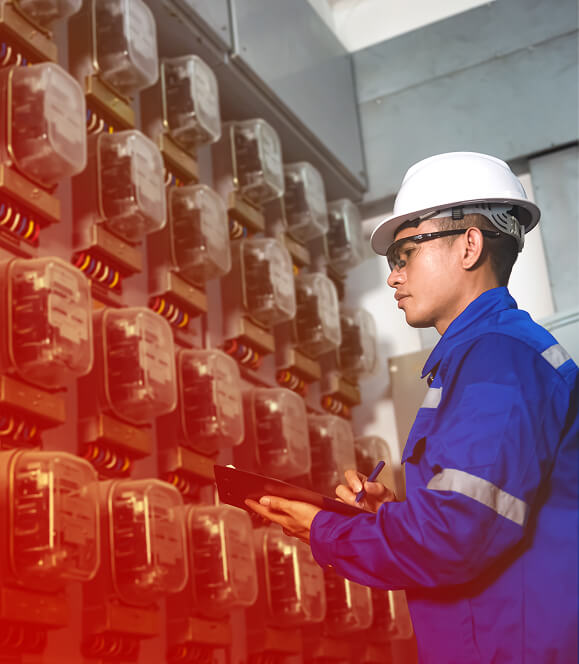
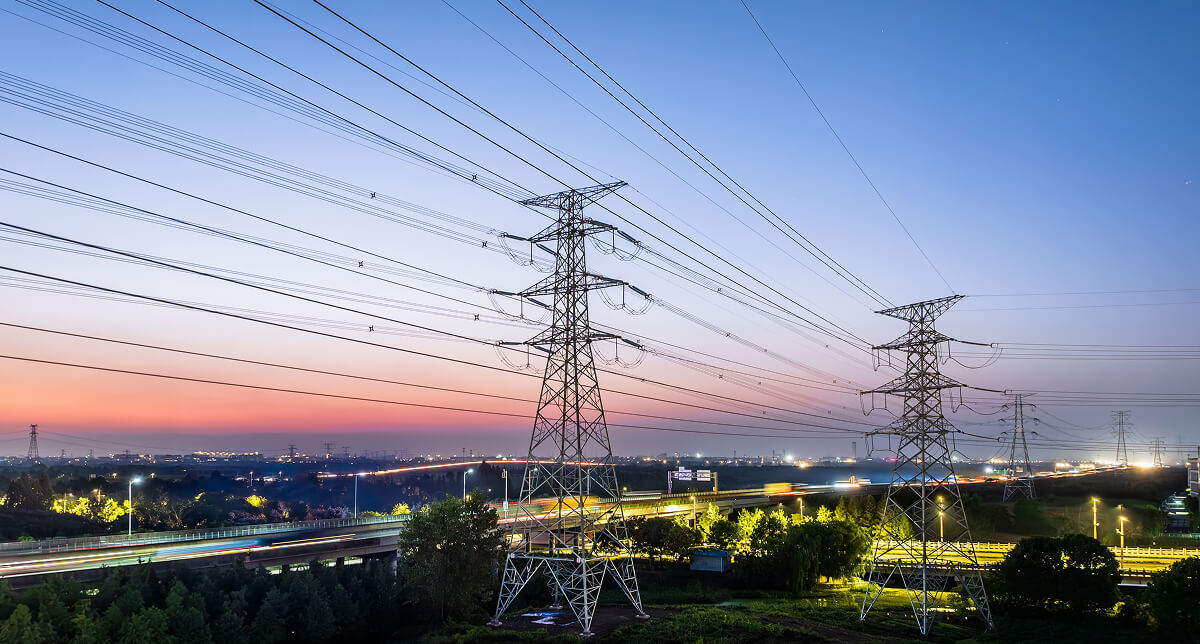
Modern data centres are hungry for power. Grid constraints can pose additional challenges: in markets such as Northern Virginia, the world's biggest data centre hub, the wait to connect to the grid can stretch over seven years. Mrs Sienkiewicz argues that energy has become one of the biggest constraints on data centre growth.
To meet this demand, some operators are generating power on-site instead. That gets them online faster, but it also turns them into power producers—a business utilities have spent decades and billions of dollars learning to run. “There's a reason the grid exists: it is very reliable for the overall community,” says Mr Perron. “When you go behind the meter, you significantly decrease the reliability of your source.”
Instead, Mr Perron argues for a hybrid approach to power. He expects data centres eventually to help balance the grid as well as draw power from it, by reducing their usage during periods of peak stress. “Instead of operating 24/7, 365 days a year, the data centre could allow that power to support the grid during those hours when it’s most exposed to a blackout,” he says. “And transitioning from drawing from the grid to actively supporting it will be healthy for the entire infrastructure.”
More than a restart
After a system failure, restoring power and cooling is only part of the process. The real test is whether the facility as a whole can recover as intended once those systems are restored. Workloads also need to restart cleanly, without corrupting data or leaving AI models out of date.
“The problem,” says Mrs Sienkiewicz, “is that organisations run into trouble under stress because their assumptions haven't been tested across the full system.” The weak points are often the links between power, cooling, batteries, emergency procedures, vendors and people. This is where system-level resilience testing earns its keep: its focus extends beyond confirming that individual components perform as designed to understanding how interconnected systems, operational procedures and people respond together under realistic conditions.
Preparing for possible disruptions means testing realistic scenarios, setting clear escalation paths and keeping maintenance and change management disciplined. “What we hope to do is be a third eye for clients," Mr Perron says, "to look over their plans and say, have you really considered this before you build?" The measure of success is simple: workloads must restart cleanly, data must remain intact and recovery must hold up when insurers and investors are watching.
“A resilient data centre isn't just better protected—it's more predictable, more financeable and better positioned to hold its value over time.”
Aimee Sienkiewicz, vice president and global new business manager at FM Intellium
Reducing risk, raising value
With a typical outage at a large-enterprise data centre costing an average of US$9,000 a minute in early 2026, financial markets are beginning to reward organisations that invest in resilience. "Making these projects more resilient will help them be more profitable over time," Mr Perron notes.
Organisations that embed resilience from the earliest design decisions may secure better insurance terms, lower borrowing costs and more flexibility on loan conditions with lenders. "Resilience is becoming a much bigger driver of data centre asset value,” says Mrs Sienkiewicz. “It affects so many business outcomes: uptime, revenue continuity, insurability, financing confidence and long-term performance."
To support this, FM has launched FM Intellium, a dedicated business unit for data centre clients. Bringing together FM's research capabilities and engineering expertise, it aims to improve resilience across construction quality, fire protection, exposure to natural catastrophes and power generation throughout a facility's life.
In a sector where even seconds of downtime can have significant financial and operational costs, FM's engineering-led approach—applied from design and construction to operations—helps clients build resilience, reduce risk and increase value.
“The most valuable data centres will be the ones that can operate reliably under stress, that protect continuity and confidence over the long term.”
Aimee Sienkiewicz, vice president and global new business manager at FM Intellium
Measuring resilience, delivering returns
As investors put more money into data centres, they may want resilience metrics similar to power usage effectiveness (PUE), the industry’s standard measure of energy efficiency. A similar measure of resilience could incorporate a facility's track record of losses, recovery time, redundancy levels, maintenance maturity and emergency-response readiness.
Scoring well on these metrics will mean getting designers, engineers, insurers, financiers and operators working from the same assumptions before decisions are locked in. “We think of good governance as making resilience part of the operating model, not as a technical afterthought," says Mrs Sienkiewicz, who describes governance optimised for resilience as “cross-functional, disciplined and proactive.”
“FM can really help clients by sitting down with them and making sure they've thought through all the different challenges. Jointly, we can make sure the assets are resilient.”
- Michael Perron, renewable energy market lead at FM
The organisations that build resilience effectively will do more than protect their own uptime: they can show insurers and lenders that their assets are worth backing. "The technical systems are incredibly important," Mrs Sienkiewicz concludes, "but the business question is whether those systems can keep operating, recover quickly and protect the value of the enterprise."
Explore more