



Saying it loud: Asia-Pacific as a global creative powerhouse
Asia-Pacific’s creative economy has the potential to fuel the stories and identity for the new Asian century.




According to the UN Conference on Trade and Development, the industry spans creative-led sectors as diverse as television, gaming, visual arts, newspapers and magazines, performing arts, advertising, movies, music, architecture, and radio. Taken by income, the television sector is its biggest earner, with revenues of $477bn annually.
“It was the result of careful policy-making that laid the infrastructure decades ago, and the fortitude of government institutions to stick to the vision. They visualised the marathon. They ran the marathon. They are winning the race.”
Innovation powerhouse
Another unique way to view the creative industry is via the World Intellectual Property Organization (WIPO), which monitors the creation of intellectual property, or IP. According to WIPO, Asia was responsible for up to 70% of all published applications in 2019. The countries occupying top spot per unit of GDP globally for patent filings over the decade to 2019 were Korea, China and Japan.
There’s no denying that the region is a proven creative machine and the numbers don’t lie. Asia’s renowned movie market, Bollywood, produces over 1,500 movies each year. In 2023, its $1.3bn comeback year was its best ever. There’s also Japan’s manga industry, which was worth almost $4.5bn in 2021, a remarkable figure for a comics and animation sector.

A global push
One could argue that while palpable, little of this success is of the ‘household name’ variety. In that category, one country becoming synonymous with globally-recognised creative product is South Korea.
For decades, Korea tapped its creative economy primarily as a driver of innovation, job creation and sustainable growth. Yet over the last five years, the country has made an undeniable mark on global popular culture.
The Korean-language film "Parasite" swept the film awards season in 2020, the first in decades to win both the Palme d’Or—the highest prize awarded at the Cannes Film Festival—and the Oscar for Festival—and the Oscar for Best Picture. Concurrently, hit K-drama Squid Game helped turn heads eastwards in an unprecedented manner. K-pop music, the local gaming industry and animation have further cemented South Korea’s place in mainstream culture.

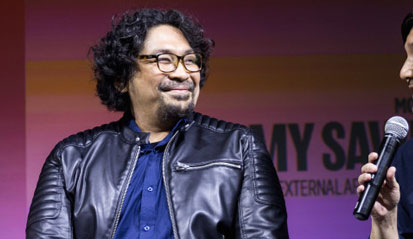
This cultural boom was far from accidental. As Keith Sicat, an award-winning Filipino director, producer, filmmaker and educator explains, it was very much part of South Korea’s global plan. “It all boils down to funding,” says Sicat. “The greater the dedicated investment a government is willing to make, the greater the reward.”
“Our content team often says to me: ‘If it's not authentic, not unique, and it doesn't work in our local country, it's not going to work anywhere else.’ And I truly believe that.”
In fact, the South Korean government began targeting the cultural industry for growth as far back as the 1990s. In 1998, the Kim Dae-jung administration announced the Hallyu Industry Support Development Plan which was backed by serious investment; the budget expanding from $14m in 1998 to $84m in 2001. “That’s the reason for Korean culture’s ubiquitous status now. That seed was sown and nurtured with real monetary resources over the long haul,” says Sicat.
Embrace your culture
One cultural figure with a bird’s eye view on this transformation is Yoo Tay-guhn, president of Seoul Institute of the Arts. Interestingly, Yoo believes that Korea’s success in creating world-class Korean IP is not something that should be copied.
Instead, he advises tapping deep into each market’s unique cultural DNA to find a distinctive and authentic local voice. “Every country and culture has an identity that is unique and special,” he says. “It is essential that every artist embraces their own culture as a basis for their craft.”
Spurred on by the rise of the internet, multipolar pop culture can be seen on streaming service Netflix, where countries like Japan, South Korea and Thailand watch over 50% of their content from Asian markets. According to Yoo, this growing Asian consumer confidence is key to an expanding global identity.
Would Korea’s successful arts industry model work in Asia-Pacific? “Definitely,” he says. “I believe that the West will next look to Asia-Pacific for innovative ideas for content creation.”
Hot-housing IP expansion
According to industry insiders, these aren’t the only voices in hot demand. “We see the trend of Asian IPs gaining global popularity,” says Brian Tiong, partner on the board of directors at Liminal Entertainment. “That is a major change.”
Liminal, a metaverse entertainment company, believes that the next steps for the creative economy in Asia-Pacific will be to follow the demographic-led trends, and better understand and expand the industry in a way that works for Asia’s youngest creative consumers. “I see Asian content continuing to rise in the next decade,” he says.
Sicat affirms that responding to the call of this generation—and to the business promise of new technologies like Web 3, AI and the metaverse—is key to the region maintaining its well-earned lead in popular and digital culture.

“One relatively easy measure right now is to educate creatives and entrepreneurs to the ins and outs of IP ecology, and connect those with IP concepts with these entrepreneurial spirits,” he says. “Everyone can have a great idea, but it’s all in the execution.”
Likewise, matchmaking funding with up-and-coming talent is a surefire way of picking winners. “Another measure is for government and private enterprises to help jumpstart the creative industry by boosting the number and scale of competitive grants and incentives,” he suggests.

Finding new voices
But throughout Asia-Pacific, the biggest barrier to the creative economy stands in the way of those with the smallest voices. That’s why Netflix, an active regional producer, is empowering more under-represented communities to tell their stories.
“In Australia, we work with Bus Stop Films, a company dedicated to disability-based filmmaking. And we do a lot of work with Australia’s First Nations peoples,” says Debra Richards, Director of APAC Content & Studio Production Affairs at Netflix.
Ms Richards says the best mantra for the creative economy is to always start with the most genuinely different stories first. “Our content team often says to me: ‘If it's not authentic, not unique, and it doesn't work in our local country, it's not going to work anywhere else.’ And I truly believe that.”
Full-throttle uniqueness
Sicat agrees that whether financiers get nervous or not, cultural uniqueness must always come first. “Most of them want to minimise perceived risk, but in creative industries, ‘minimising risk’ often means neutering the power of that original creative idea,” he says. “The ones that succeed in a big way are the ones that are actually targeting their niche market, fearlessly heading in that direction at full throttle. They are creating for the audience member that is already consuming this type of content religiously.”
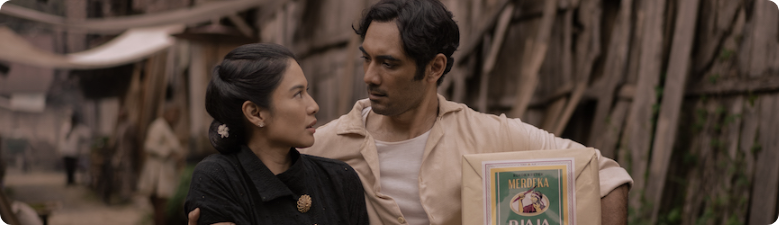
Produced by EI Studios for Netflix
