
2021 Global survey report
Following Phase 1 of the Making hybrid work human programme, which sought to define hybrid work, contextualise current trends in terms of the history of work and propose areas of further exploration, Economist Impact has pursued these lines of inquiry via a global survey, sponsored by Google Workspace.
Download full report

Economist Impact conducted a survey of over 1,200 knowledge workers in twelve countries in September-October 2021. The survey investigated the current state of hybrid work to test the hypothesis that the future is hybrid. It asked about the main benefits and challenges of hybrid work, as well as practices that are instrumental to achieving the long-term success of this working arrangement. Some high-level key findings are as follows:
The covid-19 pandemic is set to have a permanent impact on the way we work:
The share of people working fully in-person has more than halved since the pandemic’s onset, while the rates of current and anticipated post-pandemic hybrid work have doubled. Over 75% workers believe that flexible work will become a standard practice for most organizations in the coming three years.
77%
Work policy preparation
Report their organisation has issued a policy regarding working arrangements for after the pandemic
77%
Industry-wide adoption
Agree that flexible work models will become standard practice for most organisations in their industry within the next three years
76%
Organisation-level success
Confident that during the next three years their organisation will successfully implement flexible work models
Hybrid work, however, is clearly in its infancy
We are still learning as we go, and organisations are trying to ascertain how to implement hybrid work amid conflicting evidence about its relative benefits and costs. When asked about the pros and cons of hybrid work, survey respondents appear to be divided. Respondents consider heightened productivity and employee engagement to be among hybrid work’s top three benefits—while reduced productivity and engagement are also among its top three challenges. In the meantime, the mixed impact of hybrid work in practice reaffirms that how to implement hybrid work to its long-term success.

There are several apparent contradictions in the survey results
One example is the perceived presence of benefits to individual wellbeing and work performance even as workplace relations are threatened. This exists alongside the belief that current technology fosters connection with remote co-workers even as a majority feel disconnected from their organisation and colleagues. These issues, among others, perhaps reflect the uncertainty with any incipient business transformation.
Success in the hybrid workplace will require organisations to address the clear fault lines that have emerged
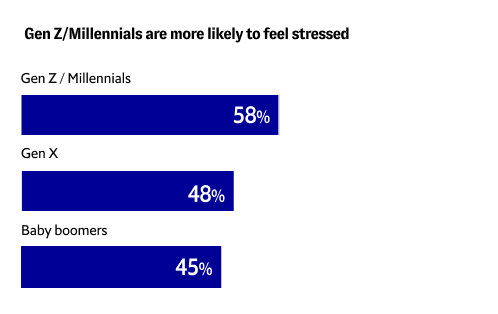
Clear lines emerged in terms of the acceptability of hybrid work: between frontline and non-frontline workers, between workers of different corporate seniority, and intergenerationally. For example, while the majority of respondents worry about distrust and disconnect from co-workers, this sense is relatively higher among frontline workers than non-frontline, as well as among younger and less senior employees.
The long-term success of hybrid work is dependent on organisations investing in both the “hardware” and “software” of hybrid work
These include better technology infrastructure and tools, as well as training, clearer communication and enhanced internal processes. Measures tailored to local economic and social contexts and, where applicable, to the needs of specific groups such as those with caregiving and/or childcare duties, will probably be the most effective.
Explore more

Managing the age of hybrid work
How might organisations consider the diverse and unique needs of different groups to make hybrid work human?
The new hybrid reality
Explore what knowledge workers said about the current state of hybrid work -- and its main benefits and challenges.

Making hybrid work human
Learn what is hybrid work and its current trends through the lens of history.