
Heatwaves and kidney injury among older adults living in cities
As cities heat up and populations age, older people face growing risks from extreme heat and impacts on their kidney health. There is a need for better warnings, access to cooling and targeted support.

Older people, defined by the UN as the over-60s, are particularly vulnerable to the health impacts of global warming, a growing concern compounded by rapid population ageing and urbanisation.1 By 2050, the number of older people living in cities or towns will have doubled to more than a billion, with the fastest shift in low- and middle-income countries.2
Ageing reduces thermoregulatory function due to impairments in cutaneous vasodilation and sweating, making it harder to adapt to and tolerate temperature swings.3 Older people are also more likely to have chronic conditions exacerbated by heat, and some of the medications used to treat those conditions may add to their vulnerability. City living brings with it the urban heat island effect that exacerbates and amplifies human exposure to high temperatures.4,5 For instance, Europe is warming faster than other regions, with summer temperatures reaching record highs.6 Often, its cities, which have dense city living, are on the front line of climate change and health, with heat-related mortality rising 160.6% in southern European cities between 1991-2000 and 2015-2024.7 Dense populations and built environments are exacerbating the problem and adaptations being made are not enough.
The growing threat of heat to kidney health in older people
In the context of climate and health, kidney disease may be one of the most important yet understudied risk factors.8 Kidney function both declines with age and is uniquely vulnerable to heat-related injury because of its central role in regulating fluid and electrolyte balance.
Neither is it a hypothetical problem; heat-related mortality in those over 65 years increased by approximately 85% between 2000–2004 and 2017–2021.9 In a 2003 heatwave in Genoa in Italy, renal disease was found to be a prominent cause of death in patients over the age of 74 years.10

As the climate warms, those over 60 will be particularly at risk of exposure to heat that their bodies cannot tolerate. Modelling data show intense and persistent “uncompensable heat stress” (UHS) in older adults even at the most conservative 1.5°C global warming scenario. In Delhi, Lahore and Dubai, older people are projected to face close to or more than 1,000 hours of UHS a year. In Bangkok, older individuals will experience UHS across much of the year as the climate warms.11
Less is known about those living nearer the equator and chronically exposed to intense heat, says Professor Jason Kai Wei Lee, director of the Heat Resilience & Performance Centre, Yong Loo Lin School of Medicine at the National University of Singapore. Here heatwaves as defined by extreme increases in temperature are less common but “we don’t need seasonal spikes to cause a problem, a small increase at the upper end may be enough”, he says. These countries, where there is often less research capacity and therefore data, are overlooked. More evidence is also needed on the pathway from repeated acute kidney injury—even at a subclinical level—and the progression to chronic kidney disease, which carries extremely high healthcare costs.12,13 It is something he is studying longitudinally in adults exposed to heat at work. One US study found an association between heat exposure and kidney disease prevalence.14

“From a government perspective, we need to first quantify the true burdens more accurately, linking temperature extremes to healthcare demand, as measured by clinic visits and hospital admissions.”
Professor Jason Kai Wei Lee, director of the Heat Resilience & Performance Centre, Yong Loo Lin School of Medicine at the National University of Singapore
Making heat protection targeted and actionable
“From a government perspective, we need to first quantify the true burdens more accurately, linking temperature extremes to healthcare demand, as measured by clinic visits and hospital admissions,” says Professor Lee. He thinks that registries of individuals at high risk need to be turned into targeted, proactive action that reaches across government departments, not just health. He points to a model developed in China that uses historical meteorological and health data to identify graded levels of stroke risk (that are related to heat) more effectively than the China Meteorological Association standard heat-warning system.15 Professor Lee believes the same approach could potentially be adapted to other heat-related health conditions. Modelling showed a two-fold increase in the proportion of avoidable excess heat-related deaths if protective interventions were put in place based on its risk alerts. A separate evaluation in Tianjin found use of the risk system over a nine-month period led to a 6.9% reduction in hospital admissions for stroke during four alert periods. It saved the government $2.6m, the researchers calculated.16
Interventions during periods of high heat will depend on local resources but can include advance warning for those at risk, access to cooling centres and the provision of information and education on how to keep homes cool. Non-governmental organisations and community health workers can provide outreach, including resources and medication reviews for individuals taking certain drugs that may affect their ability to deal with heat, such as increasing their risk of dehydration, Professor Lee explains.17
Advice should have cultural nuance and may be more effectively delivered through trusted community or faith leaders, he points out. For example, he thinks that individuals, especially the elderly, who practised traditional medicine (a field that evolved over 1,000 years), would never follow his scientific advice to cool down with a cold drink or shower on a hot day, as it would not be in keeping with this form of medicine.
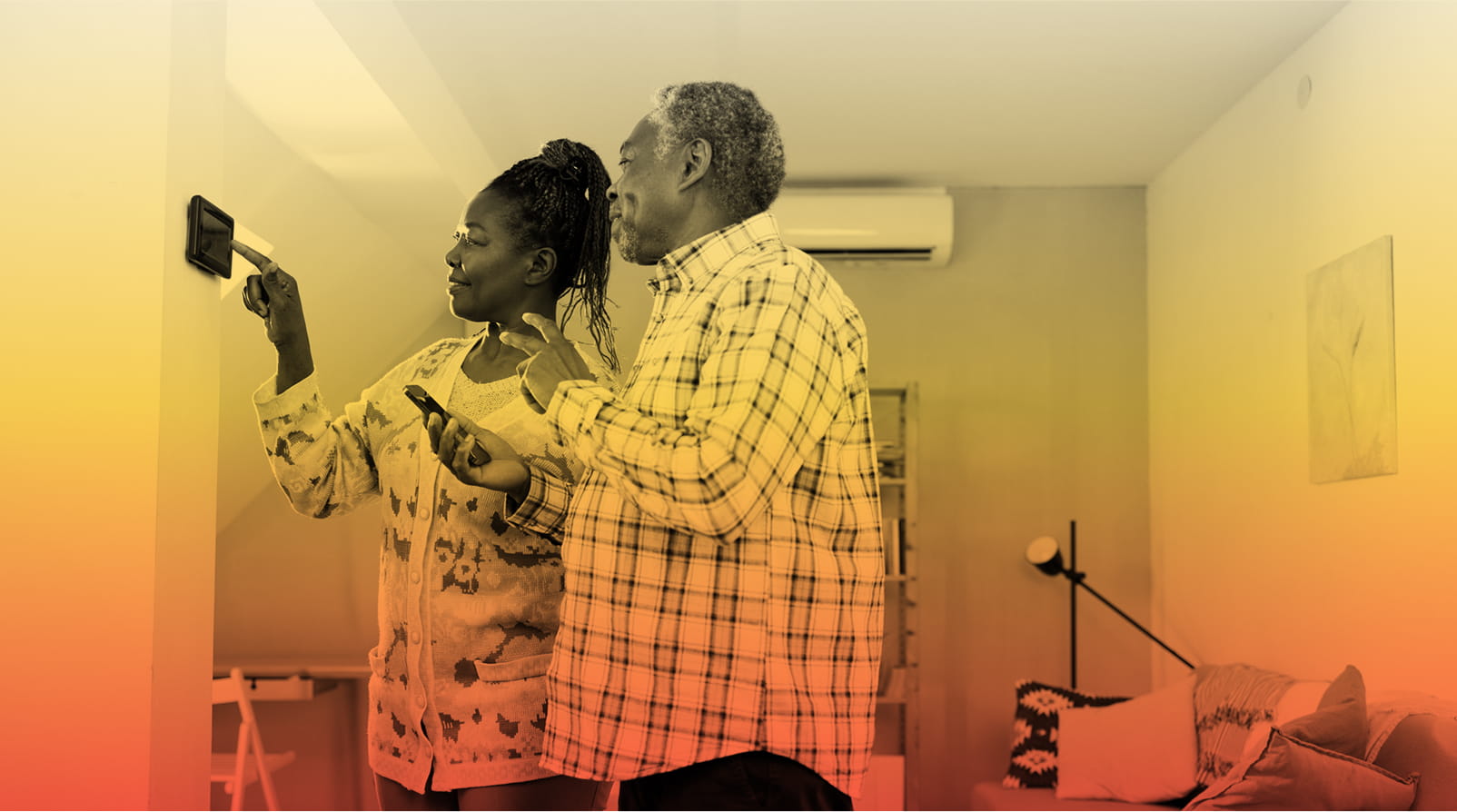
From cooling access to effective use and heat resilience
Air-conditioning will be a vital tool in protecting the most vulnerable, he believes. The real scandal, as he sees it, is its overuse by those who do not need it and lack of access for the most vulnerable, including older patients in hospitals.18
In Singapore, he notes that the government gives Climate Vouchers to households to support more energy-efficient purchases and help reduce utility costs, such as air conditioning.19 The country had learned from the experience of Japan, where, after excess deaths from heatstroke, older people had access to air-conditioning but did not use it because of the cost, Professor Lee says. A further barrier is that many older populations in Asia and Europe believe air-conditioning is bad for their health, Professor Lee says. Japan is currently trialling artificial intelligence alongside wearable sensors to encourage older people to use air-conditioning when they may be at risk from heat.20 The system uses an AI-based system that estimates core body temperatures and notifies users of the risk of heatstroke via a smartwatch but also monitors temperature in the room, turning on air conditioning automatically when it gets too hot.
He also argues that there are things people can do to protect their kidney health as they age and spending all their time in air-conditioned buildings with little exercise—something he sees in high-income countries like Singapore, could have “unintended consequences”. “If we avoid the heat, we become less heat-resilient. If we don't exercise, our capacity will shrink over time.”
Further efforts to quantify the impact of heat and kidney disease in older people living in cities, particularly in low-income countries, should happen simultaneously with research into the most effective intervention and economic evaluation that will convince governments to invest in adaptation measures and heat alerts, Professor Lee adds.
“We can’t just spend time quantifying this problem, we need to in tandem identify and scale the most effective interventions.”
We thank Professor Jason Kai Wei Lee, director of the Heat Resilience & Performance Centre, Yong Loo Lin School of Medicine at the National University of Singapore, for providing his insights. This article was written by Emma Wilkinson. The interview and editing were undertaken by Elizabeth Sukkar.
While every effort has been taken to verify the accuracy of this information, Economist Enterprise cannot accept any responsibility or liability for reliance by any person on this report or any of the information, opinions or conclusions set out in this article. The findings and views expressed in this article do not necessarily reflect the views of the sponsor.
Start of carousel.

Beating the heat: Protecting kidney health in a warming world
A report examining how rising temperatures and extreme heat affect kidney health, who is most at risk, and the actions needed to reduce the burden.

Policymakers' view on heat and kidney health
An expert panel on public health, climate resilience and labour protection sets out steps to protect vulnerable people from heat-related kidney injury and close research gaps.

When cooling down costs workers their income
Physically demanding outdoor labour exposes agricultural workers to heat stress, dehydration and kidney disease. Financial pressures make rest costly, highlighting the need for protections that safeguard health and livelihoods.

Turning kidney health literacy into action
As rising temperatures threaten kidney health, advice alone is not enough. Protecting vulnerable groups requires clear, practical guidance tailored to their needs, backed by community support and resources.
End of carousel.
References
- 1.World Health Organization. The UN Decade of Healthy Ageing 2021-2030 in a climate-changing world [Internet]. Geneva: World Health Organization; 2022 Jan 24 [cited 2026 Sep 7]. Available from: https://cdn.who.int/media/docs/default-source/decade-of-healthy-ageing/decade-connection-series-climatechange.pdf?sfvrsn=e926d220_1
- 2.HelpAge International. Ageing cities [Internet]. London: HelpAge International; [cited 2026 Sep 7]. Available from: https://www.helpage.org/what-we-do/society-for-all-ages/society-for-all-ages-campaigns/ageing-cities/ ; World Health Organization. Percentage of older people living in age-friendly cities, towns or rural areas over the past year [Internet]. Geneva: World Health Organization; [Accessed 6 October 2026]. Available from: https://www.who.int/data/gho/indicator-metadata-registry/imr-details/proportion-of-older-people-living-in-age-friendly-cities-and-communities
- 3.Núñez-Rodríguez S, Collazo-Riobó C, Sedano J, Sánchez-Iglesias AI, González-Santos J. Heat tolerance in older adults: a systematic review of thermoregulation, vulnerability, environmental change, and health outcomes. Healthcare (Basel). 2025 Nov 3;13(21):2785. doi:10.3390/healthcare13212785.
- 4.Krenz K, Amann L. Urban heat island effect: examining spatial patterns of socio-demographic inequalities in Greater London. Cities Health. 2025;9(5):901-24. doi:10.1080/23748834.2025.2489854.
- 5.Arellano B, Roca J, Serra C, Martínez D. Vulnerability of older adults to heatwaves: the Barcelona case. Front Public Health. 2026 Aug 14;14:1808985. doi:10.3389/fpubh.2026.1808985.
- 6.Chen-Xu J, Kriit HK, Semenza JC, Heiliger H, Markandya A, Dasandi N, et al. The 2026 Europe Cities Report of the Lancet Countdown on health and climate change: cities at the forefront of climate change action. Lancet Public Health. 2026 Oct;11(10):e797-e818. doi:10.1016/S2468-2667(26)00100-3.
- 7.Chen-Xu J, Kriit HK, Semenza JC, Heiliger H, Markandya A, Dasandi N, et al. The 2026 Europe Cities Report of the Lancet Countdown on health and climate change: cities at the forefront of climate change action. Lancet Public Health. 2026 Oct;11(10):e797-e818. doi:10.1016/S2468-2667(26)00100-3.
- 8.Barraclough KA. Kidney health in a warming world: heat, climate change, and implications for care. Kidney Int Rep. 2026 Mar;11(3):103802. doi:10.1016/j.ekir.2026.103802.
- 9.World Health Organization. Heat and health [Internet]. Geneva: World Health Organization; 2026 Jul 31 [cited 2026 Sep 30]. Available from: https://www.who.int/news-room/fact-sheets/detail/climate-change-heat-and-health
- 10.Conti S, Masocco M, Meli P, Minelli G, Palummeri E, Solimini R, et al. General and specific mortality among the elderly during the 2003 heat wave in Genoa (Italy). Environ Res. 2007 Feb;103(2):267-74. doi:10.1016/j.envres.2006.06.003.
- 11.Kong Q, Vecellio DJ, Huber M, Cottle RM, Wolf ST, Leach OK, et al. Exceeding human heat tolerance in a warming, ageing world: a global projection modelling study. Lancet Planet Health. 2026 Jul;10(7):101494. doi:10.1016/j.lanplh.2026.101494.
- 12.Claudel SE, Waikar SS, Scammell MK. An update on the epidemiology of chronic kidney disease of uncertain etiology. Curr Opin Nephrol Hypertens. 2026 May;35(3):353-9. doi:10.1097/MNH.0000000000001177. Epub 2026 Mar 17.
- 13.Selby NM, Taal MW. What every clinician needs to know about chronic kidney disease: detection, classification and epidemiology. Diabetes Obes Metab. 2024;26(Suppl 6):3-12. doi:10.1111/dom.15683.
- 14.Wang F, Wen F, Han Y, Bragg-Gresham J, Agrawal A, Han S, et al. The association of high ambient temperatures and kidney disease: a Kidney Disease Surveillance System ecological study. Clin J Am Soc Nephrol. 2026 Jan 9. doi:10.2215/CJN.0000000935. Epub ahead of print.
- 15.Zhang J, Zhang M, Sun Q, Ma R, Zhang C, Lu K, et al. Interventional applications of a Stroke Heat Risk Prediction Model produce health benefits. Nat Commun. 2026 Jan 27;17(1):2058. doi:10.1038/s41467-026-68815-4.
- 16.Hong C, Han S, Shang J, Zhang S, Zhao M, Xia C, et al. Evaluating effectiveness and economic benefits of meteorological health warning systems: a case study of stroke warnings in Tianjin, China. Int J Disaster Risk Sci. 2026 Sep 21. doi:10.1007/s13753-026-00768-0. Epub ahead of print.
- 17.Medicines and Healthcare products Regulatory Agency. Don’t let this heatwave affect your medicines: three important tips from the MHRA [Internet]. London: Medicines and Healthcare products Regulatory Agency; 2026 Jun 26 [cited 2026 Oct 5]. Available from: https://www.gov.uk/government/news/dont-let-this-heatwave-affect-your-medicines-three-important-tips-from-the-mhra
- 18.Davis L, Gertler P, Jarvis S, Wolfram C. Air conditioning and global inequality. Glob Environ Change. 2021 Jul;69:102299. doi:10.1016/j.gloenvcha.2021.102299.
- 19.Government of Singapore. Climate Friendly Households Programme [Internet]. Singapore: Government of Singapore; 2026 [updated 2026 Jul 6; cited 2026 Sep 11]. Available from: https://www.climate-friendly-households.gov.sg/about/
- 20.Jiji. Japan testing new tech to prevent heatstroke among elderly [Internet]. Tokyo: The Japan Times; 2026 Aug 13 [cited 2026 Sep 7]. Available from: https://www.japantimes.co.jp/news/2026/08/13/japan/japan-elderly-heatstroke-prevention-tech/