

Food systems are entering a decisive decade shaped by several ineluctable forces: intensifying climate volatility, tightening public budgets and technological disruptions; from biotechnology and artificial intelligence that are reshaping production and markets to geopolitical fragmentation that is impacting trade flows and food security. These are driving increasing hunger and malnutrition and huge inequalities that continue to undermine resilience.
In this moment of disruption and opportunity, one fact stands out: food-systems transformation will not succeed without women—not as beneficiaries, but as architects. Women are farmers, scientists, entrepreneurs, financiers and policymakers. They produce food, generate knowledge, allocate capital and shape institutions. Yet for decades, they have operated within systems that undervalue their labour, constrain their access to assets and limit their influence in decision-making. The next phase of food-system transformation depends on correcting that imbalance—not only as a matter of equity, but as a matter of economic performance and global stability.
The farmer
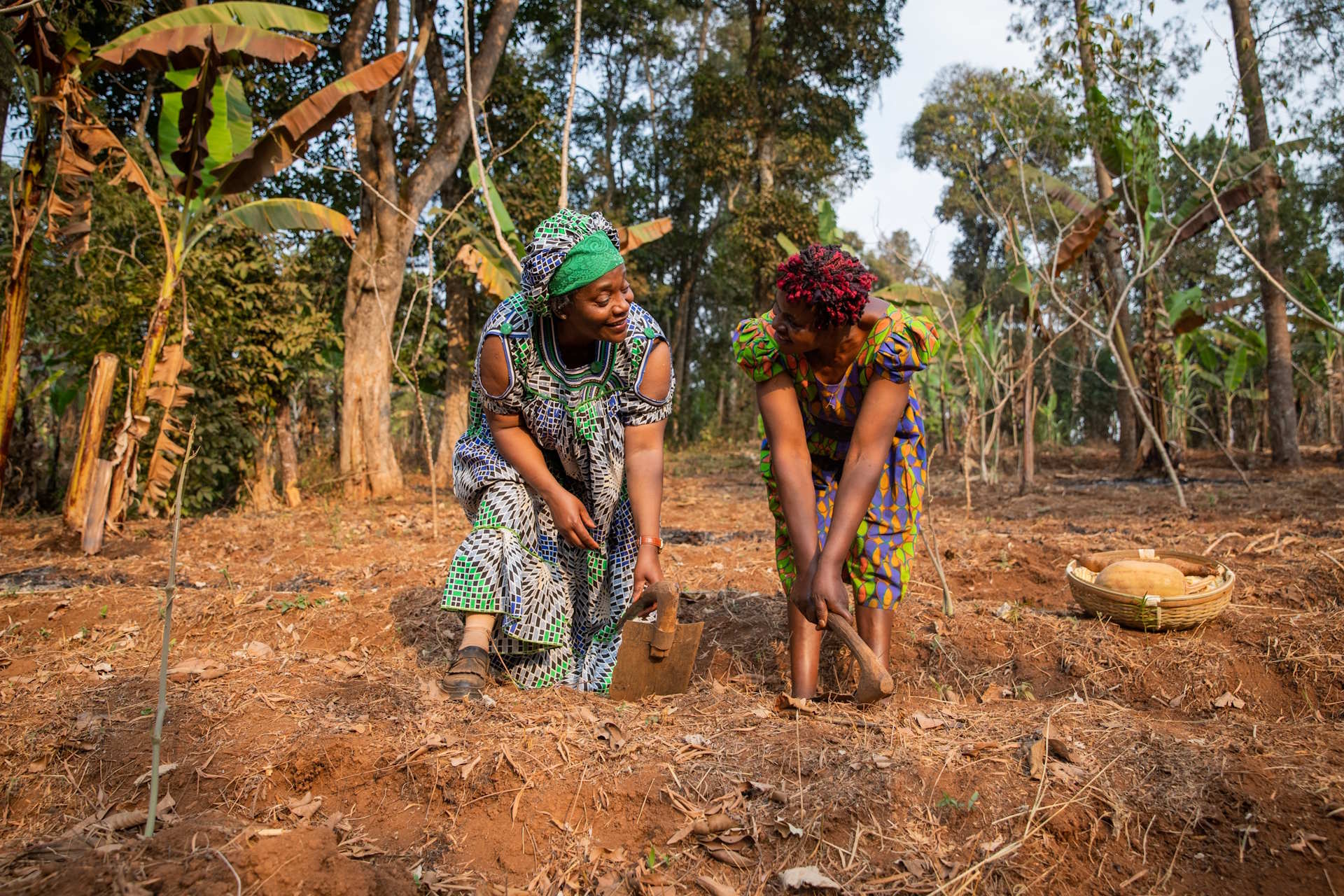
Across the globe, women account for roughly 40% of the agri-food workforce, with even higher participation rates in parts of sub-Saharan Africa. According to the Food and Agriculture Organisation, closing gender gaps in farm productivity and wages could increase global GDP by approximately $1trn and reduce food insecurity for tens of millions of people.
The productivity gap between male and female farmers is not a question of capability; it is a question of access. Women are more likely to farm smaller plots, have weaker land-tenure security, face limited access to credit and inputs and receive less extension support. Climate shocks further compound vulnerability, as women often have fewer buffers against extreme weather events.
Evidence from the International Food Policy Research Institute shows that when women control income and assets, household nutrition improves and poverty declines more sustainably. Women’s agricultural earnings are more likely to be reinvested in children’s education and dietary diversity, strengthening intergenerational resilience.
Transforming food systems for the future will therefore have to address a few foundational issues: secure land rights, accessible agricultural finance aligned with cropping cycles, climate-resilient extension services and infrastructure that reduces women’s time poverty. When women farmers are equipped with equal tools, they deliver equal—often superior—returns in productivity and stability.
The scientist
Agricultural transformation has historically been measured in tonnes per hectare. Women scientists have helped expand the definition of success to include resilience, nutrition, agency and sustainability.
The development of the Women’s Empowerment in Agriculture Index (WEAI), supported by researchers at the International Food Policy Research Institute, marked a critical shift. Agricultural programmes are now evaluated not only by output, but by decision-making power, resource control and empowerment outcomes.
Within the CGIAR system, gender-responsive research has demonstrated that innovations designed with women’s participation achieve higher adoption rates. Climate-smart technologies are more widely adopted when they account for women’s labour patterns, time constraints and risk exposure. Women researchers have also played a central role in advancing biofortification to combat micronutrient deficiencies, participatory seed systems that incorporate farmer preferences and integrated agriculture-nutrition policy models. By embedding social realities into technical design, women scientists have strengthened the scalability and durability of innovation.
The next generation of agricultural science must optimise not only for yield, but for resilience and equity. Women’s leadership in research institutions is essential and has demonstrated that transformation is easier to achieve if women are included in the design process and own the outcomes.
The leader
Where women hold decision-making authority, policy priorities shift. Countries like Rwanda, with higher female representation in legislative bodies often demonstrate stronger investments in health, education and social protection—sectors that directly influence food security and human capital.
In agri-food systems, women leaders influence land reform, climate adaptation strategies, gender-responsive budgeting and financial-inclusion frameworks. Rwanda provides a notable example: high female representation in parliament has been associated with strengthened land and inheritance reforms, normalising women’s ownership and economic participation.
Leadership also reshapes institutional culture. Hiring patterns diversify; mentorship pipelines expand; and gender-disaggregated data becomes routine rather than optional. Norms shift when exposure to women in authority becomes sustained and visible.
Yet progress remains uneven. Women are still underrepresented in senior executive roles within agri-business corporations, agricultural ministries and producer organisations. Representation without authority does not alter systems. Sustainable change requires women not only at the table but in positions of decision-making power backed by budgetary and regulatory influence.
The entrepreneur
Across Africa and beyond, women entrepreneurs are reshaping food-system businesses from the ground up. Women-led co-operatives in coffee, dairy, and horticulture have improved transparency, strengthened price negotiation power, and expanded market access. The Ghanaian cocoa co-operative model linked to Divine Chocolate demonstrated that women farmers can participate not only in production but also in ownership and brand equity within global markets.
Women-led small and medium-sized enterprises (SMEs) are central to value addition—reducing post-harvest loss, expanding processing capacity and generating rural employment. Yet these enterprises remain chronically underfinanced. The African Development Bank has launched initiatives aimed at unlocking financing for women entrepreneurs, recognising their macroeconomic importance. Women in business are redefining value. Profitability and purpose are no longer treated as competing objectives; instead, inclusive sourcing, sustainability integration and community resilience are embedded into growth strategies.
Structural inequalities persist
There has undeniably been significant progress over the past two decades in advancing gender equality in food systems: land laws in numerous countries have been reformed to strengthen gender equality, gender-lens investment frameworks have expanded, agricultural research increasingly incorporates gender analysis and development banks have introduced financing instruments targeting women-owned enterprises. Yet structural gaps persist.
Most prominently, legal reforms often falter at implementation due to customary norms and weak enforcement mechanisms; financial inclusion does not always translate into productive investment capital; gender integration in research sometimes remains confined to reporting frameworks rather than core design principles; and board diversity does not always equate to real authority. It is true, we have seen real progress, but we have yet to see it reach scale.
Women are the other half: when that half is empowered—farmers that shape the nutrition and livelihoods of families, scientists that shape inventions, entrepreneurs that shape what scales and leaders that shape what is funded and regulated—food systems will move from extractive to inclusive and from fragile to resilient.
In conclusion, food-systems transformation will not be delivered by technology alone. It will be shaped by who holds knowledge, who controls capital and who sets the rules. Women are increasingly doing all three. The question is not whether women can transform food systems—they already are; it is whether our policies, financial systems, research institutions and corporate governance structures will move fast enough to match their momentum. And whether the recognition of the problem will be matched by sufficient reforms for acceleration to happen.
In the end, true empowerment of women is a win-win: when women shape food systems, those systems become more productive, more resilient and fairer in a much stronger global economy.
Views or opinions expressed are those of the author and any individuals cited, and do not necessarily reflect those of Economist Enterprise or any other member of The Economist Group.