


Earth’s orbit is fast becoming one of humanity’s most productive economies. By 2032, satellites drifting around our planet are expected to generate over two exabytes of data cumulatively - the equivalent of 4.6 million years of HD video. But how much use is all this data?
Even the most detailed satellite images of California’s wildfires will have done little to reveal that businesses 60 miles from the blaze would have their power cut by the authorities. Nor would they have indicated regulators would respond to the crisis by writing legislation limiting how much water data centres can consume.
“Just throwing more data at the problem without understanding how to extract what matters to you is unlikely to be productive,” explains Belinda Bates, head of development for climate resilience at Zurich Resilience Solutions. “Our analysts often start by taking a broad view ofclimate risk across a company’s value chain, but quickly bring in their expertise to assess how operations or specific sites contribute to different risks, and to identify the steps they need to take to mitigate them.”

After severe flooding disrupted production at Audi's Neckarsulm plant in 2016, engineers and scientists from Zurich Resilience Solutions were brought in to find a solution. After analysing the site and surrounding region, they helped Audi erect water-filled barriers around the facility that have prevented surface flooding ever since.
As the weather-related risk becomes more volatile, resilience will move further up board-room agendas. A study soon to be released by the World Economic Council of Sustainable Development predicts businesses - particularly those in the food and beverages industry - could see their net profits wiped out entirely by the impact of extreme weather events within the next five-to-ten years.[1]
“Shareholders should understand that these are now threats to the value and profitability of companies,” Johan Rockström, director of the Potsdam Institute for Climate Impact Research told journalists in Davos. “Businesses have a great opportunity but also a high degree of responsibility to map risks of extreme events across their entire value chain.”
Yet as businesses in California can attest, this is not as simple as it may seem. Start with physical risk. “Climate risks accumulate through a combination of interacting physical processes,” explains Professor Emily Shuckburgh, academic director of the Institute of Computing for Climate Science at Cambridge University and director of Cambridge Zero, the university's climate change initiative. The businesses in California, for example, which are recovering from some of the deadliest wildfires in modern history, must now prepare for the increased risk of flooding as rainwater struggles to permeate the scorched earth; floods, in turn, can promote vegetation growth and perpetuate the risk of fires.
Next, consider the challenges of collecting accurate data across value chains. When analysts at the Bank of Japan assessed their global exposure to environmental disruption, they found that economic data provided in regions such as Columbia was provided as a national average because the government didn’t have the precise location of assets of Colombian banks. Other problems, such as the limited availability of data on subsidiaries or raw materials can also hamper analysis.
The AI advantage
Together, physical and data challenges can make it difficult to take appropriate action. Fortunately, technology provides solutions. “Our models utilise neural networks not only to look at how natural hazards are changing, but how that changes the risk to a business,” explains Iwan Stalder, head of accumulation management at Zurich InsuranceGroup. “We use neural networks to connect climate and catastrophe models,” he adds. “This helps us identify relationships and dependencies in large datasets that a human cannot do, because of the scale and complexity of the data, to better understand the business impact of a changing climate.”
Combining neural networks with other AI such as image recognition and machine learning will improve the accuracy of climate analysis in three distinct ways, explains Professor Shuckburgh. “First, data-driven machine learning approaches are being incorporated into climate models to reduce the uncertainty in projections,” she points out. “Second, AI is being used to correct for systematic biases and ‘downscale’ the projections – of the risk of extreme weather, for example – to particular locations such as a specific city. Third, AI approaches are being used to track meteorological conditions to specific impacts, and to map systemic risks that are connected through supply-chain networks.”
Future proofing
This level of climate analysis is already shaping the future. In 2024, Madrid City Council began installing permeable pavements, rain gardens and drainage ditches to mitigate the impact of floods that were increasingly threatening the city. The creation of shaded walkways and adoption of reflective materials will follow in 2025 as Zurich Resilience Solutions continues to help the city adapt.
“We've also worked with private companies to plan CAPEX projects—purchases of land to project planning and facility design—as well as integrating extreme weather and climate risk into supply chain planning,” says Ms Bates. When sustainable technology supplier Johnson Matthey was looking to accelerate its decarbonisation strategy, for example, Zurich Resilience Solution's developed quantifiable measurements for environmental risks across the company’s value chain, helping to determine where investment was needed most.
As more companies integrate climate resilience into their strategic planning, adaptation becomes a critical advantage. If an automotive company is looking to offset climate risk across its supply chain, for example, suppliers that can provide accurate data on their flood or fire resilience will be more likely to win contracts.
Climate resilience will become more important as the severity and frequency of extreme weather and natural hazards increases. In this new economic reality, it is not the businesses that move fast and break things that will thrive, but the ones who can adapt to a volatile world.
Find out more from Zurich
Start of carousel.

How AI can power progress
The take from Davos

Power shifts: what next for energy and geopolitics?
Zanny Minton Beddoes, editor-in-chief of The Economist, moderated a panel on energy security at Davos 2025 with Jason Bordoff, Meghan O’Sullivan and Daniel Yergin on the sidelines of the World Economic Forum Annual Meeting.

Madrid’s battle against extreme heat: How Zurich has been helping enhance the city’s climate resilience
Global warming and urban sprawl mean more cities are contending with extreme temperatures. With heat waves expected to increase in frequency, intensity and duration, Madrid City Council turned to Zurich to help the Spanish capital adapt.
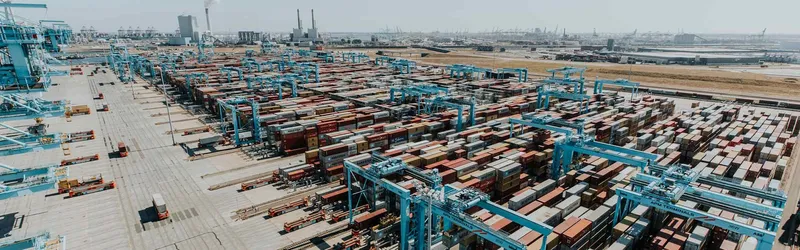
Navigating climate risks: Maersk turns to Zurich to bolster port resilience
Ports are vulnerable to windstorms, flooding and storm surges. They are on the front line of future climate change too. Shipping and logistics giant Maersk wants to future-proof its ports and has turned to Zurich Resilience Solutions for support.

Why climate change is hitting the poorest hardest
Rising temperatures are deepening social inequalities globally and within regions and cities. Resilience strategies should offer protection and increase opportunity for the most vulnerable.

A warming planet is fracturing, but trust and collaboration are now essential
Combating climate change requires co-operation and cooler heads, not conflict.
End of carousel.
References
- 1.Johan Rockström at the World Economic Forum, 20:00:00 : https://www.weforum.org/stories/2025/01/how-can-businesses-manage-and-mitigate-the-risks-and-effects-of-increasingly-wild-weather/