
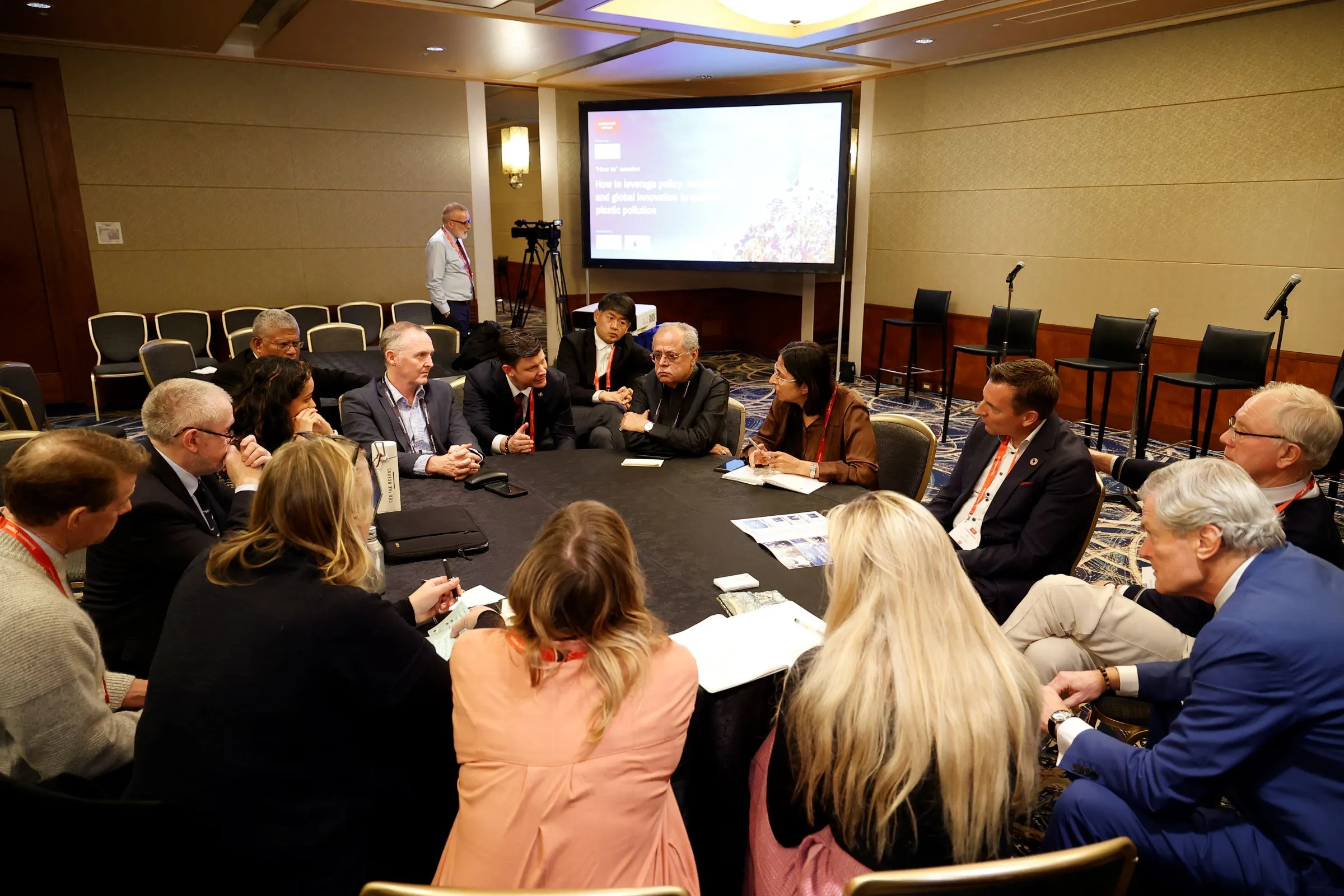
The Global Plastics Treaty (GPT), which could be implemented in 2025, represents a critical step towards tackling plastic pollution through legally binding international commitments to reduce plastic pollution by changing the way plastic is produced and consumed. To ensure its success, signatory governments must develop coherent policies and regulatory frameworks that drive systemic change, while fostering alignment between international, national and regional efforts. Effective implementation of the GPT will require harmonised regulations, robust enforcement mechanisms and clear accountability structures, as well as collaboration across sectors to create scalable and lasting solutions.
Participants in this "How to" workshop explored ways to design policy frameworks that incentivise waste reduction, support circular economy models and strengthen global supply chains. Discussions focused on how to support national legislation with international agreements, ensure financing for waste management infrastructure, and integrate extended producer responsibility schemes. Speakers examined how industry can contribute through upstream innovation in material design and reuse models, and how downstream improvements in recycling and waste collection can support treaty goals. The session also explored how to enhance cooperation between policymakers, NGOs, scientists and businesses to build a unified response to plastic pollution. Attendees left with practical ideas of how to translate policy commitments into progress, ensuring the GPT becomes a powerful tool for reducing plastic waste worldwide.
Moderator: Chloé Dubois, co-founder and executive director, Ocean Legacy
Speakers:
Gargi Pareek, director, government affairs for Indian subcontinent, TOMRA
Atul Bagai, former head of UNEP, India
Martin Koehring, ocean and finance specialist, UNEP Finance Initiative
Doug Woodring, founder and managing director, Ocean Recovery Alliance

Session report: How to drive solutions for the success of the Global Plastics Treaty
Discover how this "How to" workshop explored ways to design policy frameworks that incentivise waste reduction, support circular economy models and strengthen global supply chains.
ANCHORED IN ACTION

Insights, initiatives, and innovation for ocean futures at the World Ocean Summit 2025
Key takeaways from a pivotal event for ocean action—how communities and countries are reshaping the blue economy

Deep-sea mining: poised to be another subsidised extractive industry
Deep-sea mining is the most expensive—and destructive—way to get minerals we don’t need.

Accelerating corporate action towards a healthier ocean
Multi-stakeholder initiatives to help companies improve their impact on marine ecosystems