


How the UAE is unlocking the economic opportunity of energy transition
His Excellency Dr Thani Al Zeyoudi, minister of state for foreign trade, outlines how the UAE is embracing the energy transition as a driver of economic diversification, attracting investment and creating new opportunities for sustainable growth.
17 Feb 2025
It is easy to feel a sense of helplessness about the ongoing climate crisis. When seeing floods in Spain, wildfires in America and drought in the Amazon, or reading headlines about rising temperatures and shrinking ice caps, the scale of the challenge is often too big to even conceive, let alone tackle. Similarly, the proposed solutions seem to require the unravelling of an economic order that has, for many people, delivered nothing but progress and prosperity. The opposite of optimism is all too often apathy. If it’s beyond us, why bother?
To the United Arab Emirates, however, nothing is ever considered unachievable. The nation itself, born in 1971 from a collection of emirates in one of the hottest, driest parts of the world, is an exercise in overcoming the odds; the transformation of modest Gulf ports, which traded spices and pearls around the Arabian peninsula, into international hubs for business, finance, aviation, sport and entertainment within half a century was as much a testament to our leadership’s imagination as their ambition. Add in the construction of record-setting airports, towers and shopping centres, and you have a collective ability to see beyond the realms of the possible.

We see our commitment to net zero, which we plan to achieve by 2050, as an opportunity for reimagining our economy, a new gold rush that can inspire new capabilities and birth new industry sectors.
We are approaching the issues of climate change and sustainability with the same creativity. The only real obstacle is inaction. Indeed, we see our commitment to net zero, which we plan to achieve by 2050, as an opportunity for reimagining our economy, a new gold rush that can inspire new capabilities and birth new industry sectors. We believe it can form a key pillar of economic diversification, delivering new forms of value creation, driving new operational and industrial efficiencies, and creating new products and services for export. With our green energy programme projected to create 50,000 new jobs and mobilise investments of US$50bn, this is ultimately a business decision with environmental benefits, rather than the other way around.
The signs are already encouraging. According to the Green Fuel Index, the UAE has increased its renewable energy capacity more than any other country in the world over the last decade, with the Mohammed bin Rashid Al Maktoum Solar Park in Dubai not only the world’s largest single solar facility, but also the source of the planet’s cheapest commercial-scale solar power. The Barakah Nuclear Energy Plant in Abu Dhabi helps to save more than 5m tons of CO₂ every year and is on course to supply up to 25% of the UAE’s electricity needs.
We are now home to enterprises such as Masdar, Bee’ah, AMEA Power and SirajPower that are pioneering carbon capture and storage techniques, turning waste to energy on an industrial scale, and exporting knowledge in renewable energy, in particular solar and wind power generation, across Asia, Africa and Europe.
We have the solutions, we can see the investment and, in nations such as the UAE, there is the will to bring them together.
Importantly, we have developed an investment ecosystem that is attracting start-ups and projects that are able to accelerate this progress. The UAE is already the region’s principal destination for climate tech investment, which attracted US$401m in funding between 2018 and 2022, while our NextGen FDI initiative, which seeks to introduce high-potential global companies to the UAE, has welcomed enterprises specialising in precision fermentation to produce cattle-free dairy cheese, hybrid aviation for low-carbon commercial and cargo flights, and concentrated, off-grid solar power.
This isn’t a sudden realisation. Sustainability and environmental responsibility have been guiding principles since our foundation, and they have enabled us to reduce the contribution of hydrocarbons to our economy to less than 28%.
They have certainly been key features of my 15-plus years in government. In 2009, I project-managed the team that secured Abu Dhabi as the host of the newly established International Renewable Energy Agency (IRENA), and was later named the UAE’s first minister of climate change. In my current office as minister of state for foreign trade, I have been able to place energy investment, food security and economic diversification at the front and centre of our trade partnerships, and ensure that trade was, for the first time, a focus of deliberations at the COP28 climate change conference in Dubai.
Trade has a clear role to play in the delivery of a greener, smarter and more energy-efficient global economy. The UAE is leading the drive to introduce cutting-edge technologies, low-carbon transport and clean energy sources into our supply chains, and has joined forces with the World Economic Forum to create the TradeTech initiative to promote the use of blockchain, AI and data analytics across the logistics sector.
Since its launch in 2008, the Zayed Sustainability Prize has helped to create more than 840,000 jobs, deliver energy to 54.1m homes and provide safe water to 11.4m people.
As a global trade hub, we are also ensuring that sustainable and green-economy products are able to reach global markets. Our Comprehensive Economic Partnership Agreement programme, which prioritises tariff reduction and supply-chain resilience, is not only connecting exporters to customers, but also facilitating investment pathways into renewable energy, advanced manufacturing and agri-tech projects in emerging nations.
It is this commitment to positive change that informs my role as a judge of the annual Zayed Sustainability Prize, an international award that recognises impactful solutions in healthcare, food, energy and climate action. Since its launch in 2008, the Prize has helped to create more than 840,000 jobs, deliver energy to 54.1m homes and provide safe water to 11.4m people.
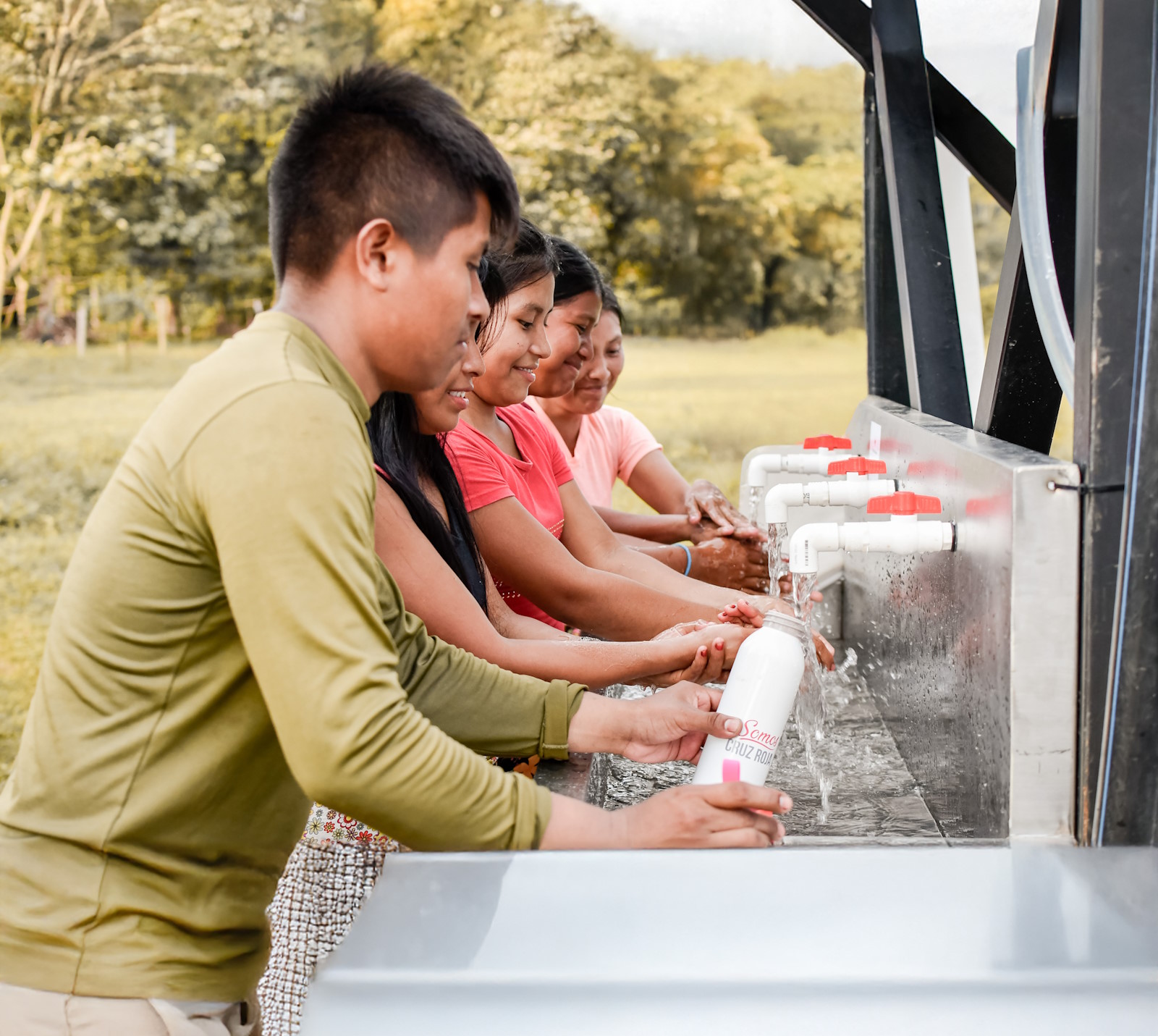
This year’s winners, announced recently during Abu Dhabi Sustainability Week, will make a telling contribution to this legacy. They include SkyJuice Foundation from Australia, whose patented ultrafiltration technology provides sustainable water treatment solutions for humanitarian projects around the world, and OpenMap Development Tanzania, which combines drone technology, mapping and data analytics to assess, and mitigate, the impacts of flooding in Tanzania.
This is why, despite everything, I remain optimistic. We have the solutions, we can see the investment and, in nations such as the UAE, there is the will to bring them together. Just as we have proved over the last 50 years, there is no sense in putting a limit on ambition.
The Zayed Sustainability Prize is now accepting submissions from organisations and institutions with sustainable solutions across the categories of health, food, energy, water and global high schools.
Related Articles

Scaling Resilience Through Innovation: India’s Lessons for a Changing World

Delivering on loss and damage for low-lying island nations

COP28 charts new course for climate action
