

Climate tech: bridging the gap between innovation and impact
Tackling the escalating climate crisis will be near-impossible without advances in climate tech, a diverse family of technologies that are explicitly focused on targeting climate change. Not only will the adoption of climate tech be critical to overcome and adapt to a changing climate; the scaling of climate technologies also has the potential to create new jobs, support economic growth and accelerate broader technological advancement.
Funding for climate tech in Europe and North America has markedly accelerated in recent years. This has facilitated a boom in activity in previously neglected technologies, such as carbon capture and green hydrogen.
However, critical early-stage funding is still insufficient to reach net-zero according to our new report, Climate tech: bridging the gap between innovation and impact, commissioned and supported by IMPROVED.
In order to reach net zero by 2050, innovation in high-risk, high-impact technologies will be crucial. Fostering innovation in climate tech requires supporting the development of firms from research and development through to industrialisation. While public funding plays a central role in supporting early-stage innovation, the private sector - including venture capital, private equity, and institutional investors - is also crucial to financing the development of emerging technologies.
In particular, venture capital investment in climate tech has surged over the past decade. This is a good thing. However, a more recent slowdown means that such investment still falls far short of what is needed. This underscores the need for greater diversity in sources of funding for climate tech, including actors that can support the sector over the longer term. Such actors include government funding agencies, private equity, and alternative pools of capital - such as pension funds and insurance companies.
Beyond funding, government policy is also essential to fostering an enabling environment for climate tech innovation. The Estonian government’s successes in expanding the nation’s climate tech sector is a case in point.
Cases such as Estonia’s demonstrate the immense opportunities afforded by innovation in climate tech. However, there is still much progress to be made globally to realise the sector’s full potential. For more detail on the current landscape for climate tech innovation and investment, read Economist Enterprise’s briefing paper: Climate tech: bridging the gap between innovation and impact.
For more detail on the current landscape for climate tech innovation and investment, as well as corresponding actions to be taken by pioneers, investors and policymakers, read Economist Enterprise’s briefing paper - commissioned by IMPROVED - Climate tech: bridging the gap between innovation and impact.

References
- 1.
RELATED ARTICLES
Start of carousel.

Artificial intelligence: A new realm of possibilities
A blog by Anima Anandkumar, senior director of AI research at NVIDIA and Bren professor at Caltech

Decarbonisation through software: A climate optimist’s mission
A blog by George Wade, co-founder of the decarbonisation software company Zevero
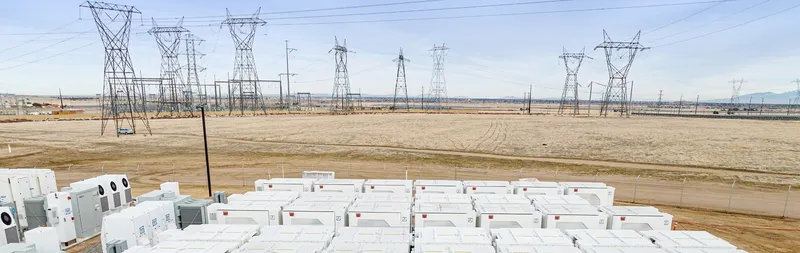
From start-up to scale-up: The future of energy storage solutions
A blog by Dr Marek Kubik, founding member and sales managing director for Western Europe at energy storage technology company Fluence

Deploying direct-current fast chargers for a more resilient future
A blog by Anurag Kamal and Folasade Ayoola, co-founders of energy storage company ElectricFish

Battery management: A key driver on the road to net zero
A blog by Christoph Birkl, co-founder of battery management technology company Brill Power

Getting on board for smarter – and more sustainable – transportation
A blog by Sam Ryan, CEO and co-founder of Zeelo

Sustainable aviation: Taking innovation to new heights
A blog by Shashank Sripad, co-founder of And Battery Aero

Electrifying transport through easily accessible charging stations
A blog by Luís Santiago Pinto, co-founder and CEO of Powerdot

Investing in net zero: The private sector’s role in driving lasting climate impact
A blog by Alex Harbour, climate investor and founder and chair of the Venture Climate Alliance

Fresh takes on climate change: The power of Gen Z perspectives in tech and venture capital
A blog by Meagan Loyst, founder and CEO of Gen Z VCs, a community for Gen Z innovators in tech and venture capital
End of carousel.