


During this summer period, I find myself on the Tuscan coastline, where the beaches are consistently crowded and showing growing signs of degradation. Alongside coastal erosion, this year has also seen an invasion of blue crabs—a species introduced by humans. Summertime often means having more time for closer contact with nature, but it’s now evident that this is occurring in an unsustainable manner, to the detriment of both the environment and ourselves.

Coastal and marine tourism accounts for over 50% of the global tourism industry and plays a fundamental role in the economies of coastal communities. It brings employment, investment and income owing to its valuable marine ecosystem services as well as its aesthetic value.
But the tourism industry today is “self-consuming”, exerting significant pressure on ecosystems and leading to biodiversity loss and pollution. This poses a dual challenge for coastal communities, since they rely on this sector for sustenance but must also reckon with its negative impacts. The United Nations Environment Programme estimates that marine plastic pollution cost sectors such as fishing, aquaculture and tourism between US$6bn and 19bn in 2018.
From awareness to action
A paradigm shift is urgently needed in the coastal and marine tourism sector, with innovative approaches to achieve sustainable and regenerative development. This requires both awareness and action to maintain a balance between the demands of tourism and the well-being of our planet. Although sustainability challenges have been part of discussions in the industry in recent years, widespread recognition of the issue is still lacking. According to the latest “Business for Ocean Sustainability” report by One Ocean Foundation, less than 25% of tourism-sector companies studied acknowledge the pressure that the industry places on coastal and marine biological integrity and diversity.

Although awareness is a fundamental step towards advancing sustainable coastal and marine tourism, it has to be translated into action. To do this, the interdependence among local communities, the tourism sector and the preservation of our “blue” natural-capital assets must be acknowledged. Protecting and simultaneously regenerating our blue natural capital is fundamental to ensuring the continued availability of these invaluable resources and services for both present and future generations.
Sustainability as a competitive advantage
As key players in the global economy, organisations within the coastal and marine tourism sector must adopt a proactive approach to protecting our blue natural capital. They must demonstrate greater awareness and capacity for cultivating a sustainable business, and implement actions with positive impacts on coastal and marine ecosystems. This approach can create value for companies by improving efficiency, identifying new income streams, promoting resilience and improving brand reputation and image.
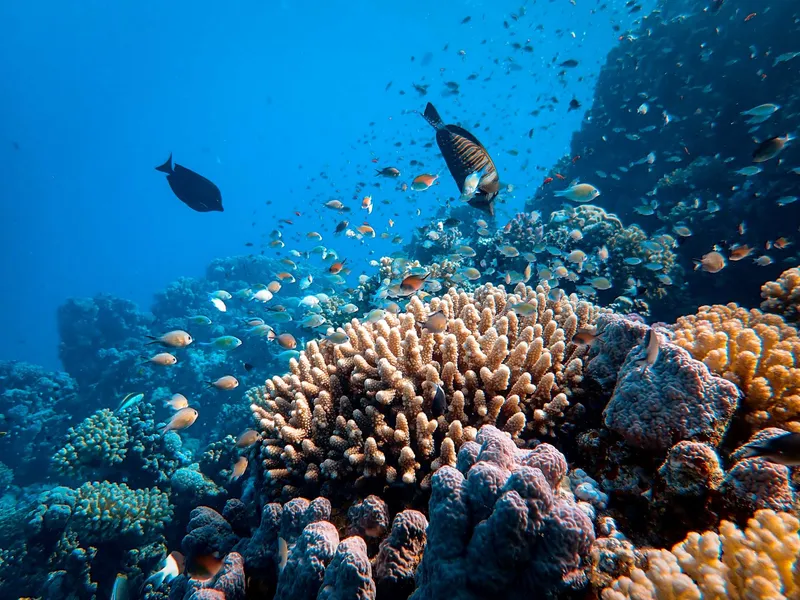
Effective solutions include pollution control through wastewater treatment devices, synthetic particle interception technologies, waste recovery and recycling systems, and the development of regenerative tourism aligned with conservation and ecosystem-restoration objectives. Other sustainability measures include coastal engineering solutions for coral-reef restoration, coastal-erosion prevention programmes, such as planting meadows of Posidonia oceanica, and cutting-edge services for the management of Marine Protected Areas (MPA). MPA programmes could include educational entertainment initiatives that intertwine the preservation of natural resources with the creation of enjoyable experiences for tourists. More broadly, marine-engineering solutions like smart-buoy fields, facilities to harness wave energy, and hydrogen-powered or electric boat-charging infrastructure can contribute to the landscape of potential solutions.
Businesses in the coastal and marine tourism sector need to anticipate future challenges and be ready to respond effectively. To support this, One Ocean Foundation has been developing the Ocean Disclosure Initiative—a science-based framework to guide companies in taking concrete actions to assess and mitigate the negative impacts of their business on the ocean. By fostering transparency, this tool can empower organisations to become catalysts for change as they embrace a proactive stance that recognises and addresses the challenges facing our oceans.
MORE FROM TOURISM
Our editorial explores the issue of “overtourism” – the role of policy in alleviating the overcrowding caused by an excess of tourists and the ways in which the travel industry can spur the protection and preservation of natural spaces. With much work still to do to achieve SDG 14 (on ocean sustainability), how can we find ways to grow this important ocean industry in sustainable and responsible ways?
Start of carousel.
Sustainable tourism management in the Great Barrier Reef Marine Park: a collective effort
A guest blog by Josh Thomas – CEO, Great Barrier Reef Marine Park Authority

Covid changed the DNA of tourism”: Destinations look generations ahead following pandemic rethink
Sustainability, stewardship and generative tourism are key buzzwords as elements of the industry shift from a focus on numbers

Overtourism: coastal management key as global traveller numbers return to pre-pandemic levels
More people are travelling, and many are visiting the same locations. The UN World Tourism Organisation says the travel industry has been caught unprepared as millions flock to hotspots.

Balancing profit and planet in the ocean tourism industry
A guest blog by Giulio Magni, director of One Ocean Foundation

Regenerative coastal tourism: protecting the planet through unforgettable experiences
Speakers at the 10th annual World Ocean Summit highlighted the planet-saving power and profitability of regenerative blue tourism

Will tourism recover from the Covid-19 crisis sustainably?
The World Ocean Summit heard about the sector’s pathways towards environmental sustainability.

Preserving the ocean with regenerative tourism
A guest blog by Hemal Jain, general manager, and Silvina Miguel, regenerative tourism consultant and permaculture designer, Alila Villas Uluwatu

Creating a better planet through better tourism
A blog by Luís Araújo, president of Turismo de Portugal and speaker at the upcoming World Ocean Summit

Can a holiday help deliver on global goals?
Adopting patterns of sustainable consumption and production in the tourism industry can benefit people and the planet.

Restoring coral reefs through regenerative tourism
Catching up with Ocean Changemaker Challenge winner Olga Lucía Caro Jácome
End of carousel.