
Aquatic animal welfare as a key intervention to achieve sustainability
Global efforts are slowly mitigating the environmental impact of fisheries and aquaculture, yet the welfare of individual aquatic animals remains overlooked, writes Catalina Lopez, director of the Aquatic Animal Alliance at Aquatic Life Institute.
3 Apr 2024

The 2030 Agenda for Sustainable Development addresses the most pressing social, economic and environmental challenges of our time, with the aim of creating a more equitable, prosperous and sustainable world by 2030. Companies and governments around the world are focusing on this framework to create road maps for their sustainability strategies. A crucial aspect that deserves attention in the context of the Sustainable Development Goals (SDGs) in the aquaculture and fisheries industries is animal welfare, which plays a significant role in both supporting and being impacted by multiple goals.
It is essential to recognise that aquatic animal welfare extends beyond ethical considerations. Improving their well-being has far-reaching implications for sustainable development, including poverty eradication, food security, environmental preservation, public health and social equity. Incorporating aquatic animal welfare considerations into global and local policies, strategies and practices is an urgent and essential task for all countries. By addressing the welfare of these sentient beings, nations and corporations can forge a transformational path towards a more sustainable and equitable future.

Aquatic Life Institute identifies ten priority areas in which aquatic animal welfare serves as a cross-cutting solution to many of the sustainable-development challenges. By embracing this holistic perspective, we can foster a more compassionate, sustainable and resilient world for both present and future generations.
Water quality, biosecurity, antimicrobial resistance, disease control, feed composition, climate change, food security, food safety, ecosystem health and livelihoods are the main categories that can be impacted by adequate and effective aquatic animal welfare interventions. Consequently, stakeholders can significantly contribute to the attainment of sustainable development goals through their actions in this domain, with specific strategies aimed at animal welfare.
An integrated approach
The One Health framework advocates for an integrated, unified approach to balance and optimise the health of people, animals and the environment. Derived from this framework is the concept of One Welfare, which underscores the interconnectedness of animal welfare, human well-being, and environmental conservation.
Similarly to health, when we talk about welfare we also must address the three aspects to achieve a genuine impact in improving welfare. Human well-being is directly impacted by the welfare of animals and the conservation of the environment. Therefore we must ensure that the policies and strategies that are designed to improve human well-being and environmental sustainability include animal welfare as well.

Key pillars of aquatic animal welfare
At Aquatic Life Institute, our animal welfare recommendations are rooted in the fundamental principle of the five freedoms:
Freedom to access sustenance that sustains health and vigour;
Freedom to live in an appropriate environment that enables and does not impair well-being;
Freedom to live in an environment that prevents disease and does not expose to undue risk of injury, and have diseases rapidly and appropriately treated;
Freedom to live with sufficient space, and with such companionship and materials required to express natural behaviours;
Freedom to live in conditions that promote good psychological health and avoid mental suffering.
These freedoms form the basis of our approach to ensuring the welfare of aquatic animals.
Consequently, we devised five key aquatic animal welfare pillars that guide our recommendations for the aquaculture industry, addressing welfare concerns throughout the life cycle of aquatic animals in this industry.
These pillars include water quality, space requirements and stocking density, feed composition, stunning and slaughter, and environmental enrichment. Promoting interventions based on these pillars can ensure aquatic animals are healthy physically and mentally, which reduces the likelihood of disease and antibiotic use.
Wild-capture fisheries
It is our objective to show that animal welfare issues in commercial fisheries are widespread and significant, but greatly neglected. The adoption of an animal welfare-based approach (WBA) to capture-fisheries management is urgently needed. We focus on the most concerning stages of the fishing process that produce the most suffering for the animals in setting out key welfare recommendations for marine capture fisheries.
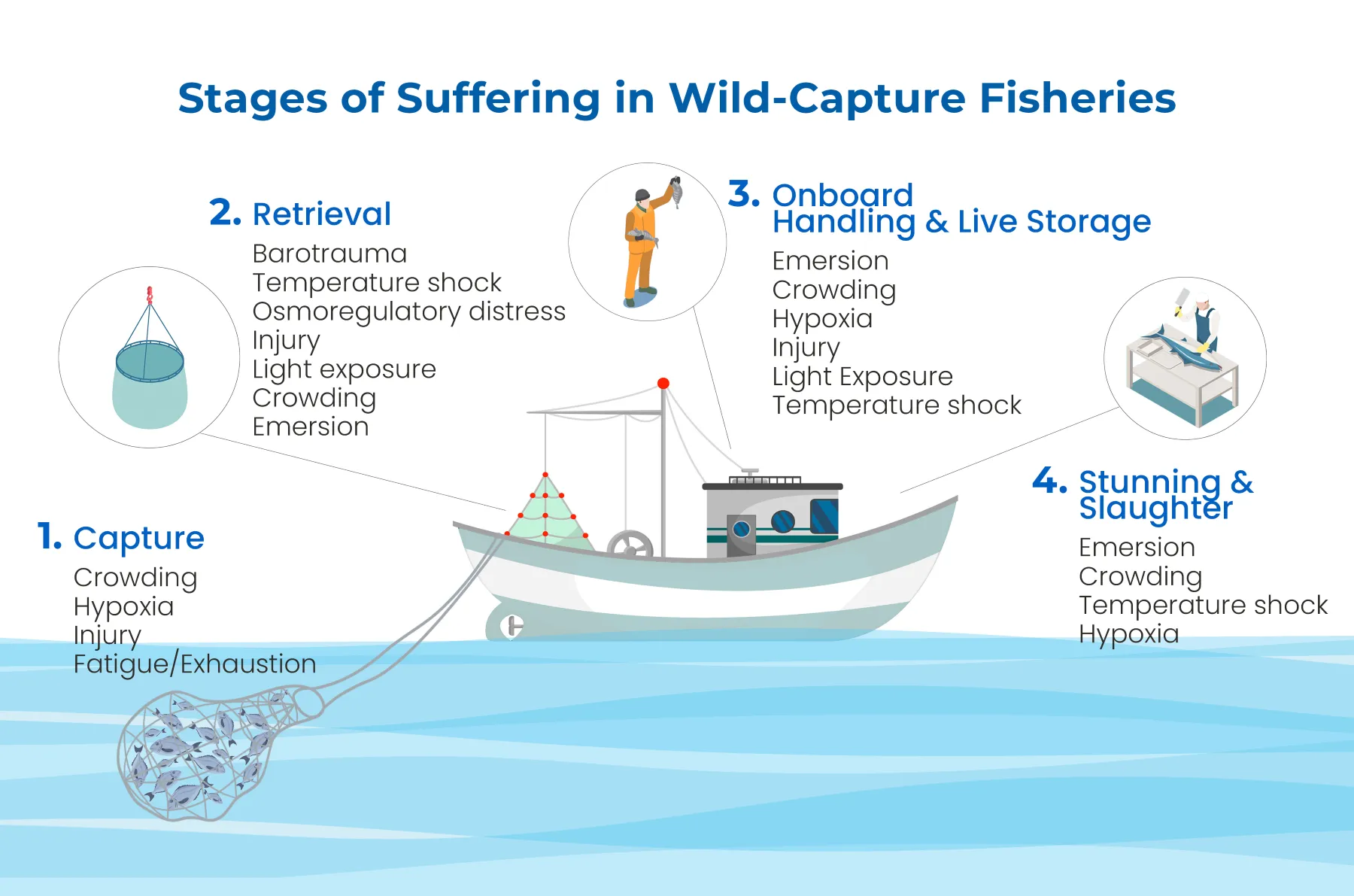
Improving the welfare of aquatic animals is not just an ethical consideration; it is a strategic intervention to achieve the sustainable-development goals. As we delve into the complex dynamics of the ocean economy, let us act with urgency and determination to ensure that aquatic animal welfare becomes an integral part of the broader conversation. The health of the ocean is intertwined with the well-being of its inhabitants, and by ensuring the welfare of aquatic animals, we will not only contribute to a more compassionate world but also promote social, economic and environmental benefits.
Views or opinions expressed are those of the author and any individuals cited, and do not necessarily reflect those of Economist Enterprise or any other member of The Economist Group.
Header image: Unsplash