

How Toronto is using AI to assess donor lungs
An AI model that helps doctors to assess the viability of donor lungs shows how the city’s healthtech ecosystem is accelerating medical innovation

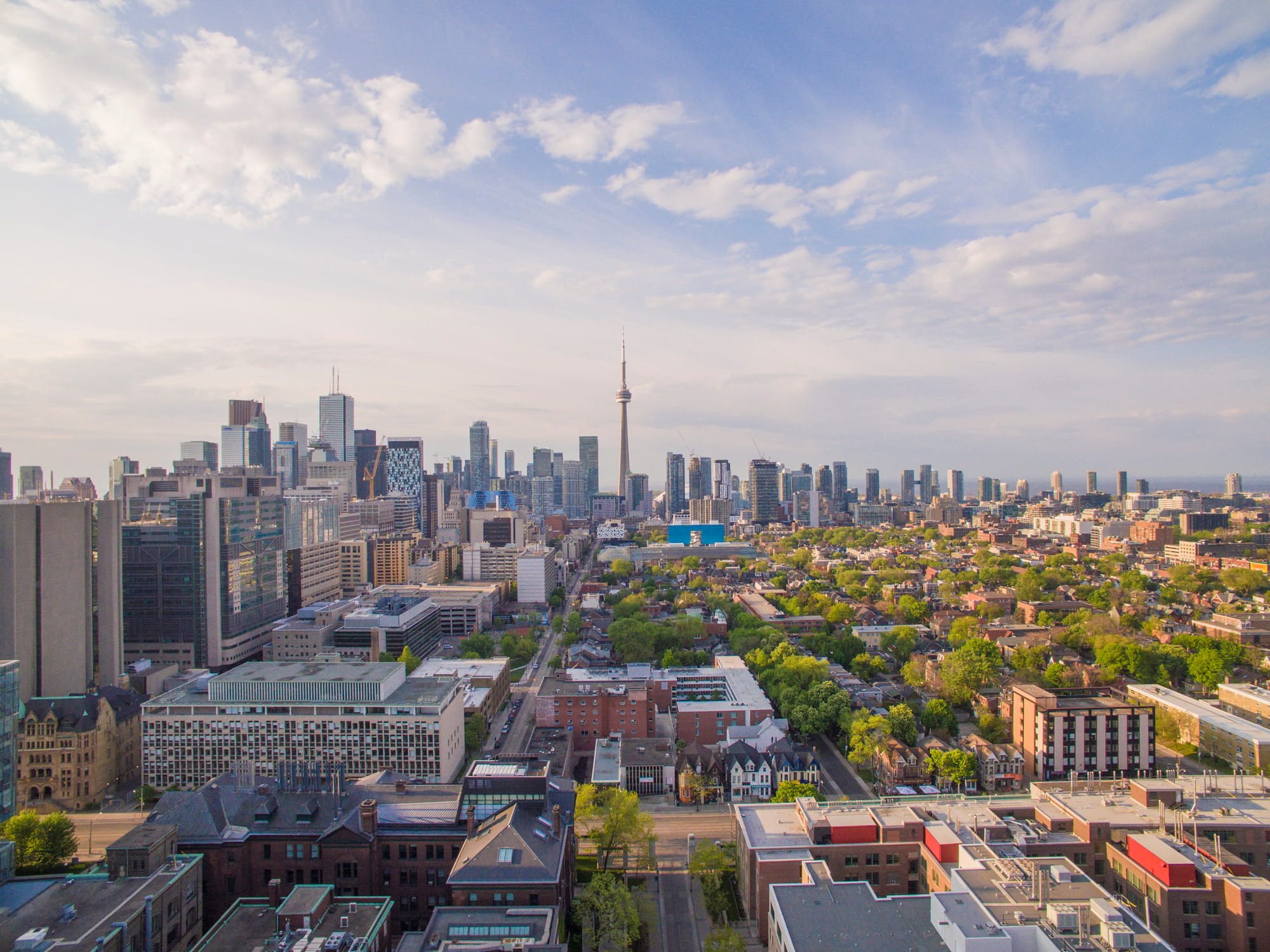
At Toronto’s University Health Network (UHN), a pair of human lungs breathes under a clear plastic dome. Doctors have just a few days to determine whether the donated organs are healthy enough to be transplanted into a patient and, if they are not, whether they can be repaired in time to save a life. Transplant teams are developing a powerful new tool that helps them to assess donor lungs. Shaf Keshavjee, a transplant surgeon and chief of innovation at UHN, worked with Andrew Sage and Bo Wang, the network’s chief artificial intelligence scientist, to create “digital twins” of donor lungs. These digital twins can predict how well the lungs will function over several hours and help to assess whether damaged lungs may respond to treatments such as anti-clotting drugs. The collaboration reflects a broader pattern across Toronto. The city's downtown core contains one of North America's densest concentrations of hospitals, universities and research institutes. As a consequence, researchers, clinicians and entrepreneurs can easily meet in person in labs or at events, rather than interacting only online.
In 2023, Dr Wang and Dr Keshavjee were introduced to each other through mutual friends. Dr Wang was on the hunt for large datasets to train AI models that could be quickly deployed to benefit physicians and patients. Dr Keshavjee knew he had exactly what Dr Wang needed.

The surgeon pulled up a video of a human lung pumping inside an Ex Vivo Lung Perfusion (EVLP) machine, a technology developed in Toronto by Dr Keshavjee and a thoracic surgery colleague, Marcelo Cypel. The system keeps donor lungs functioning outside the body by pumping a blood-like solution through the organs and supplying them with oxygen. More than a thousand donor lungs have been transplanted using the system at UHN’s Toronto General Hospital alone, and the technology has since been adopted around the world.
What began as a breakthrough in donor-lung preservation also produced an unusually rich stream of biological data, creating the foundation for the digital twin mode—a computer model that replicates a real organ. Originally developed for engineering, digital twins are now being applied to medicine.
Each lung was X-rayed to check for pneumonia or injury. Sensors measured the volume of each breath and the pressures developing in the airways. Tissue biopsies were analysed for signs of inflammation. Researchers also continuously measured the perfusate—the liquid that circulates through the organ—for electrolytes and biomarkers.
One of the study’s lead authors, Elly (Xuanzi) Zhou, helped to develop the digital twin model as part of a research team led by Dr Keshavjee and Dr Sage. Using the model, the team effectively ran a virtual clinical trial, showing that some lungs could be rescued with medication, while others were too damaged to benefit. The study was published this year in Nature Biotechnology, one of the world’s leading biotechnology journals.
“With the help of these AI models, we can increase the utilisation rate from as low as 20% to 50 or 60%,” Dr Wang explains. “You can imagine how many more donor lungs could become available for transplantation, and how many additional patients could benefit.”
“With the help of these AI models, we can increase the utilisation rate from as low as 20% to 50 or 60%."
Bo Wang, chief artificial intelligence scientist, University Health Network

Grace Lee Reynolds, CEO of Toronto’s MaRS Discovery District, points out that the proximity of the city’s healthtech ecosystem creates opportunities for "collisions" between researchers, entrepreneurs and clinicians. MaRS helps to turn those encounters into commercial ventures. Its programmes include mobility initiatives with Toyota that apply AI to healthcare and life sciences, and JLABS, Johnson & Johnson's innovation hub, which helps start-ups to transfer research from the laboratory into practical applications.
The city's AI ecosystem extends beyond hospitals. In February, the Vector Institute hosted its third Remarkable conference, drawing more than 1,500 researchers and industry leaders from 39 countries to discuss how AI research can translate into practical outcomes. Healthcare AI emerged as one of the event’s strongest themes, with presentations describing breakthroughs in using the technology to diagnose cancers, analyse medical images and help clinicians to make challenging decisions.
The partnership between Dr Keshavjee and Dr Wang brought together two fields: transplant surgery and artificial intelligence.
"We can bring AI scientists, clinicians and data engineers all together around real clinical problems."
Bo Wang, chief artificial intelligence scientist, University Health Network
Dr Keshavjee is the son of immigrants who arrived in Toronto from Kenya when he was just 12 years old. He was a medical student at Toronto General Hospital in 1983, when the world’s first successful lung transplant was performed there. Over the following four decades, he helped to build the world’s busiest lung-transplant programme.
Dr Wang, meanwhile, was lured to the University of Toronto from China for a master’s programme in computer science. Later, he received a PhD from Stanford University, California, and led research projects at life-sciences companies, including Illumina and Genentech. By the time Dr Wang returned to the University of Toronto as an assistant professor in 2020, the AI boom was well underway. He set his sights on applying AI to medicine, creating Clinical Camel, a large language model attuned to the jargon of clinical research, and MedSAM, which analyses CT scans and other imaging.
The two researchers work only a five-minute walk apart. In many cities, that would be an unremarkable detail. In Toronto, it helped to produce a new way to decide whether a donated lung can save a life.
“We can bring AI scientists, clinicians and data engineers all together around real clinical problems,” says Dr Wang. “That, to me, as a researcher in AI for health, really makes Toronto an ideal place to test AI strategies safely and responsibly.”